
Blockbuster Art Exhibitions – London UK

Absinthe, Toulouse Lautrec
When it comes to art exhibitions, the term ‘blockbuster’ is somewhat overused these days, but it surely must apply to Tate Britain’s offerings
The Degas, Sickert and Toulouse-Lautrec exhibition ran until 15 January 2006 and was filled with accessible, beautifully executed paintings. It drew on works from the eponymous painters as well as gems from lesser known or even scarcely known artists such as Bonnard, Vuillard and Warrener.
Arranged more or less in chronological order, from the 1880s to the 1900s, the works on display marked the beginning of modern art, particularly in form and composition. Some are extremely well-known, such as several of the ballet scenes by Degas, but the visitor was encouraged to see the very modernist concepts that were introduced by the artist, such as the cutting off a figure at the edge of the canvas or the horse’s head divided by a pole in the foreground of his Jockeys before the Start. These innovations give an almost photographic feel and were much tut-tutted over at the time.
The subject matter too marked a move to the modern era. The centrepiece of the exhibition is undoubtedly Degas’ L’Absinthe. Incredibly this familiar work was exhibited in London for the first time since 1893 when it caused a tremendous stir, with its two main figures drawn from Parisian lowlife looking drab, despondent and decadent. A whole room was devoted to this and just one other painting, with facsimiles for the visitor to read which draw on the ‘shock-horror’ responses of the nineteenth century critics.
The exhibition also highlighted the cross-fertilization between England and France during this period, and although it seems mainly the English that have benefited from the ideas of French artists, the influence of the somewhat underrated Walter Sickert across the Channel is well illustrated. He is often criticized for his use of dark colours, but there is a wide variety of styles in evidence here and this exhibition surely enhanced his reputation.
You may well recall another ‘trio’ of painters at Tate Britain in 2005, Turner, Whistler and Monet. It seems an exhibition of more than one great master is not a pre-requisite of gallery exhibitions (there was an exhibition devoted entirely to Constable in 2007) but they have all shown successfully the influences across borders and between styles in exhibitions that are both informative and enlightening.
This exhibition really was a feast for the eyes.
Degas, Sickert and Toulouse-Lautrec, London and Paris 1870 – 1910 ran at Tate Britain and sponsored by British Land Company PLC
Review of Toulouse Lautrec and Avril: Beyond the Moulin Rouge at the Courtauld, London UK 2011
Jeannette Nelson, Art Critic
The Puppy that came for Christmas …
 This true story will appeal to all dog lovers, and others, as it is truly heart warming and heart wrenching.
Megan Rix and her husband decided to take on a puppy for six months to train for people with disabilities. What Megan didn’t realise was just how deeply they would fall in love with the sweet natured puppy and how much of a wrench it was to give it back six months later. They then took on another puppy, Freddy, and fell in love again and were broken hearted when he too was moved on for further training.
Then, one Christmas, little Traffy came along …
This is a book we couldn’t put down and are sure it will be a bestseller in no time.
Published by Michael Joseph/Penguin, paperback £6.99, available from Amazon
You may be interested in our new seven part series about training Winnie by her owner Claire.
Step Families – The Trials & Tribulations of Stepparenting
 Families are rarely easy. Parenting, as we all know, does not come with a comprehensive User Guide to cover all eventualities. And life moves on – “It wasn’t like this in my day”, we cry (a bit too often in my case!). Put all those factors together – plus add a big dollop of self-sacrifice, resentment and frustration – and ‘VOILA’, welcome to the world of Step-Parenting …
Okay, it’s not entirely doom and gloom. There are moments of loveliness, of joy even, times when the step-parent and the step-child(ren) are happy together, bonded.  But too often it feels like an impossible undertaking for all involved. I speak for myself, of course, and I’m sure there are plenty of Step-Mum’s and Step-Dad’s out there who skip through it all with relative ease. But I’ve read enough on the subject to know I’m not alone in my struggles. There are many (Step) voices in the wilderness, equally anguished. I’m also very aware that plenty have it far far tougher than I do; more complex family units, more animosity between ex-partners, etc, and so maybe I should stop the whingeing … but then this would be a very short article!
I have a son from a previous relationship who is almost six years old, and my husband has a daughter from his previous relationship, nine months younger than my son, who spends five days/nights out of every fortnight with us. We have been together since the children were very young, so they don’t remember the situation being any different. From what I’ve read, this all helps enormously. Our situation is ‘normal’ to the kids, they know no different. Yet, despite this, we struggle. Here are some of the classic battle scenes other stepfamilies may recognise:
“You’re not my real mummy”: I had hoped this would be reserved for The Teenage Years, but sadly not. I think it was first uttered (well, screamed) when my step-daughter was about 3. A whole decade early! That’s really bad form; I wasn’t prepared. She used to call me ‘Mummy Lisa’, but suddenly I was cruelly demoted to ‘Not My Real Mummy’. It shouldn’t hurt, but sometimes it just does… Needless to say, I avoid any fairy tales that have the archetypal Wicked Stepmother in – no need to fuel the fires!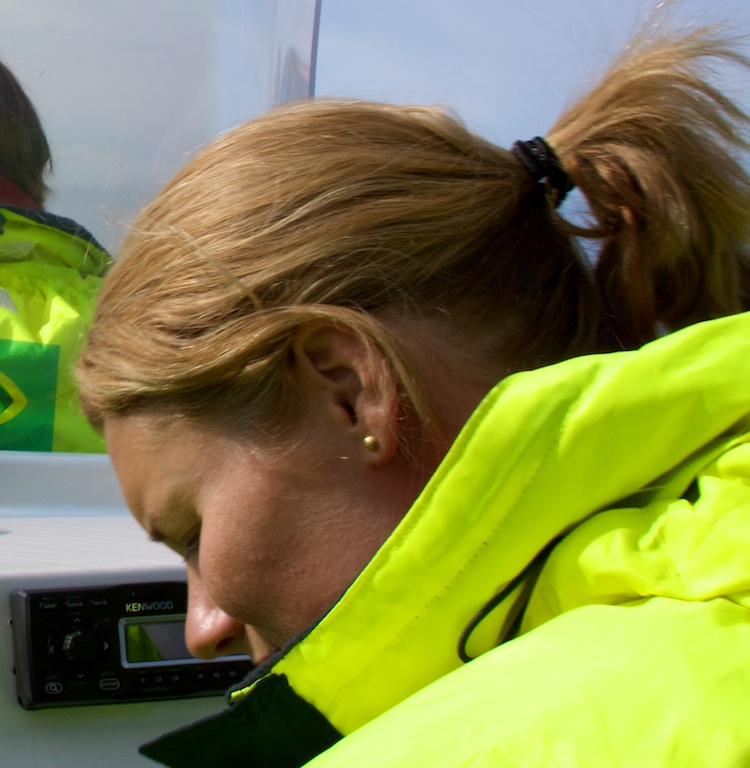
“I don’t want you, I want my daddy”: Typically, this one stings when it’s spat out amidst angry tears when my step-daughter has woken up in the early hours crying after a bad dream or suchlike. When ‘daddy’ is asleep. When ‘Not My Real Mummy’ is the only one available (though a bit bleary-eyed). I’m afraid I am guilty of replying ‘Well, tough, you’ve got me’ on occasion – I’m sure Supernanny would be appalled.
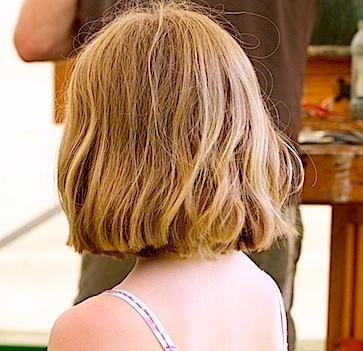 “I’m going to tell my mummy/daddy about you”: This one usually follows a telling off. It sometimes appears in its extended form ‘I’m going to tell my mummy/daddy about you being so horrible to me all the time’. Nothing shocking, but when you’ve picked said child up from school, played with her, fed and watered her, and have only told her off when she’d been incredibly rude/kicked the dog/thrown her jelly across the table (delete as appropriate) it does grate. Just a little.
Step-parenting can put even the strongest relationship under a huge amount of strain, and I’ve read of many step families that have fallen by the wayside when the tensions became unbearable. But I’ve also been cheered by the number of step families that have risen to the various challenges and stayed the course. With a bit of luck (and a lot of patience and devotion), we’ll be one of those!
Some of the resources that have kept me sane (ish) as a step-parent are:
http://www.bbc.co.uk/health/physical_health/family/stepfamilies/step_becoming.shtml
The Step-Parents Parachute – Flora McEvedy
How To Be A Happy Step Mum – Dr Lisa Doodson
Forums can be good too – some of the discussions on Mumsnet were useful to me in the earlier stages
The author’s name has been withheld to protect the identities of the children. Any correspondence from readers will be forwarded via the editor.
Val Reynolds Brown, Editor
Toulouse-Lautrec and Jane Avril at the Courtauld Gallery

Henri de Toulouse-Lautrec, Jane Avril, 1899, colour lithograph, 56x38 cm
For me, small is most definitely beautiful when it comes to art exhibitions. That’s not to say that I give the blockbusters of the National Gallery or the Tates a wide berth; on the contrary, the current exhibition of the art of Joan Miro at Tate Modern is one of the best days out in a gallery I’ve had for a long time. But perhaps that’s the point; it really needs a day out to do it justice, and it’s not helped by the fact that once you’ve bought your ticket you’re not allowed to leave for a breather and come back again. There really ought to be more thought given to this as the art would be appreciated all the more if it didn’t have to be swallowed in one gulp.
But back to the Courtauld, set in a wing of Somerset House. The temporary exhibitions are hung on the top floor and occupy a mere two rooms. Consequently, the number of artworks is limited but as befits such a prestigious institution, they are most judiciously chosen.

Original sketch for the Jardin de Paris poster next image
A few months ago I was bewitched by various depictions of Cezanne’s Card Players, and now it’s the turn of Toulouse-Lautrec to capture my imagination and the spirit of the Belle Epoque with his compositions of his friend Jane Avril.

Jean Avril at the Jardin de Paris 1893, colour lithograph
I, like so many of my student friend in the sixties, had various posters of Jane Avril and other dancers from Paris’s Moulin Rouge adorning my walls. So I was expecting the work to be familiar and indeed it was. Some of you may also remember the Athena representations of Jane Avril and also of Mlle Eglantine’s troupe.
But the exhibition is more than just an evocation of the familiar. It shows up the strong bond between artist and subject, a fact borne out by the accompanying notes which tell of their friendship and also hint at the closeness which developed because they both had to endure a physical disability. The painter had dysfunctional legs, a condition that his family took a long time to come to terms with. Jane Avril, it is believed, suffered from St Vitus’ Dance, as it was called then, which caused involuntary movements of the limbs; she found that dancing could keep this under control and so took up the profession.

At the Moulin Rouge 1892-3, oil on canvas
The real fascination of the exhibition lies in those works that are not of her as a professional but instead show her, in sketches and in fully painted works, as a rather solemn, gaunt young woman away from the stage. And the viewer is also struck by the striking modernity of Toulouse-Lautrec’s fin-de-siecle oeuvre, particularly in the effect achieved by simple lines and brush-strokes.
In the smaller of the two rooms are works by contemporary artists and more information about the professional and private life of Jane Avril. This complements Toulouse-Lautrec’s work well and helps make the whole exhibition easier to appreciate and enjoy. It runs until 18 September 2011 and the entrance ticket also includes the permanent works in the gallery, which include some stunning impressionist greats. It all makes for a delectable treat.
Opening hours: Daily 10am to 6 pm, last admission 5.30 pm
Admission Adult £6, concessions £4.50, free admission Mondays 10 am to 2 pm except public holidays, at all times for under 18s, full time UK students and unwaged. Information on Gallery Talks and Study Day see www.courtauld.ac.uk
See our review of blockbuster exhibition in 2006 Degas, Sickert and Toulouse-Lautrec
 Jeannette Nelson, Arts Critic A bit of a culture vulture, Jeannette enjoys art exhibitions, cinema and classical music, but her main interest is the theatre. For several years she ran theatre discussion groups for which her MA in Modern Drama together with teaching skills stood her in good stead. She prefers to concentrate on the many off West End and fringe productions as well as that real treasure of the London theatre scene, the National.
Photography Pintail Media

Section of At the Moulin Rouge 1892-3, oil on canvasDetail of At the Moulin Rouge 1892-3, oil on canvas

Detail of At the Moulin Rouge 1892-3, oil on canvas

Bourdelle, Porcelain mask cast from bronze of Jane Avril 1861-1929
The Tropical Tale behind Delicious Dried Fruits+Bundles of Giveaways!*
 We enjoy hearing about successful projects with a strong social theme and Tropical Wholefoods is just that with the bonus of selling great products. We love their dried mangoes and there’s a whole range of dried fruit, mushrooms and even vanilla, to choose from available in good healthfood stores, Oxfam, Fairtrade stores and online. You can enter the giveaway of bundles of gorgeous Tropical Wholefoods healthy Fairtrade goodies at the bottom of the page.*
 Adam Brett grew up in Uganda but went to the UK during the Amin period and subsequent civil war. In the late 1980s, he returned to Uganda as an adult with a plan: to enable Ugandan farmers to produce quality sun dried fruits using a low tech, low cost solar drier he had designed.

Dried mangoes
Teaming up with a Ugandan friend, Angello Ndyaguma and his English partner Kate Sebag, Adam set up the fairtrade company Fruits of the Nile. It distributed solar driers to farmers at cost, trained them in using and constructing them and then bought the resulting dried fruits at guaranteed good prices from the farmers. Soon, considerable numbers of farmers began working with the driers, producing gorgeous sun dried pineapple, bananas and mangoes for onward sale.
Back in England, Adam and Kate marketed the products under the label Tropical Wholefoods, initially from market stalls and then from a factory in south London. They quickly built up a small but dedicated fan club for Tropical Wholefoods products. People were attracted by the fresh and powerful flavour of the dried fruits – especially because they were 100% natural with no added preservatives or sugars.  Because the fruits were dried immediately after harvesting, they preserved extremely good flavours. The buying public also liked the simplicity and directness of the operation and the clear benefits that Tropical Wholefoods was able to deliver back to farmers in Uganda.

Dried apricots
Adam and Kate were able to sell directly to retail shops in London and attracted the custom of larger distributors in the health food and delicatessen trade. According to Kate, “Running a packaging factory and doing delivery runs around the capital wasn’t exactly what we imagined we would be doing when we started the business. We thought we would be living in Uganda, but we found that intensive marketing and product control in UK was necessary to build our brand.” With Adam and Kate deeply involved in building a market in the UK, day to day control of the Uganda operation passed to Angello Ndyaguma. Supported by a number of Ugandan aid agencies, Angello undertook extensive training sessions with farmers in solar drying operations and business management. Today, there are about 100 different solar drying sites in Uganda, who have organised themselves into six different Community Based Organisations.

Mango harvest

Dried pineapple
In many cases, people operating solar driers use their own fresh fruit to fill their driers, adding value to fresh fruit. Solar drier owners also buy fresh fruit from other farmers, therefore providing them too with a market for their produce. Both fresh fruit farmers and solar dryer operators are certified Fairtrade by the international Fairtrade Organisation FLO.
After nearly 20 years of operation Fruits of the Nile estimates that at least 1,000 adults are benefiting from the solar drying operations they have initiated and trading with around Uganda. The most common use people have for their additional income is to pay children’s secondary school fees and medical bills, neither of which are freely available in Uganda. One of the producer groups, Nakatundu Muslim Farmers Group, has also been able to send one of their founder members, Umaru Wasswa, back to school:
“Thanks to solar drying our pineapple, I have not only been able to send my child to a good city boarding school, I also have now managed to go back to school to advance on my academic standards as I had dropped out when my dad passed away,” says Umaru.
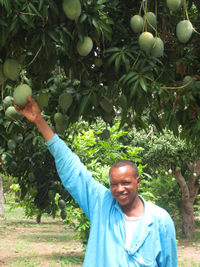
Sangar TON community
Farmers are also able to improve their farms and homesteads by being involved in solar drying. When people expand their solar drying operations, they often incorporate drying fans powered by solar electricity into the dryer, so speeding up their fruit processing. This also provides the opportunity to install solar lighting and power into their houses and community centres. Since very few villages in rural Africa or Asia have access to the national electrical grid, this is a great resource to have. As Umaru comments, “Now I no longer use candles but electricity in a rural Ugandan village!”

Apricot kernels
Tropical Wholefoods’ good example in Uganda led other fairtrade businesses in developing countries to get in touch and Adam and Kate are now trading and doing business development work with partners in Burkina Faso, West Africa, Northern Pakistan and Afghanistan.

Raisins
Back in the UK, Tropical Wholefoods teamed up with Fullwell Mill in 2001. Initially a small Sunderland bakery employing people with special needs, Fullwell Mill has now expanded to a staff of 35 who pack all Tropical Wholefoods products as well as baking their dried fruit and cereal bars and making energy and health food bars for other companies.
Fullwell Mill now owns the Tropical Wholefoods brand, and Kate and Adam are directors of FM along with original founders Richard Friend and Peter Fawcett. This merger has left Adam and Kate freer to concentrate on development work overseas as well as marketing work in the UK.

Alya Noorin, Mountain Fruits, Northern Pakistan
In 2003, Fullwell Mill was awarded first place in the North East for the Inner City 100 Index – an index launched by Gordon Brown MP, the New Economic Foundation and Royal Bank of Scotland to reward the fastest growing and best run inner city companies in the UK. Nationally, FM was sixth overall. This is not the only prize to have been collected by the Tropical Wholefoods/FM Foods team. In 1998, they were the winners of the World Vision Award for Development, when the judges commented that “Tropical Wholefoods are an outstanding entrepreneurial team, giving heart to people who would not normally aspire to a stake in the quality end of the food market of the developed world.” In 2000, they won the National Westminster and Directory of Social Change Enterprising Solutions Award. In 2010, FM were winners of Sainsburys’ Own Brand Supplier Awards – Best for Corporate Responsibility.
Tropical Wholefoods website has an excellent recipe section, we specially liked the mango chutney and amoretti biscuits recipes.
Amoretti biscuits

Bread and butter pudding
Tropical Wholefoods products are available in all good health food stores, Oxfam stores, Fairtrade shops and catalogues and of course at our favourite online supplier GoodnessDirect
Call 0845 258 2781/2782 for details of your local stockist
*WE HAVE TEN BUNDLES OF Gorgeous Tropical Wholefoods health Fairtrade goodies to GIVEAWAY to IN BALANCE READERS
Last date of entry 30 August 2011 One entry per household
The winners announced on 8 September 2011


Did you Win the £35 GoodnessDirect Voucher? Check here
 Our article about Online Shopping highlighted the service offered by GoodnessDirect who provided a £35 voucher to give away to an In Balance reader.
The winner was P Gibson of London. Congratulations! Have fun selecting your goodies from the GoodnessDirect website!
By the way we will soon be adding some wheat free recipes using rice flour available from GoodnessDirect.
If you have any recipes suitable for anyone with a particular food intolerance let us know and we could add it to our Recipe Book.
If you are interested in other In Balance giveaways go to the Giveaways Section
A Trip to Oslo
 I took the DK Eyewitness Travel Guide: Norway to Norway with me on a recent trip to Oslo, having established that no guide seemed to be published for the city alone. I suppose that given the population of the whole country is just under 5,000,000, and of the capital just over 600,000 (and, interesting bit of trivia here, if you tipped the thin strip of land that is Norway on end it would reach Sicily), it’s not really surprising. That said, there is an amazing amount to see in Oslo, and almost every minute of our four-day trip there was packed.
The DK guide, as customary with all their travel publications, is a feast for the eyes. The sheer quality of the paper and dazzling colour photographs do great justice to the sights of the town and all information was almost 100% accurate, no mean achievement when changes in charges and opening times are almost inevitable. The series has an interesting feature which picks out what it considers the most interesting attractions which it describes in greater detail; subjectively, I agree with their choices, notably the Vigelandsparken, Oslo’s largest park packed with 212 sculptures of people, young, middle-aged and old, named after the sculptor Gustav Vigeland. It’s a unique experience and not to be missed on a trip to Oslo.
The city is also home to a plethora of museums, six of which are on the peninsula of Bygdoy. This is most easily reached by a frequent boat service. The Norwegian Folk Museum is an open-air affair to which historic buildings have been transported from the whole country; (Stockholm has the same idea at Skansen). Nearby is the Viking Museum with three genuine Viking ships on display. Go one stop further on the boat and you’ll come to the Kon Tiki museum, named after the raft on which Thor Heyerdahl proved that by building sailing craft with the simplest of materials, indigenous peoples from Peru could have sailed to Easter Island. Next door is the Fram museum, with the actual boat that explored the Arctic and Antarctic at the beginning of the 20th century, and in which the Norwegian Amundsen pipped Scott to the post by reaching the South Pole first. Back to Oslo Central for even more museums and galleries, notably the National Gallery which has a wonderful international collection as well as fine examples of Norwegian painters and the Munch museum which showcases the work of perhaps the most famous one. My interest in theatre led me to the Henrik Ibsen museum which houses an interesting exhibition of the playwright’s work but more importantly, offers tours round the apartment where he spent the last years of his life.
My only quibble with the Guide was that it failed to mention the Oslo Pass. This can be bought for 24, 48 or 72 hours and covers all transport and museum entrance fees for the period as well as discounts in certain restaurants and bars. The 72 hour pass cost around £50, but I carefully noted and added up what individual tickets would cost; thanks to our fervent desire to soak up as much culture as possible, the total spend came to over £100! And while we did more than just scratch Oslo’s cultural surface, there was masses that we didn’t have time to visit!
And perhaps my only quibble with Oslo itself is the cost. It has a deserved reputation of being the most expensive city in Europe and eating out (and certainly drinking out as well as in) is eye-wateringly dear. That said, the people are very friendly and welcoming and despite the cost it’s a city I’d dearly like to visit again. I said so to the nice bus driver as he unloaded our cases at the airport for our trip home. He seemed genuinely pleased that we had enjoyed his city and hoped that we would indeed come back ‘when we could afford it’!
The DK Guide to Norway is published by Dorling Kindersley and available from DK Eyewitness Travel Guide: Norway

Jeannette Nelson, Contributing author
The Woman with a Worm in her Head
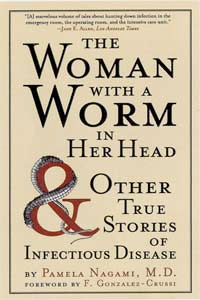 This book is a collection of fascinating true stories of a doctor’s struggle against the terrifying and invisible world of infectious diseases.
I can remember at the age of about ten dipping into my grandmother’s medical books, recoiling in horror at the pictures but fascinated by their message. The real awfulfulness of all things medical hit me hard and I thought I only had hours to live because I must have at least three infectious diseases and the possibility of a host of others. I know now my reaction wasn’t unusual and my morbid fascination with all things gory was something my friends shared.
The book reads like a medical thriller
Reading The Woman with a Worm in her Head reminded me of that first encounter with medicalspeak and graphic, dispassionate descriptions of conditions. Dr Pamela Nagami writes of the many patients she has helped through conditions involving bacteria, viruses, parasites and opportunistic microbes. For instance when Danielle Jordan ate a salad, she had no idea she’d become a ‘host’ to an organism that six years later would grow into a worm that would burrow into her brain.
An ordinary insect bite on Allan Roth’s foot led to ‘flesh eating strep’. He shed his skin like a snake and had to have a large area of dead tissue removed from his abdomen and upper thigh.
We assume most infectious diseases can be treated and those that can’t be are somehow far removed from daily life, but think again. Do you know what ‘souvenirs’ you’re bringing back from your exotic holiday? Killer organisms are also on our doorstep.
Written from a practical viewpoint with a wry humour interwoven, Dr Roth’s book is compulsive reading and a reminder of how important it is to pay attention to cleanliness even in our super hygienic Western world. That is not to say we should be scrubbing ourselves and food preparation surfaces fanatically, but simply to be aware and remember the consequences of slackness. Washing hands after visiting the loo is so important as is our responsibility to remind our children and husbands (especially!). A doctor speaking on my radio show about hygiene was emphatic about the importance of washing thumbs. With air travel now taken by a vastly increased number of people, all over the world, basic hygiene could be the definitive feature of survival.
So, what ‘souvenirs’ might you be bringing back from your exotic holiday?
The Woman with a Worm in her Head is published by Fusion Press and available from Amazon
A couple of books about health when travelling we have found useful are:
<a href=”The Virgin Travel Health Handbook: Sound Advice for Anyone Travelling Abroad
<a href=”The Rough Guide to Travel Health
Val Reynolds Brown, editor
London Sketchbook a pictorial guide book – Six to Give Away*
 As I opened the packaging of a copy of another guide to London my thoughts were, well, Not another guide to London! Surely there must be sufficient already, a fact borne out by witnessing tourists of all nationalities armed with guides of all shapes and sizes and in a plethora of languages teeming through the London streets.
But I have to say that this one is just a little different. For a start the London Sketchbook* (see below for giveaway form) looks different, a slim hardback volume in A5 format with a delightful impression of Tower Bridge and the City on the cover. It doesn’t readily sit into a niche – it’s partly a traditional guidebook, partly a guided walks book, but what makes it stand out from the crowd are the wonderful line and wash illustrations drawn by the author Jim Watson and the very personal style of writing.
 For him, creating this book seems to have been a labour of love; he first visited all the places he writes about and then set about drawing them with helpful annotations attached. The colours are really beautiful and all the people illustrated alongside the sights are smiling and happy!
As a seasoned Londoner who spends much of her time tramping through the capital’s street, there wasn’t that much the guide taught me – I have the Blue Guide to London for that, crammed with every fact and figure you could wish for. But as a guide, this little book would be excellent for a first-time visitor wanting to concentrate on the main attractions.
The ten areas broadly covered are
- Central London
- Piccadilly and St James’s
- Whitehall and Westminster
- South Bank to Fleet Street
- The City, Tower of London
- Chelsea
- Knightsbridge
- Bloomsbury and Marylebone
There is no mention of Camden Town with its famous market, Banglatown and the revival of London’s East End. These newly created latter attractions are interesting to visit but offer more a retail opportunity than a historical interest. But in my experience, most visitors who don’t know London come here with the express intention of seeing exactly the sights in this book. And in it they have quirky anecdotes as well as just enough facts to avoid knowledge overload.
It’s as up-to-date as any guide can be; I couldn’t help feeling that had it been written some time later, there would have been a mention of the city’s famous ‘Boris bikes’ because it’s just that sort of information it contains.
I’ve enjoyed browsing through it in the comfort of my own flat, but I can’t wait for my first overseas visitor (I get quite a few of them) so they can discover the wonders of London with the help of this delightful little book.
London Sketchbook is published by Survival Books and available on Amazon
To view the list of winners click here
 Jeannette Nelson, Arts Critic
A bit of a culture vulture, Jeannette enjoys art exhibitions, cinema and classical music, but her main interest is the theatre. For several years she ran theatre discussion groups for which her MA in Modern Drama together with teaching skills stood her in good stead. She prefers to concentrate on the many off West End and fringe productions as well as that real treasure of the London theatre scene, the National.
*********************************************************************
*WE HAVE SIX COPIES TO GIVE AWAY TO IN BALANCE READERS:
To enter complete the form below. One entry per household. The draw will be held on 18 August 2011 so entries will be accepted up to and including 17 August 2011.


Puppy Training 1: Winnie Learns Digging is Not Popular

Winnie and Claire
Winnie’s Woes: The diary of a golden retriever learning about life
A seven part series with a bittersweet final episode
Oooh! Hurry up Claire! I can’t hold on much longer!
I’ll just settle down on my bed again and try and wait
Is that the alarm I hear? Thank goodness, I’m busting here!
Footsteps on the landing, down the stairs – better position myself in extra cute mode just behind the door. Ouch! By Dose! Why do I always sit so close to the door?
Claire! I’m so glad to see you! I’m so happy, my tail is wagging like crazy
Ooh, nearly forgot, need the toilet.
What’s she doing? Getting my breakfast!
Oh the indecision, should I wait or should I point my nose at the door to be let out? It’s a real shame she doesn’t understand dog – life would be so much easier.
Ah, she’s noticed, thank goodness. Ahhhhhh, that’s better and breakfast on its way too.
Ooh how exciting, dog biscuits! I love biscuits. Better eat these quickly just in case anyone tries to steal them.
Now for a cuddle. Ah, tickles behind the ear, love that. What’s she saying? Blah blah blah blah, good dog, blah blah blah blah.’
Oh, she’s off again. Maybe if I sit here looking adorable she won’t leave.
It didn’t work. Oh well.
Oh – she’s left the back door open. I’ll just have a little peak outside.
It’s such a lovely day, think I’ll stretch my paws a little.
Oh, a leaf, I’ll carry that around. Oh wow! A stick! Boring leaf, I’ll have the stick instead. OH WOW! A bit of soft dirt – oh that’s just calling out to be made into a hole.
(Dig, dig, dig)
This is so much fun, I love digging
(Dig, dig, dig)
Paws are filthy, but I don’t care – digging’s great!
(Dig, dig, dig)
WINNIE! Blah blah blah
Uh oh
BLAH BLAH BLAH, bad girl!
Oh, don’t call me that – what have I done? I was just digging a hole. Don’t make me go inside.
She must be really cross, even my most cute look hasn’t worked, lying on my back with my paws in the air isn’t working either … oh dear – what did I do wrong?
Claire Price, Winnie’s owner
Trainer’s Advice:
Dogs dig for lots of different reasons; fun, stress relief, boredom, hunting (animals, roots, etc), to cool down or to escape.
If your dog digs for any other reason than cooling down or to escape, you can do the following to save your garden:
Dig a hole in your garden, where you will allow your dog to dig. Now take some meat bones/smelly treats/toys and layer with soil until you’ve covered up the hole. Let half a bone or some garlic sausage stick out through the top soil. Go and fetch your dog and show her to the digging pit. Pretend to dig in the pit yourself and praise her lavishly when she starts digging. If your treats in the hole are yummy enough and you keep it topped up with new interesting items, you should have a dog that will go to her pit to dig, rather than the garden, as it will be more rewarding to her.
Episode 2: Winnie learns not to chew up shoes!
 Have you read the bestseller The Puppy that came for Christmas … A true story that has appealed to dog lovers and non-dog owners alike – it is both truly heart warming and heart wrenching.
Recommended Link: Anythingdogz – an excellent website owned and run by Lisa Evans, an In Balance reader
Helpful Holidays offer holiday cottages in the West Country that welcome dogs. See their holiday cottages website.
Winnie’s Woes Part 7 – Winnie Moves On
Winnie’s Woes Part 6 – Winnie Learns about Children
Winnie’s Woes Part 5 – Winnie’s friend Henry learns not to eat stones
Winnie’s Woes Part 4 – Winnie learns about other dogs
Winnie’s Woes Part 3 – Winnie Eats too much
Winnie’s Woes Part 2 – Winnie eats a shoe
Winnie’s Woes Part 1 – Winnie finds digging is not a popular activity!
 In Balance