
Memory Loss for a Day – Associative Amnesia

Nothing is what it seems
Memory Loss is disconcerting. Unbelievable really, and I was unwilling to accept it. I kept on trying to remember, thinking about where I had been, visualising, but getting nothing in my mind’s eye.
What I can remember is sitting comfortably by the fire, sipping a welcome early morning cup of coffee and suddenly realising I should be at a press event in London for gardening journalists. An event I had been looking forward to for months.
I quickly got my stuff together and left for the station. After a few yards I ran back to the house to get my Nordic walking stick because my back has been playing up recently and the stick helps.
The next thing I can remember is walking back up the same street returning home. The period in between was blank and no matter how hard I tried I could not remember what I had been doing nor where I had been.
When I got indoors I looked through my handbag and found a train ticket and a taxi receipt.
Looking through my rollerbag I found a pile of paperwork, a pair of secateurs, gardening gloves, packets of seeds and the gardening event programme.
So it would seem I had visited the show, in Victoria, which meant I had taken the train, got off at Finsbury Park, taken the Victoria line to Victoria station and taken a taxi to the Royal Horticultural Halls.
The train ticket receipt showed it was bought at 10.42 and a taxi receipt (which is not something I usually take) showed 11.34 with a journey of 6 minutes, which seems to imply I took a taxi from Victoria to the RHS Horticultural Halls. In my notebook I found a short note about stevia, a natural sweetener and on a couple of business cards I had made other notes, so I must have spoken to at least a couple of people on stands.
I have no memory of signing into the event, meeting colleagues, visiting stands – all the kinds of things I would expect to happen. I have no memory of lunch, coffee, tea, water, visiting the loo, or leaving my jacket at, or even collecting it from, the cloakroom. I had taken no photographs, which is unusual for me.
Frankly the whole thing is a puzzle. Almost like the beginning of a mystery story, at least I didn’t find something sinister in my bag!
All night I tried in vain to remember something, anything, to convince myself I wasn’t going mad, or worse.
I went to the doctor the following morning who had no idea what had happened to me. He checked my reflexes and for signs pressure behind my eyes. Everything looked normal. The doctor said he had never experienced anything like this before and would get back to me after investigating it from a neurological perspective.
My symptoms were that I felt very tired and had occasional head pains, not a headache as such.
So it feels as if I have lost a day of my life and the feeling of bewilderment is strong. I’m also concerned that it may happen again and wonder whether I will be able to get back home. The doctor suggested I take my mobile with me at all times and put in an ICE – in case of emergency – number.
Do I go to a training course next week, or to Regent Street for a meeting?
The doctor did get back to me and confirmed it was a case of Associative Amnesia, sometimes referred to as fugue state. I have been assured it is unlikely to happen again. It affects about 2% of the population with a 5% chance of it happening again.
So what made it happen? No idea, except I have experienced a lot of anxiety and uncertainty for many months, mostly related to lost websites, lost email addresses with little understanding of how they happened.
Val Reynolds Brown, Editor
PS Four months later: I have experienced no further episodes. So, onward and upward!
A Positive Take on Cancer

The worst news
Unfortunately these days, there can be hardly anyone who has not known someone, relative or friend, who has suffered from some type of cancer. Or indeed has the disease themselves.
What once was called ‘The Big C’, because no-one dared speak its name has now become so prevalent as to be almost a household word.
Turtle Watching in The Oman

Turtle tracks in sand
Based in Singapore-style city Dubai in the Arabia Gulf, Dave Reeder took advantage of a quick trip into the more relaxed and green Oman, specifically to watch the centuries old story of giant turtles coming ashore to lay their eggs
Was it a good trip?” my friends all asked, the week after I’d had three days out of Dubai. Yes, it was a great trip. Oman is stunningly beautiful, even though we only saw a hint of it!
So I escaped the steel and glass city of Dubai, thanks to the local natural history club. A team of about 12 of us went in convoy, from one side of the Arabian peninsula to the other – from, if you look at an atlas, the Gulf to the ocean facing East Africa.
Anyway, this late-40s New Zealander turned up in her giant V8 Landcruiser and we set off, to rendezvous with the rest later. In the way of expats, she was easy to talk to and she drove us to the Omani border where I took over the driving of this 2-ton monster.
Fast down the coast, we turned inland about 30km before the capital Muscat, rising up through the mountains on great roads. Because it was the Islamic festival of Eid, most locals were with friends and so the traffic was light. We then ended up late afternoon on the edge of the Wahaybah desert – which stretches across to Saudi Arabia and is serious Bedouin country – looking for the desert camp. Seems, however, that there is a political battle between Bedouins and government on the ‘proper’ name of this part of the desert, with the Bedouin destroying signs that have the ‘wrong’ name on them!
Of course, the supplied map was dreadful and our mobiles didn’t work. Finally, with sunset approaching we found a rough track into the desert and, after about five miles, found the camp – up a hillside in deep desert sand, which somehow I got the Landcruiser up!
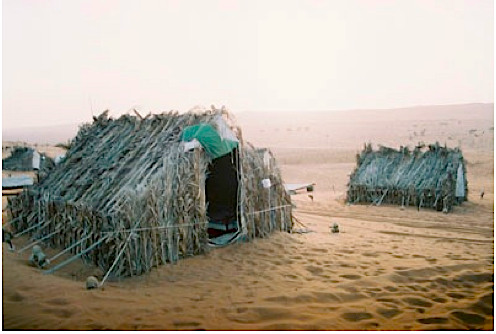
Frame tents covered in fronds and branches of Barasti
Simple place. A-frame tents covered in barasti (a kind of interlocking frond and branch arrangement), with hard metal beds inside – memories of school! – with a communal eating area and a shower/toilet block. The whole group then assembled piles of drinks and nibbles on the back of a 4×4 and we drank our way through to the dinner bell at 7pm. Food was simple, buffet style, with rice and dhal, boiled eggs and sausages, bread and salad. Breakfast much the same.
Plus a small Bedouin troup of musicians who, sadly, didn’t speak any English but tried to help me understand the oud – the Arabian lute – and how to play it.
An early night for all, as we were tired and wanted an early start. Next day we went in convoy to a serious wadi (a dry channel that floods after rain) way up in the mountains – five miles up rough tracks, some 20 miles off the main road. Up and up we went, finally reaching the end of the road and the start of rolling over giant boulders and the like. But so green! And, when we reached the end of the road, there was a walk up through falaj (irrigation) systems and, finally, two enormous pools of clear water – about the size of two Olympic swimming pools! Unfortunately, because of the holiday, it was stuffed with more people than you can imagine – many brought up first in taxis and then, after decamping, on the back of small trucks.
But it was a magical place and the peace and beauty of it out of season must be amazing. So unspoilt. Wonderful.
Then, a drama. A German family with us had twisted their front wheel coming up, so it was at a serious angle to the vertical. With far too many cars on this twisty road, they somehow got it out, with us taking the luggage and a mother/daughter combo. Serious 4×4 guys made light of it – they were ready to drag it out of there, if necessary!
Anyway, they set off for the nearest town (some 90km away) and we headed for camp two about 150km south of Muscat. The coast there is stunning and we ran between it and the mountains across a kind of lunar landscape with the sun low in the sky and the most amazing colours everywhere. Finally we found the camp – similar to the others but with wooden-sided tents. Same kind of food and then, at 9.30pm, we set off in convoy to the beach.

Turtle tracks on the beach
This area has some 20,000 green turtles laying every year which means, despite the remoteness, that it gets popular. The night before, at the main beach, there had been some 1,000 visitors! So our guide took us to a smaller, more remote beach. Serious instructions in the car park – no lights, no shouting, no flash – and we set off following the three Omanis who found the most suitable turtles on the beach.
The beach is dark but you get used to the light, until a crowd of dumb people keep turning the lights on and off. Seems their children were scared and so started bawling and shouting and demanding to be taken home. Talk about destroying the atmosphere … But we could see the tracks up the beach, the mounds that the cover the eggs and then, by magic, a turtle in its self-dug pit laying eggs the size of golf balls. Maybe 120 of them.
Once they’re at work, they’re very placid and didn’t seem to mind us. Even co-operating when the guides unwound a fishing net that had got caught around a flipper of one busy laying.
The moment was incredible. Such a privilege to see, under a black sky filled with more stars than I’ve ever seen – no ambient light, of course. So we went on and they showed us other nests and other turtles. Apparently they take about three hours to climb the beach above high water mark and dig three holes, the first two as decoys to fool the foxes that come at night for the eggs. About the same amount of time to lay and then the same again to rest before hauling back down to the water. The hole is about two feet deep and bigger than the turtle, obviously; then, when covered over, the mound is about a foot above the surface.
After an hour or so, we went back to camp and to bed, woken at 4.30am to go back down again. This time, with the faintest hints of dawn in the sky, we were told it was a “free beach” and we split up, watching the last couple of turtles make their way back to the water. And then the treat of seeing tiny hatched turtles emerging from earlier mounds – they take five or six weeks to incubate. They’re tough! About the size of a cigarette packet, they had to be held really tightly else they’d squirm away. We spent maybe half an hour gathering up any we could find and putting them into the water – with dawn, seabirds were starting to gather for this feast …
And that was the most amazing thing. Out of every hundred, maybe two survive and to know that I helped, in whatever small way, to try and improve those odds was such a wonderful feeling. And then to watch the sun come up over the ocean and the colours of the cliffs behind changing. Wow!
After breakfast, a couple of cars set off on convoy up the coast on a rough road – here an ancient tomb visited by Marco Polo on his way back from China, there a giant sinkhole. Finally, we got to Muscat and hotel apartments. After welcome long hot showers, we were ready for more exploring. We went round the old part of Muscat with its 16th century Portuguese forts.
 Then, next morning, a run up the coast through tiny fishing villages. Part of the Eid celebration involves new clothes and everywhere we saw small children rushing towards the car in their new finery, faces full of smiles. Omanis are so friendly. Then we cut in land and headed for the Emirates border at Al Ain – a stunning run through the mountains with loads of fertile little oases and beautiful small villages. Lunch in Al Ain in an archaeological site of bronze age settlements and then home.
What a trip! For those who imagine that the Middle East is all desert and no wildlife, this kind of trip could be such an eye-opener. Traditional ways of life. Loads of greenery, often in the most unexpected places. And wildlife from birds and camels, to turtles and whales – strangely, the whales off the Oman coast never migrate, like all other whales. Why would they want to? It’s a paradise …
Dave Reeder Consultant Editor
Fashion in Motion – Fantastic Free Catwalk Event – Yohji Yamamoto – Book Your Seat!

Jean Paul Gaultier at Fashion in Motion Show
What a fantastic FREE
High Fashion Catwalk Event! & anyone can attend! The Yohji Yamamoto Show is on 1 July 2011 at the V&A but booking is essential – details below
Me? Go to a fashion show with impossibly proportioned models wearing impractical clothes? Never! And yet … I was there! At the V&A, watching the amazingly outrageous designs of Jean Paul Gaultier. It was one of five shows of the day put on as part of the Fashion in Motion series of free catwalk shows. This was the first time Jean Paul’s work, from his early collections to his most recent, had been shown in the UK.
All the Gaultier iconic items were there, from underwear worn as outwear, the corset dresses, the Aran pullover dress, the patchworked mermaid dress, the silver anatomic dress.

Jean Paul Gaultier iconic corset design
My favourites were the most outrageous, the Divine Jacqueline, the ballet costumer for Regine Chopiot, Sacre Coeur and the black lace capelin dress.
An inspirational experience – it was half an hour of sheer entertainment with a very excited and appreciative audience: young, old, male and female, fashionistas, the wealthy, students, admirers. All wildly applauding Jean Paul when he appeared at the end of each show. And what a friendly chap! He mingled happily with the crowd, willingly signing anything offered to him. He took a real interest in the questions from fashion students and young people – where did he find inspiration (everywhere), what he was most proud of (the most popular designs!)

Jean Paul Gaultier iconic design
Two young women who work in the accessories trade were ecstatic at having the chance to attend the show, very well aware they would never normally have access to a couturier fashion show such as this. Others were knocked out by the clothes, the models, the atmosphere and energised by the sheer excitement of the event. That clothes such as these are inspirational is clear and elements do filter down to high street fashion.

Jean Paul Gaultier iconic design
Attending the show made me appreciate how successful the V&A is at working to make art forms accessible to the general public. Their aim is to show fashion as it is meant to be seen – in movement. Previous designers featured in the series include Ozwald Boateng, Giles Deacon, Roksanda Ilincic, Christian Lacroix, Stella McCartney, Alexander McQueen, Gareth Pugh, Vivienne Westwood and Erdem. Absolutely everyone I spoke to agreed it was an absolutely fantastic event and couldn’t wait for the next one! Must say I felt the same way myself!

Yohji Yamamoto retrospective exhibition at V&A 2011
If you would like to go to the next show on 1 July 2011, featuring the work of Yohji Yamamoto admission is free but booking is essential.
Tickets will be available to book from 20 June on 020 7942 2820.
If there is absolutely no chance of you being able to attend you might like to know Fashion in Motion: Yohji Yamamoto will be broadcast live from the V&A website www.vam.ac.uk/channel/live
Val Reynolds Brown, Editor
Were you a Giveaway Winner? Supa Drippa Taps

Supa Drippa Taps
Of all the gardening gadgets, products, equipment we have come across so far, these taps are the most useful. We are really happy we had some to giveaway. They saved our plants in the drought because we could target the tender and precious ones, right where they needed water, next to the stem in the case of the tomatoes. And those tomato plants are looking very good.
Leaving the milk containers in place means when we want to feed the tomatoes, generally once a fortnight – we just remove the cap, pour in the fertiliser mix and away they go!
Simple, time saving and effective, see our feature SOS – Save Your Plants.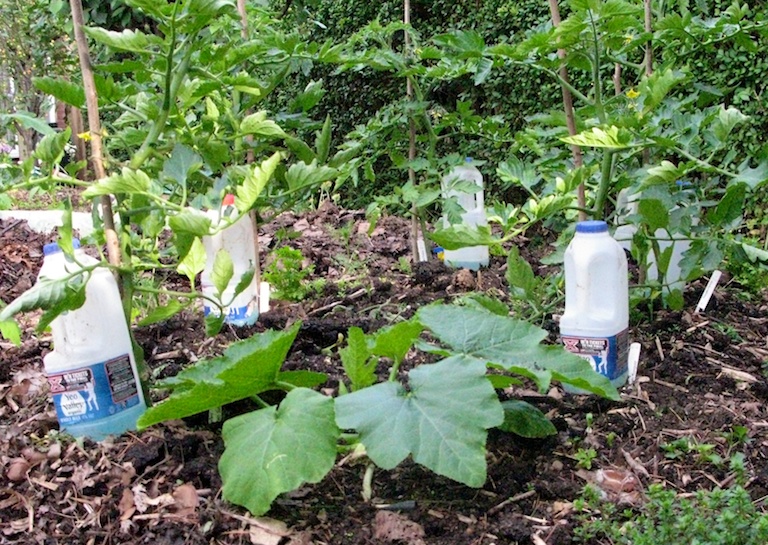
So the lucky In Balance readers who have won a pack of 10 taps sponsored by The Organic Catalogue are:
- A Westley, Chesham
- V Brown Chichester
- T Karweni, Aldershot
Happy watering!
By the way www.ourfrontgarden.com is the website we write about the ongoing renovation and care of a front garden in a garden city
Val Reynolds Brown, Editor
Fancy a Free Meal? Really!
 Sunday 19 June is Barter Day at Hummus Bros who are offering free meals in exchange for donations to Cancer Research UK. Those donations could be:
Clothes
DVDs
Books
Homeware
On Sunday, just take your unwanted items into the Wardour Street branch of Hummus Bros where you can haggle the value of your possessions with staff from the Marylebone Cancer Research UK shop. Vouchers will then be given out matching the value – two or three good quality donations should be enough for a completely free meal!
Barter Day runs from midday to 6pm on Sunday 19 June at Hummus Bros, 88 Wardour Street, Soho, W1F 0TH and all quality donations will be accepted. To get directions, see their mouthwatering menu and see what journos thought of the cuisine see the Hummus Bros website.
With Barter Day, Hummus Bros continues to offer unprecedented value while being socially and environmentally responsible – keeping your conscience and tummy happy.
So why not get a few things together and meet other likeminded diners on Sunday …
Val Reynolds Brown, Editor
Are you a Winner? Beauty Show Tickets
 The New You Beauty Show will be held on Sunday 19th June 11am – 5pm
in the Hertford Theatre.
There’ll be Raffles, Goody Bags, Makeovers, Competitions.
The winners of the pairs of entry tickets worth £10 are:
K Dilley, Langford
L Evans, Welwyn Garden City
A Woolveridge, Stevenage
Congratulations and enjoy your day!
Val Reynolds Brown, Editor
Grow your Own Veg in a Town Garden
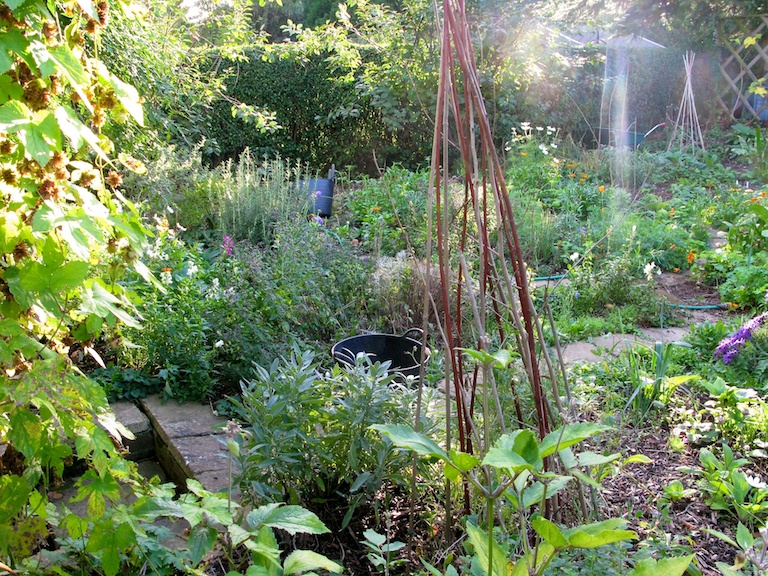
Growing veg in a town garden - my mixture
It isn’t difficult to grow your own veg in a town garden but you do need to have a realistic expectation of success and ways of avoiding disaster. So where do you go to get really reliable information on how to grow veg?
I think tv programmes don’t always provide the real picture and give a false expectation to the whole subject. Do you remember Jo Swift transforming an allotment into a perfect vegetable plot on that top viewing show Gardeners’ World? What they didn’t tell you there was an army of helpers to clear and weed the plot. I reckon they must have used some kind of weed killer to destroy the horsetail, a plant that is usually very, very hard to eradicate. Then there was GroundForce – just how did they get rid of those serious weeds in such a short time before planting up? What I want is reality and how problems are overcome, not a smooth, problem free entertainment show with perfect results. Having said that I have found a whole load of excellent short BBC videos. The one about growing potatoes in bags on your patio is particularly good.
More realistic are books giving reliable advice from experience and two gardeners I both admire and respect are Carole Klein and Anna Pavord. Both write in a most accessible way.
 But for me the most inspirational book is The Edible Garden by Alys Fowler. I find her down to earth approach to growing veg in her tv programmes and books very appealing and resonates with my own experience.
My failures include newly planted cabbage and lettuce seedlings decimated within a day of planting by voracious slugs. Yes I used organic slug pellets and the dreaded beer traps, but somehow there was always a wayward specimen on the prowl and we never did get to eat any lettuce or cabbage that wet summer. My husband used to collect the slugs and throw them into the hedge across the road reasoning that the hedge was better cover for them and if they did venture across the road the chances were they would be run over. Well that was the theory although the slug numbers didn’t seem to drop.
The only solution that has ever worked for me is to use self adhesive copper strip attached to plastic bottles with the tops and bottoms cut off. It does mean a lot of work to begin with, but the containers can be used for years if you use reasonably thick plastic. If mine break up I remove the copper strip and reuse it as it is fairly expensive.
I have had great success with brassicas for the first time ever. In the past I have given up on growing any kind of cabbage because pigeons systematically stripped the cabbage seedlings. So this year I covered the area with fleece. Then as the plants grew I removed that and put netting over them, which works. I forgot to cover this one.

Kale decimated by pigeon
What has worked well for me so far this year
Seeds that germinated easily, that is to say fast and profusely!
- Leeks & Onions – not having sown these before I wasn’t sure what to expect. They germinated quite quickly and came up ‘broken’ but gradually straightened out. They were quite floppy though as seedlings.
Leek seedlings
- Parsley – I add the leaves to veg/fruit when I use the juice extractor as parsley has such a good reputation for providing valuable vitamins. It is an annual though so be prepared to resow every year and don’t rely on seed from those plants, the growers are really good at making them sterile so you have to buy new every year. However I do let some plants go to seed and add them to stews for flavour in winter
- Par-cel – a cross between parsley and celery, the plants are doing well, good to add to salads, stir fries, even stews

Par-cel, excellent garnish and addition to veggie smoothies
-

Mizuna, used in salads and stir fries
Mizuna – can be used in salads and stir fries
- Kale – the purple leafy kind



The broad beans have been very successful. I received this advice from Sine Chesterman, our gardening guru:
Pinch off the tops once you see the first beans forming on the lower stem. This stops blackfly colonising the tops of the beans and hence working their way down and ruining the crop. We used to give the tops to our goats (who love the whole plant) but when our last goat died and we didn’t replenish, we ate the leaves ourselves. Boiled with a little salt, strained and warmed with a little pepper and butter – superb.
Another tip I received was to be sure to water the beans regularly – just at the base. I added mulch thickly round them as well to retain moisture and to keep the plants from going through the stress of drought which results in stunted/slow growth and poorer crops.
One new herb I sowed from Suttons is Stevia. The seeds germinated quickly. Once the plants are about 4 inches high the leaves can be used to sweeten drinks – one leaf per cup. I will be experimenting with the leaves in baking and cooking. The seed packet came with recipes.
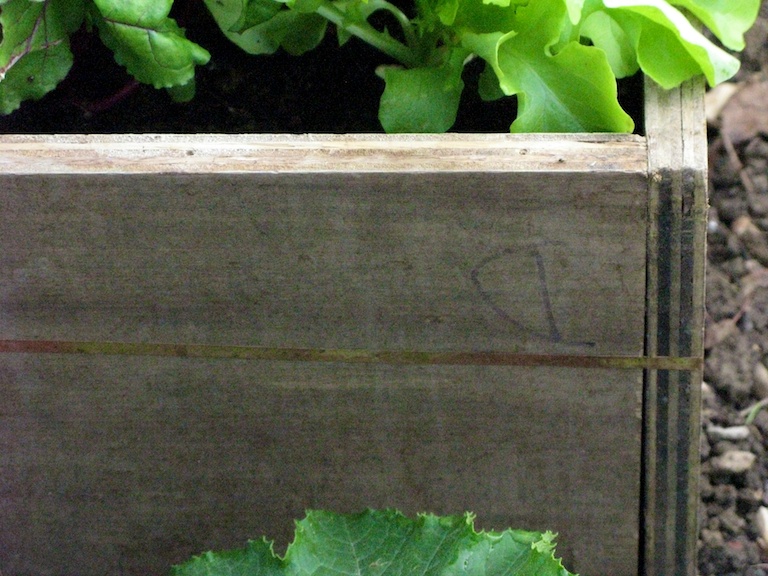
Copper strip used to deter slugs - it works
I put some wooden frames together and sowed carrots, beetroot, spring onions and large onions with a fleece cover, a system that has worked very well. I like the frames, they give protection from wind and put off insects. On the outside of the frame containing the salad stuff I’ve added copper strip to deter the slugs.
I’ve sown some climbing beans in the same way as from experience slugs absolutely love them. I like to see the flowers moving in the wind on the bamboo wigwams. When the beans were first introduced to Europe in the 1400s they were grown just for their flowers, I’m not sure how quickly the beans were found to be good to eat. A big advantage of purple beans I found is they are highly visible and quick to pick.
Poor results
The only real disappointment were the first purple dwarf french beans sown. Out of four rows only three beans germinated, I assume mice got the rest. To reduce the risk of mice getting the seed I sowed more beans in loo roll centres in the conservatory, like I did for the broad beans. They quickly germinated in the warm weather.
I have had a lot more success this year by spot targetting plants reusing milk containers with an adjustable tap. See article
To encourage germination of my fruit I deliberately sow seeds of plants attractive to bees and other pollinating insects throughout the garden:
- borage
- pot marigolds
- love in the mist
- cosmos
- foxgloves
- daises
- violas
- thyme
- pansies
- forget me nots
My seed suppliers:
By the way www.ourfrontgarden.com is the website we write about the ongoing renovation and care of a front garden in a garden city
Val Reynolds Brown, Editor
Positive Feedback for Young Car Drivers and Cheaper Car Insurance

Suburban Boy racer
With young car drivers aged 17-21 being the highest risk category for accidents it’s no surprise that cheaper car insurance is a top priority.
General advice on reducing car insurance premiums includes
- Taking a Pass Plus course
- Having a car alarm fitted
- Parking the vehicle in an off road site
However we think the BEST SOLUTION is the nifty new technological system available from the “one-stop-shop” for young car drivers, Intelligent Marmalade, which provides the greatest chance of more affordable premiums as well as improving safety and skills on the road.
The system is installed in cars purchased on the revolutionary cashback-combined-with-insurance scheme offered by Young Marmalade. It monitors the driving skills of the young person behind the wheel in order to prove good driving practice.
Using the system young drivers are able to review their own driving proficiency. An added incentive to encourage the young driver to take care on the road is the insurance premium for the second year is fixed at the outset, eliminating the unpleasant prospect of increasing premiums.
Nick Moger, founder of Young Marmalade realises youngsters may initially be wary of Intelligent Marmalade because it could be seen as a spying eye – a sort of ‘black box’ which records their every move in the car. But he is certain sensible young people soon realise the benefits of using the system in reducing their risk assessment as far as insurance policies go.
The way Intelligent Marmalade works is that with the system installed in the car the scheme managers, young driver him/herself, and the parents are able to access the Ingenium Dynamics website to review records of journeys made, and thereby assess any risks that may arise, address possible hazardous driving techniques, and generally ensure the young driver is staying safe on the road. It all aids in improving the individual’s driving skills and reducing his/her risk profile as far as insurance goes. It goes a long way to reassure parents too which has to be a huge plus feature. It also adds to the debate on how to drive economically and reduce fuel usage.
This really is the most positive initiative we have ever seen to ensure reduced risk for youngsters on the road and reduced insurance costs.
We can’t see any reason why it shouldn’t be made generally available – after all organisations with a mobile workforce are being encouraged to install the devices, why not the general public? I know a few drivers who would really benefit from having one in their vehicles … no names of course!
Val Reynolds Brown, Editor
Zumba! Zumba! Everybody’s Doing It!
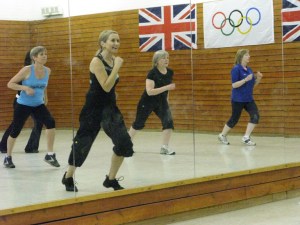
Zumba! Zumba! Class in Welwyn Garden City, Gosling Sports Park
Zumba, a fitness programme inspired by Latin dance, is the newest, hottest way to keep fit. You can attend zumba classes, buy zumba dvds, there’s even zumba on wii and of course there is a range of zumba clothing to choose from
Janet Hamer writes about the Zumba class she attends in Hatfield to keep fit
We baby-boomers never miss a trick to keep ahead of the game, always on the alert for something new to help maintain our ageless bodies. So, bored with the gym which had achieved little except provide me with something else to moan about, I turned up at the studio on Monday morning. Feeling quite nervous as well as excited, I must admit.
I should have taken my cue from the faces of the other women gradually filing in. Did they look excited? No, on the whole they looked more like people walking into the dentists’, resigned but tense. Then the instructor rushed in and we all sidled reluctantly into the centre of the room. After a cheery greeting, we were off – step, step, step, kick, step, step, step, kick. Wow! This looks simple, I thought, and relaxed a bit. The Latin-American rhythm started to work its way into my bones, and I began to dance for the first time for years. The routine seemed pretty simple, and the insistent beat lifted my mood. I became a bit more daring, actually waving my arms in the air, trying for a bit of “attitude” while my legs rushed this way and that. I even noticed some of the words of the song “And a cha cha cha, and a woo woo woo!” I remember this – this is fun! I thought, and that was when I caught sight of my mother in the floor to ceiling mirror.
Face as red as an embarrassed tomato, her expression deeply worried, she was going through the motions of the dance, but the legs which had felt like Madonna’s bore more resemblance to the trunks of the trees outside, and while the arms were certainly waving enthusiastically to the beat, the bingo wings beneath were doing their own thing. Horrified by what I was seeing, my concentration went flying – and so did I, catching the sole of one trainer underneath the other, I tumbled less than gracefully onto the floor. I scrambled to my feet as fast as I could, desperate not only to avoid attracting attention, but also to reduce the chances of being trampled on by the sideways-moving hordes of women, all staring grimly ahead at the instructor for fear of losing their place in the routine.
With a fixed smile to show that I really didn’t care that I’d just made a fool of myself, I rejoined the class, at which point I became aware that something had happened to my legs, which were feeling as if someone had encased them in concrete. I glanced up at the clock, then stared incredulously as it surely couldn’t be right. Only 10 minutes into the class? Another 50 to go?
“Right, ladies, you’ve had your warm-up. Now we’re into the serious workout!” shouted the instructor. She turned on the next track, doubled the volume, and the serious stuff began. At this point genuine doubt set in as to whether I’d make it to the end of this class, or be carried out on a stretcher. Deceptively simple dance steps became a nightmare at four times a comfortable speed and I was reduced to walking through the motions, or even just shifting my weight from foot to foot. Occasionally we were told to shout out or sing, but all my breath was directed towards keeping me conscious, mouth opening and closing like a large cod singing the Hallelujah Chorus.
Just when I knew I couldn’t keep going any longer, it seemed we were into the home strait, ten minutes of slowing the heart-rate and stretching out our poor limbs. The relief of having actually survived was intense, and helped provide the momentum to get out of the building and to the car.
At home again, I checked my reflection for signs of imminent heart failure, unable to believe that exercise so extreme – by my standards – could have left me still intact. But by the evening I was still in the land of the living, and starting to feel just a little bit smug. And as I arranged my aching limbs in bed that night, a tune was replaying in my head, “And a cha cha cha, and a woo woo woo”….
Eight months later, and I’m a regular zumba-goer. Incredibly, I don’t seem to have lost any weight, but my glutes (that’s bottom muscles for those who aren’t au fait with these things) are firm and to the delight of my GP, my BP reading is down 20 points! If you feel like giving it a try, you won’t have to look far as zumba classes are starting up in gyms, healthclubs and school halls everywhere.
Just don’t look in the mirror.
Feature written by Janet Hamer, contributing author
What is zumba
- Zumba is a dance fitness program created by dancer and choreographer Alberto “Beto” Perez in Colombia in the 1990s
- Zumba music is based on salsa, merengue, cumbia, reggaeton and other international music styles and forms
Where can I learn?
- Zumba classes are offered through licensed instructors in more than 110,000 locations in over 125 countries
- Dvds are available for learning at home.
Do I need special clothing?
- No, just wear loose fitting, comfortable casual clothing
- Zumba shoes might be a consideration if you get serious – note heel feature

Zumba shoes
Photography by Pintail Media taken at Gosling Sports Centre, Welwyn Garden City, Hertfordshire
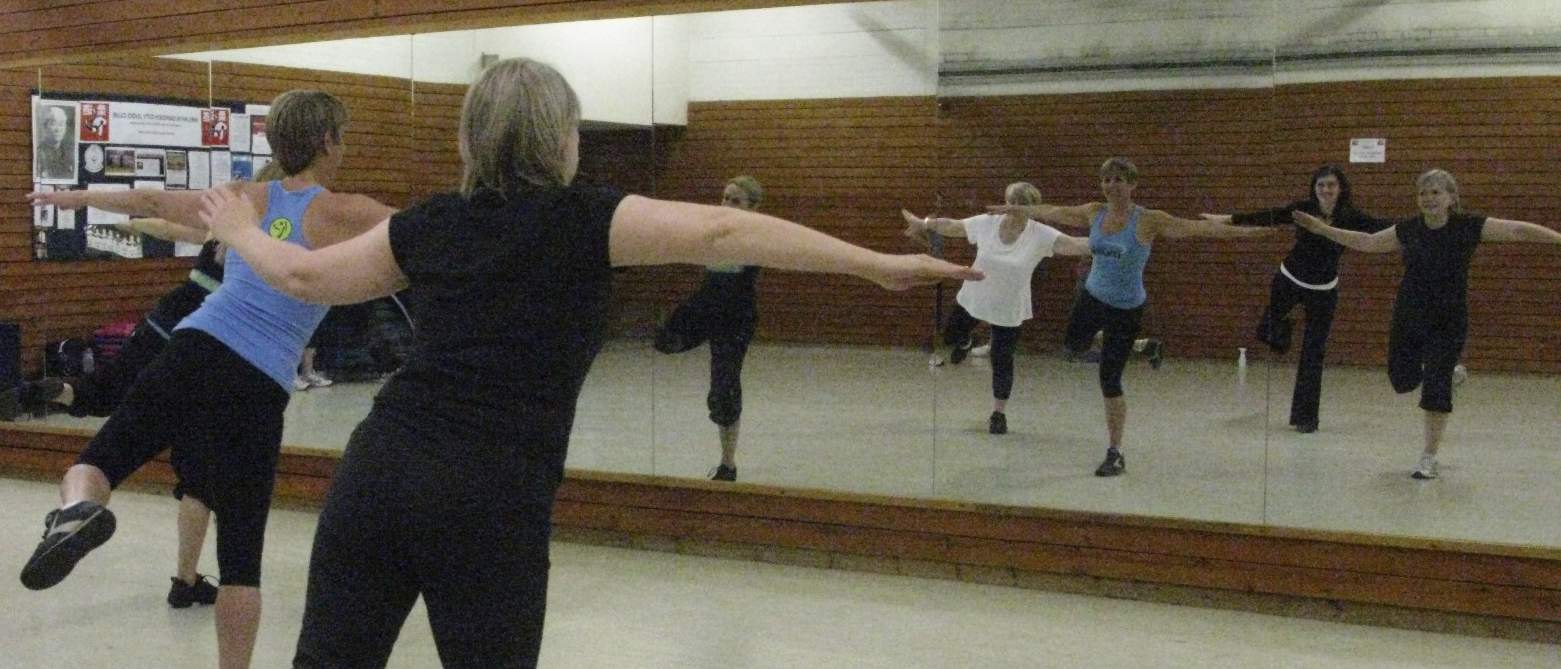
All images were taken at a Zumba class to illustrate this feature It is not the class attended by the writer of this article
See video clips of the class:
http://www.youtube.com/watch?feature=player_profilepage&v=QK919GM7TBA
and http://gallery.me.com/valpintail#100036 on your mobile
or on You Tube http://www.youtube.com/watch?v=Olfgy7idFfU&feature=mfu_in_order&list=UL
Contact Karen at zumbakaren@hotmail.co.uk or go to her website for details of classes

 In Balance