
Handmade Bespoke Cakes with a Jamaican Flavour for any Occasion
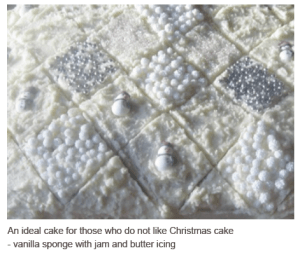 For us www.crumbsnall.co.uk hits all the right buttons, no hydrogenated fats, no artificial flavourings or colourings, handmade. All natural and Sonia McDonnell who makes these yummy items is taking orders for Christmas cakes now.
The ingredients just sound so enticing! Overproof Jamaican rum and brandy, homemade marzipan and icing. All made with natural ingredients, no animal or hydrogenated fats, artificial flavourings or colourings.
Most of the supermarkets have lots of goodies to choose from at this time of year. But there is always a question mark in our minds as to what they are made of.
However, we are definitely going for one of Sonia McDonnell’s Christmas cakes … at least we are sure of the ingredients. And the taste! So moreish and memorable! Do have a look at her website and if you are interested please mention you read about her in inBalance Magazine!
Thanks
Val Reynolds Brown
Editor
PS Sonia is based near St Albans and delivers within a five mile radius.
SIMPLY SUPER Christmas Gifts: 1 An Heirloom
 Our selection of Christmas Gifts is from the many items we have tried throughout the year. Some are very expensive, others more modest and some affordable by most of us.
MOST COSTLY
Knives for Cooking In November a group of us had a Christmas Lunch cooked by the chef named as the World’s Sexiest Chef” by The New York Times. Jean Christophe Novelli. We couldn’t vouch for that of course, but he is very good looking and his French accent added an extra, attractive flavour to the experience.
That apart, the meal was excellent, the turkey succulent, the gravy spot on, the vegs al dente without being chewy. The dessert, apple pie with wonderful vanilla ice cream, was superb. However, the object of the session was not to eat and drink ourselves silly, but to watch Jean in action with his recently launched Ziganof cooking knives.
 Top of the range, these knives are for life, even to pass on to the next generation. With the core made from the best surgical steel and covered with 63 layers of Damascus steel, the hardest and sharpest knives have been created. See more detailed information on the Novelli website. You can see the striations in this photograph
Jean showed us how using just the two knives it is not necessary to have any others. The paring knife is a multipurpose knife ideal for peeling all small vegetables and other intricate work such as deveining shrimp, removing seeds of small jalapeno peppers, skinning mushrooms and all the other delicate jobs in the kitchen.

More Autumn Activities – Making Jelly and Jam
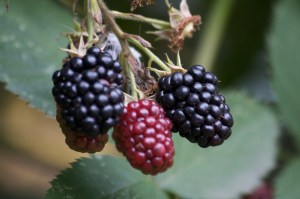
Blackberries
I can remember our mother telling us ‘If you get out there and fetch some blackberries, I’ll make some jelly’. We returned hot, scratched and with purple fingers. It was worth it though when we had the luscious jelly on bread and butter. We were also given it in a warm drink by the fire before we went to bed on cold winter nights. Yum. It was such a strong memory that when I was offered a cutting from a thornless blackberry I was over the moon.
A most undemanding plant, the himalayan blackberry was easy to get to grow well and now needs very little attention apart from cutting out dead fronds after fruiting and tieing in new growth. We have had more than 40lbs this year – possibly reflecting the generous dose of manure we gave it last winter. We decided to make blackberry jelly using the Certo recipe, which takes 3lbs of berries. The longest bit is the straining through a jelly bag that takes ages but resisting the impulse to squeeze it is hard the resulting jelly is worth it, clear and delicious, melting sensually in the mouth.
Grow Nasturtiums for Natural Health

Nasturtium © S Chesterman
Tropaeolum majus also known as Indian Cress
Nasturtiums are bright – see Google page of pictures. They range through yellow-orange to fiery red annuals. This is a plant for which the phrase ‘getting the most out of a plant’ really rings true. Growing nasturtiums is easy. All parts are edible – the flowers, leaves and seeds.
You can plant nasturtium seeds in a bed, border, to climb against a fence, or in containers and hanging baskets. Nasturtiums are easy to grow, in full sun or partial shade. They prefer moist, well-drained poor to ordinary garden soil; too rich a soil results in a profusion of lush green leaves but this is at the expense of flowers. The climbing, trailing and dwarf varieties readily self-seed or the seeds can be gathered and started in pots in the greenhouse.
Good introduction to natural history for children
They’re great for children to plant, not only as the largish seeds are easily held by small fingers but they are fairly quick to germinate and grow. And if you show children how to sow lettuce and radish seeds beside the nasturtiums, there’ll be benefits, both for the plants’ health and the children’s knowledge.
Buds, flowers, leaves and seeds are all edible and quick to pick, contain vitamin C and, belonging to the Cruciferae (mustard) family, also contain a type of mustard oil, benzyl isothiocyanate, with a peppery taste. This oil is not only very useful in salt and pepper-free diets, but possesses antifungal properties and impedes the growth of bacteria and viruses.
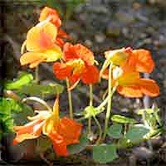
Nasturtiums © Pintail
Originating in Bolivia and Columbia, seeds were brought to Europe from Peru by Spanish conquistadors in the 16th century and hence became considered a symbol of conquest and victory.
Nasturtiums are planted in the spring, once the danger of frost is over. They can be used not only for decoration in the flower garden but also amongst vegetables, as a companion plant for radishes, whilst their pungent smell can be utilised by careful siting, to repel or attract pests.
Use nasturtiums as a natural repellent
Woolly aphis can be repelled from apple trees by planting nasturtiums around the base of the tree, or by spraying affected branches with an infusion made from the whole plant, while a few nasturtiums near tomato plants and broccoli can deter whitefly. On the other hand, blackfly find the smell attractive, so adding a few nasturtiums near broad beans will help to lure them away to the nasturtiums, subsequently nipping off any attacked parts. When frosts appear, the stems can be chopped up and added to the compost heap.
In natural medicine, fresh leaves can be used for combating infections of the urinary tract and the respiratory system.
Using nasturtiums as a natural remedy
Juice from leaves (liquidised and strained) can be of benefit as a remedy for coughs and bronchitis, while liquidising and straining the fresh leaves and stems produces a liquid which will ease skin irritations and painful muscles, and act as an antiseptic for wounds.
Dried seeds can be powdered for use as a mild laxative; or crushed to a pulp, then sandwiched between two layers of muslin or cheesecloth, with a plate above and beneath and placed over a pan of boiling water to produce a hot poultice to bring spots and boils to a head.
The naturally occurring sulphur in the plant can be utilised to make a hair and anti-dandruff lotion. Place one large handful of leaves and a cup of vodka in a wide-necked screwtop jar, cover and keep in a warm place for two weeks, shaking the jar once a day. Then strain it repeatedly until a clear lotion is produced and apply it to the scalp with a cottonwool pad, once or twice a week, ensuring no lotion enters the eyes.
Recipes for nasturtiums
In the kitchen, the flowers will look attractive while adding texture and flavour to food. Those flowers with a long spur at the base, have a drop of sweet nectar giving a sweet/sour flavour. When picking, if you find tiny, black, pollen beetles on the flowers, put the stems in water, cover the whole with a brown paper bag, place, preferably outside, in a dark spot (away from the wind), to allow the beetles to drop off and go elsewhere. Nasturtium petals can be added to omelettes and cream cheese for extra flavour, while petals or the whole flowers can be scattered over lettuce for salads. As an additional salad ingredient, wash some leaves, pile on top of one another, and then roll up, slice into strips and toss in a vinaigrette
Make the vinaigrette from
• 2 tablespoons oil
• 1 dessertspoon vinegar (half the normal quantity due to the strong flavour of the nasturtiums)
• salt and pepper, adding fresh seeds, whole, or crushed with a fork
To pickle the seeds for use as mock capers, pick the seeds on a dry day, wash and then soak them for 12 to 24 hours in a brine of 57g (2oz) salt to 570ml (1 pt) water. Drain and then put them in small jars, filling to 13mm (1/2 inch) of the top. Cover them with cold spiced vinegar in the proportions 570ml (1pt) vinegar, 6 peppercorns, 2 bay leaves and 2 teaspoons salt, or for a more spicy result, replace the bay leaves with a slice of horseradish root, 1 clove and 2 tarragon leaves. Seal the jars and try to keep them for 12 months before using.
For a salt and pepper-free diet, ripe nasturtium seeds can be ground and kept for use in tightly-stoppered bottles. This was done during World War II but for different reasons – pepper was very expensive and sometimes unobtainable. Adding a little salt will improve the flavour.
Among other recipes, the pickled seeds can be added to martinis; relish can be spread on the leaves, then rolled up and loosely tied with a long-stemmed flower – try a relish of cream cheese, chopped walnuts and raisins, or mix tuna, parsley and mayonnaise. Or for a different effect, large flowers can be stuffed with a teaspoon of the cheese or tuna relish.
Add up all these reasons and I think you’ll agree that nasturtiums are certainly well worth growing and utilising.
Sìne Chesterman’s interest in gardening and botany started at an early age with her own patch in her parents’ garden, and learning which plants were natural healers. Brought up with old and tested remedies, and gardening methods, now termed ‘organic’, she still practises natural ways of pest control.
Catering for Coeliacs: Orange and Chicken Hot Salad, Orange Drizzle Cake, Brandy Snaps
 More recipes from Sallie Darnell – delicious cakes designed with coeliacs in mind and an unusual savoury dish – all working with oranges
Oranges are full of Vitamin C, other nutrients are vitamin A (as beta carotene), potassium, calcium and most other vitamins and minerals but in small amounts. Orange juice is a popular drink but in reality eating an orange is better than consuming juice as the membrane contains bioflavanoids which have antioxidant properties.
The many types of orange include Jaffas, mandarins, clementines, satsumas, tangerines, the bitter Seville orange (suitable for marmalade) and kumquats. They can all be used in different recipes both sweet and savoury.

Chicken and Orange Hot Salad
Chicken & Orange Hot Salad
500g/1lb 2oz boneless chicken, cut into strips
1 tabsp olive oil
1 onion finely chopped
1 packet rocket
2 large oranges
2 tsp wholegrain mustard mixed with 1 tabsp olive oil
1 tabsp sunflower seeds or chopped chives
Fry onion and chicken in oil quickly until browned. Add oranges, mustard and oil to warm through
Put rocket onto serving dish and place chicken/orange mixture on top. Sprinkle with sunflower seeds or chopped chives

Orange Drizzle Cake
Orange Drizzle Cake
110g/4oz margarine
110g/4oz caster sugar
110g/4oz rice flour
2 eggs
One heaped teasp baking powder
Topping – juice 1 orange
2 tabsp caster sugar
Heat oven 180 degree / gas 4
7″ square cake tin lined with baking parchment
Put all ingredients in a bowl and using a hand electric mixer whiz together until a smooth creamy mix is obtained. Do not overbeat otherwise you will have a heavy cake. Add approx 1 tabsp milk to mix.
Put mix into lined tin and bake 20mins
When cool remove from tin and sprinkle cake with orange juice, then sprinkle over remaining sugar

Brandysnaps for coeliacs
Brandysnaps – Special recipe for coeliacs
110g/4oz dairy free margarine
110g/4oz caster sugar
2 tablsp golden syrup
110g/4oz rice flour
1 tsp ground ginger
Makes approx 14 brandysnaps
4 oranges – peeled and sliced. For a touch of luxury the slices can be marinated in brandy.
Cream or dairy free ice cream
Heat oven 180degrees/ gas 4
Melt margarine, sugar and golden syrup together in a saucepan, remove from heat, stir in rice flour and ginger
Line a baking sheet with baking parchment and place small spoonfuls of mix on to paper. Make sure these are well spaced as they spread on cooking.
Cook until golden and bubbling approx 10 mins.
Allow to cool for a few seconds and roll over small pieces of plastic tubing. Allow to cool completely. Can be stored in an airtight container for several days.
Fill brandy snaps with whipped cream or dairy free ice cream and serve with the marinated oranges.
This NHS website has some very useful information and Coping with Coeliac Disease is a good reference, available on Amazon

Sallie Darnell
Sallie Darnell – Sadly Sallie died a couple of years ago. Sallie was an inspired and down to earth professional cook whose husband became wheat intolerant. That led her to devise scrumptious and appealing recipes for him. We admired and valued her recipes and are pleased to pass them on, a valuable resource for coeliacs.
Gorgeous, meaty, tasty … Cornish Pasty
Gorgeous, meaty, tasty, great pastry, a good mouthful … just some of the remarks made when we tried the Ginsters Original Cornish Pasty, no, not the chefs! – you’ll see them later!
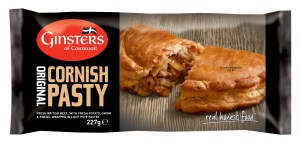
Ginsters Cornish Pasty
Considering the recipe hasn’t changed since Ginsters set up business in 1968, the remarks are testament to its pedigree!
All ingredients used are sourced locally to ensure they are the freshest possible and Cornish. This includes the meat, the cheese, double cream and vegetables.
So, what did we try and what did we think?
We tried the Chicken and Mushroom Slice: Mm, delicious, great pastry, distinctive sauce. One of us would have liked more meat. One mum said it would be a good standby in the freezer when having a hard day and not wanting to produce something substantial for the family. We had a carrot and celery salad to go with it on a hot day, and spinach and broccoli on a cool day. We heated the slices up on both occasions. Overall the women preferred this product.
Steak Slice: Popular with the men, we thought it was a good snack. Heated up it would be a good meal with vegetables. It was very meaty and well seasoned.
Cornish Pasty: This authentic recipe went down well with the men who like a satisfying filling product. Good pastry texture, could really taste the meat, good pub grub! Great heated up and makes a good meal with vegs.
Eaten hot or cold our findings were positive enough for us to be sure to look for them on our next trip to the supermarket. They are good for on the go, to take on picnics and a great fall back if we don’t have much time to cook. In fact, the freezability of all the products made them very desirable indeed, and with the reassurance of quality ingredients they are a knockout!
We’ll be keeping a look out for other Ginsters products especially the new Cornish Bara, 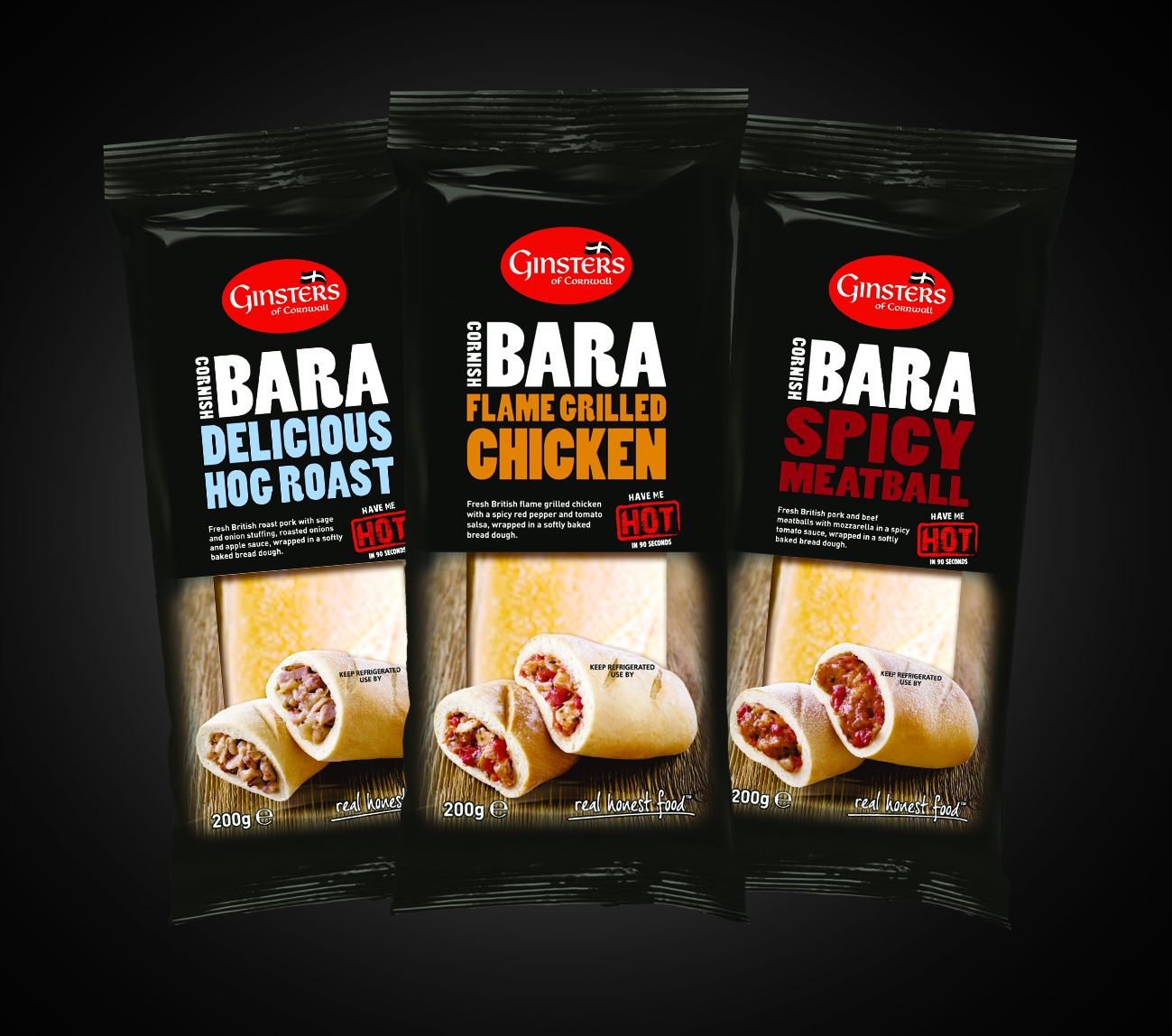 a new creation of the creative chefs at Ginsters.
A cross between a sandwich and a pasty, they are designed to be ideal for eating on the go, without any mess. Can see the kids liking these!

Toby, Graham, Stefan
More information on www.ginsters.co.uk.
Forced Rhubarb – First fruit of the year
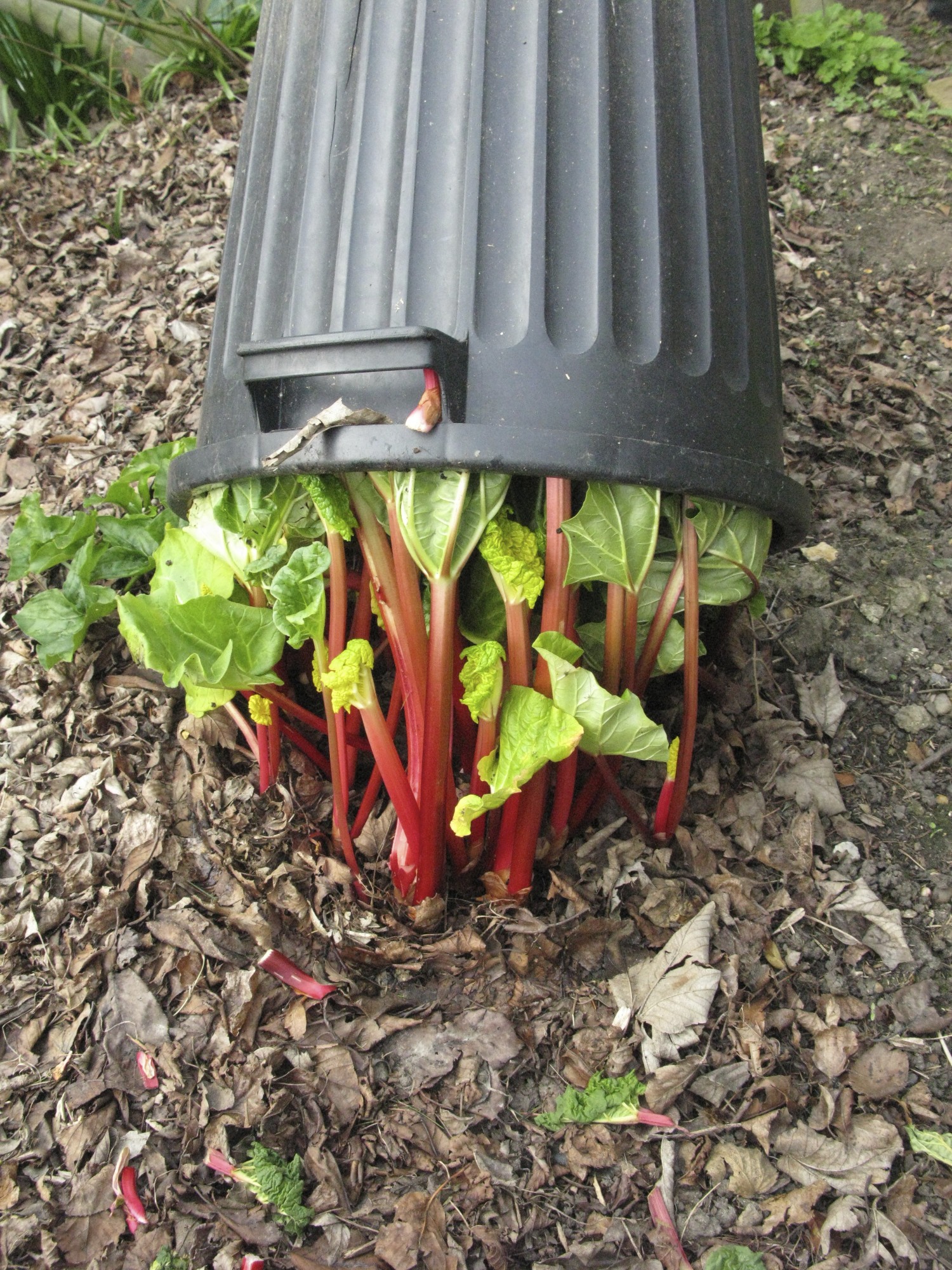
Forced rhubarb ready to cut
It’s so unbelievably easy to get juicy, sweet rhubarb so early in the year. And yet we do it, every year. We just place an old plastic dustbin over the new shoots when they appear in early spring and a few weeks later hey presto there’s rhubarb to pick.
We generally get too much at a time so it is cooked with a little sugar and stored in the freezer ready for later use. Great with yogurt, on cereal, with ice cream. We made some delicious wine one year, it was a beautiful pink colour. We do bottle some, best for us in the smaller jars, a whole kilo jar tends to languish in the fridge for far too long. Anyway as it has a high oxalic acid content it’s best not to eat rhubarb for extended periods. Once a week is probably wiser. We generally go for crumble or pies, with a generous amount of ground ginger to give it that little extra zing.
We have no idea which variety of rhubarb we have, we think it’s been in this garden since the 1930s. But good plants can be purchased from Thompson & Morgan, here is a link to their comprehensive rhubarb catalogue page.
Val Reynolds Brown, Editor
 In Balance