
Wines to Die For … A French Vineyard visit

Domaine aux Moines vineya
Roses planted at the top of each row of vines at Domaine aux Moines, monitor the health of the plants. Black spot and mildew attack roses and vines alike so if either are detected on the roses vineyard owners know it is time to spray – of course only chemicals approved by the French equivalent of our Soil Association
I had tasted some wine from a neighbouring vineyard at a restaurant in Angers a day or so earlier and I was startled by its fresh taste and particularly the aroma, or nose. (I hate using the word bouquet, it seems so affected. Anyway it reminds me of Hyacinth Bucket and all that she stood for!) I was very keen to visit the area where the wine came from and jumped at the chance to taste the Domaine aux Moines wines.
We tasted white wines from Chenin grapes, from several years. Fascinatingly each one differed in flavour and nose. I found them all quite, quite delicious.
To describe wine is difficult for me as I draw back from eulogising in terms of flowers and fruit, nuts etc, but the wine I chose to take away – Cuvee des Nonnes 2007 – did remind me of the scent of Christmas pudding. If you consider the ingredients of that pudding – raisins, nuts, dried fruit, and brandy of course – you may be able to understand my description. It is a mellow wine, reminiscent of a Muscadet, with less sweetness but enough to serve as an aperitif. The Domaine aux Moines website provides food and wine recommendations, very useful indeed.
I realise now I have drunk a lot of indifferent homogenous wines over the years and am really eager to learn more about the differences and the reasons for them. I have to say I think it has a lot to do with the constituents of the soil in which the vines grow. Some years ago now I produced about 100 litres of wine for a family wedding, made from concentrated grape juice of no particular origins other than red grape, and tap water ferried over from Correze. People found it hard to believe I had made it at home in Hertfordshire – it just tasted so ‘French’.
The Domaine aux Moines website gives you a great deal more information about their wines and its production. Much of it is exported to America and Canada, but is available from Les Cave de Pyrene in Guildford UK.
I’m planning another visit to the vineyard in the not so distant future and hope to visit others using the same agriculture biologique methods in the area. We will be encouraging friends and relatives to do the same – we know they will have a great time and be made most welcome.
Val Reynolds Brown, Editor
*Located near Savenniére, Domaine aux Moines is about 8 miles west of Angers, France
London Sketchbook a pictorial guide book – Six to Give Away*
 As I opened the packaging of a copy of another guide to London my thoughts were, well, Not another guide to London! Surely there must be sufficient already, a fact borne out by witnessing tourists of all nationalities armed with guides of all shapes and sizes and in a plethora of languages teeming through the London streets.
But I have to say that this one is just a little different. For a start the London Sketchbook* (see below for giveaway form) looks different, a slim hardback volume in A5 format with a delightful impression of Tower Bridge and the City on the cover. It doesn’t readily sit into a niche – it’s partly a traditional guidebook, partly a guided walks book, but what makes it stand out from the crowd are the wonderful line and wash illustrations drawn by the author Jim Watson and the very personal style of writing.
 For him, creating this book seems to have been a labour of love; he first visited all the places he writes about and then set about drawing them with helpful annotations attached. The colours are really beautiful and all the people illustrated alongside the sights are smiling and happy!
As a seasoned Londoner who spends much of her time tramping through the capital’s street, there wasn’t that much the guide taught me – I have the Blue Guide to London for that, crammed with every fact and figure you could wish for. But as a guide, this little book would be excellent for a first-time visitor wanting to concentrate on the main attractions.
The ten areas broadly covered are
- Central London
- Piccadilly and St James’s
- Whitehall and Westminster
- South Bank to Fleet Street
- The City, Tower of London
- Chelsea
- Knightsbridge
- Bloomsbury and Marylebone
There is no mention of Camden Town with its famous market, Banglatown and the revival of London’s East End. These newly created latter attractions are interesting to visit but offer more a retail opportunity than a historical interest. But in my experience, most visitors who don’t know London come here with the express intention of seeing exactly the sights in this book. And in it they have quirky anecdotes as well as just enough facts to avoid knowledge overload.
It’s as up-to-date as any guide can be; I couldn’t help feeling that had it been written some time later, there would have been a mention of the city’s famous ‘Boris bikes’ because it’s just that sort of information it contains.
I’ve enjoyed browsing through it in the comfort of my own flat, but I can’t wait for my first overseas visitor (I get quite a few of them) so they can discover the wonders of London with the help of this delightful little book.
London Sketchbook is published by Survival Books and available on Amazon
To view the list of winners click here
 Jeannette Nelson, Arts Critic
A bit of a culture vulture, Jeannette enjoys art exhibitions, cinema and classical music, but her main interest is the theatre. For several years she ran theatre discussion groups for which her MA in Modern Drama together with teaching skills stood her in good stead. She prefers to concentrate on the many off West End and fringe productions as well as that real treasure of the London theatre scene, the National.
*********************************************************************
*WE HAVE SIX COPIES TO GIVE AWAY TO IN BALANCE READERS:
To enter complete the form below. One entry per household. The draw will be held on 18 August 2011 so entries will be accepted up to and including 17 August 2011.


WHY PEOPLE MISS FLIGHTS

Watching the flight information board
The most common reasons and some practical advice to help ensure you catch your flight
Travel website missedaflight.com has carried out research to find out the most common reasons why travellers miss their flights and provide some helpful hints and tips on how to avoid the most common reasons for missing a flight:
Problem: Mis-read and mis-spelt documents
SOLUTION: On receipt of your documents check the name, spelling and flight details are correct.
Problem: Flight schedule changes
SOLUTION: Check your latest paperwork for any changes. Remember the times on the ticket will be written using the 24 hr clock.
Problem: Traffic delays caused by road accidents and road works or engineering works on railways
SOLUTION: Check with the RAC and AA for any delays, accidents or engineering works that may affect your route and if need be find an alternative route.
Problem:
Denied permission to travel due to incorrect passport or expired passports.
SOLUTION: Review your passport in advance to ensure it still has six months to run after your return to the UK. Also remember to pack your passport in your hand luggage.
Problem Essential medication needed urgently but packed in the hold luggage which has been checked–in
SOLUTION: If your bags do not join you on the aircraft you run the risk of missing your flight. Make sure any prescribed medication is packed in your hand luggage just in case you need it before the flight departs. Most airports have a chemist but they may not stock your particular prescription.
Problem Too late to check-in
SOLUTION: Add more time – Airports are big and somewhere you might not be familiar with. Never under estimate your timings, make sure you have left plenty of time to get from the airport car park, (which may require a transfer service) to the terminal, and into the correct check-in zone. Remember there may be a queue at check-in. Make sure you know which terminal as some airport have more than one and airlines can also fly out of more than one terminal.
Problem Not allowing enough time to get to the departure gate once checked-in
SOLUTION: Airlines are requiring their passengers to arrive at the gate for their flights earlier than in the past. Plan on getting to the gate at least 30 minutes before your flight departs and remember some gates can be as much as 25 minutes away from the main retail area. If you’re late they won’t wait.
Problem Flights not connecting
SOLUTION: Connecting flights are the most difficult to negotiate. If there is no nonstop flight, then build extra time into your itinerary for the connection. Don’t take the connecting flight that gives you just 45 minutes to change planes at a busy airport; instead, ask for a 2 to 4 hour layover to make the connection. You may not be able to do this online, instead call your travel agent or the airline directly. Please remember if you have bought two separate flights your connection is never guaranteed.
Having missed your flight first speak to the airline to find out what you need to do. If they can get you on a later flight get in touch with your hotel to make sure they don’t give away your room.
Next contact your travel insurer to let them know the situation and find out if you are covered for any additional costs you may incur as a result of missing your flight.
Airline companies vary in the way they will treat your booking if you miss your flight. A good idea is to visit the forums on the internet.
Our experience has been to always have decent insurance cover. Finding that insurance will take time and effort. In the long run it is not expensive and could save you a deal of trouble and extra expense. Reputable insurance companies will give you an emergency phone number to call – just remember to take it with you!
Have you had a bad experience? Want to tell us about it? Or, have you had a good experience? Tell us about that too!
Val Reynolds Brown, Editor
Perfect Travel Guides when Visiting Sweden
 The DK Eyewitness Travel Guides never seem to let you down. These glossy, full colour books are a must for travellers who focus on the culture of cities as they are easy to navigate and packed with information. Indeed, so much is there that you will probably notice things you’ve missed on the flight home!
 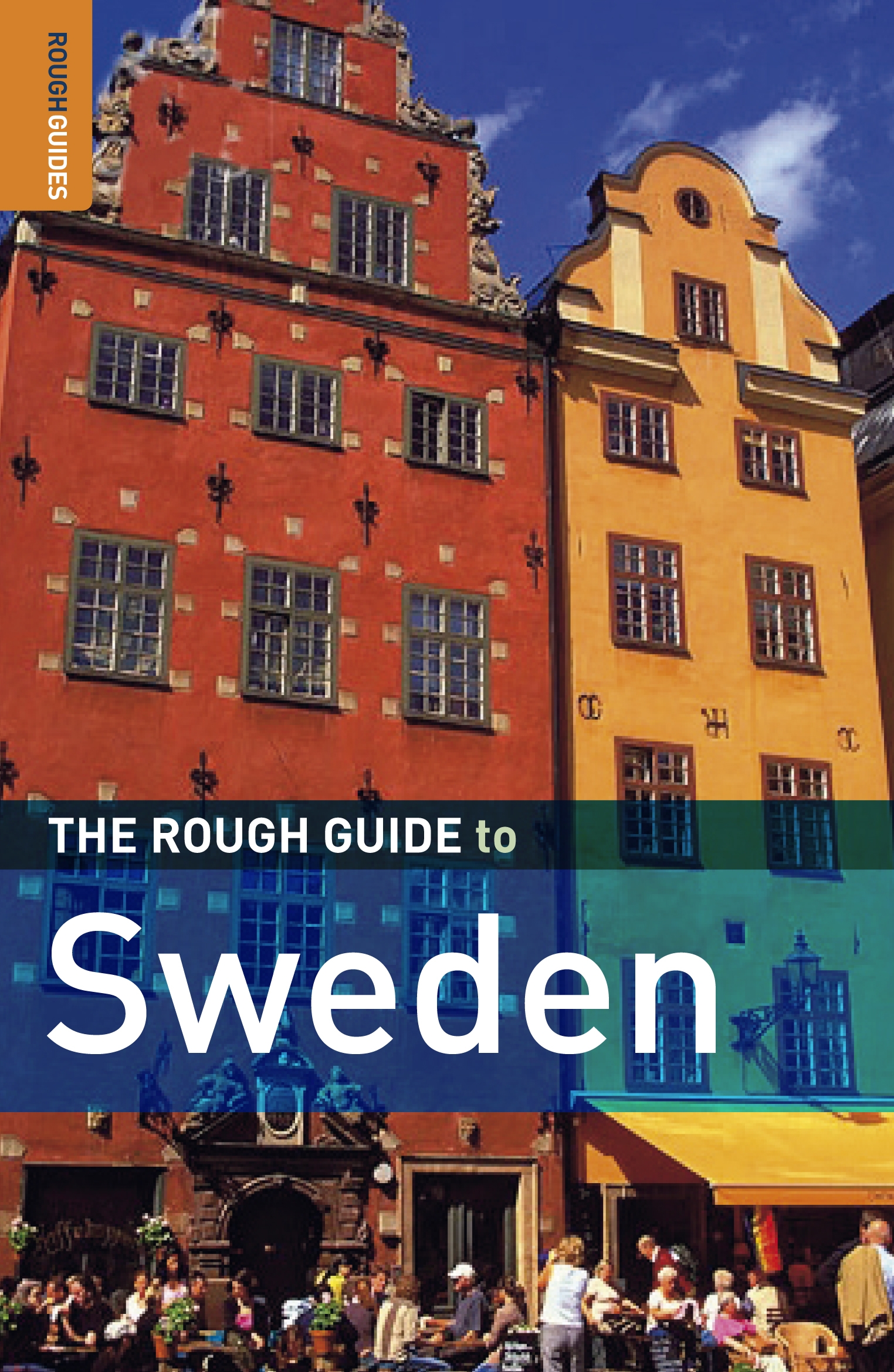 Step up the Rough Guide series, less a factual list of objects in museums and hotels and restaurants listed in order of price; more a traveller’s musings to be shared with future travellers. The Rough Guide to Sweden has, by nature of its content, only a section on Stockholm, but it complemented my other guide book well. And it had far lengthier exposes on other elements of Swedish life and culture which made for great reading and gave a far greater insight on the Swedish way of life.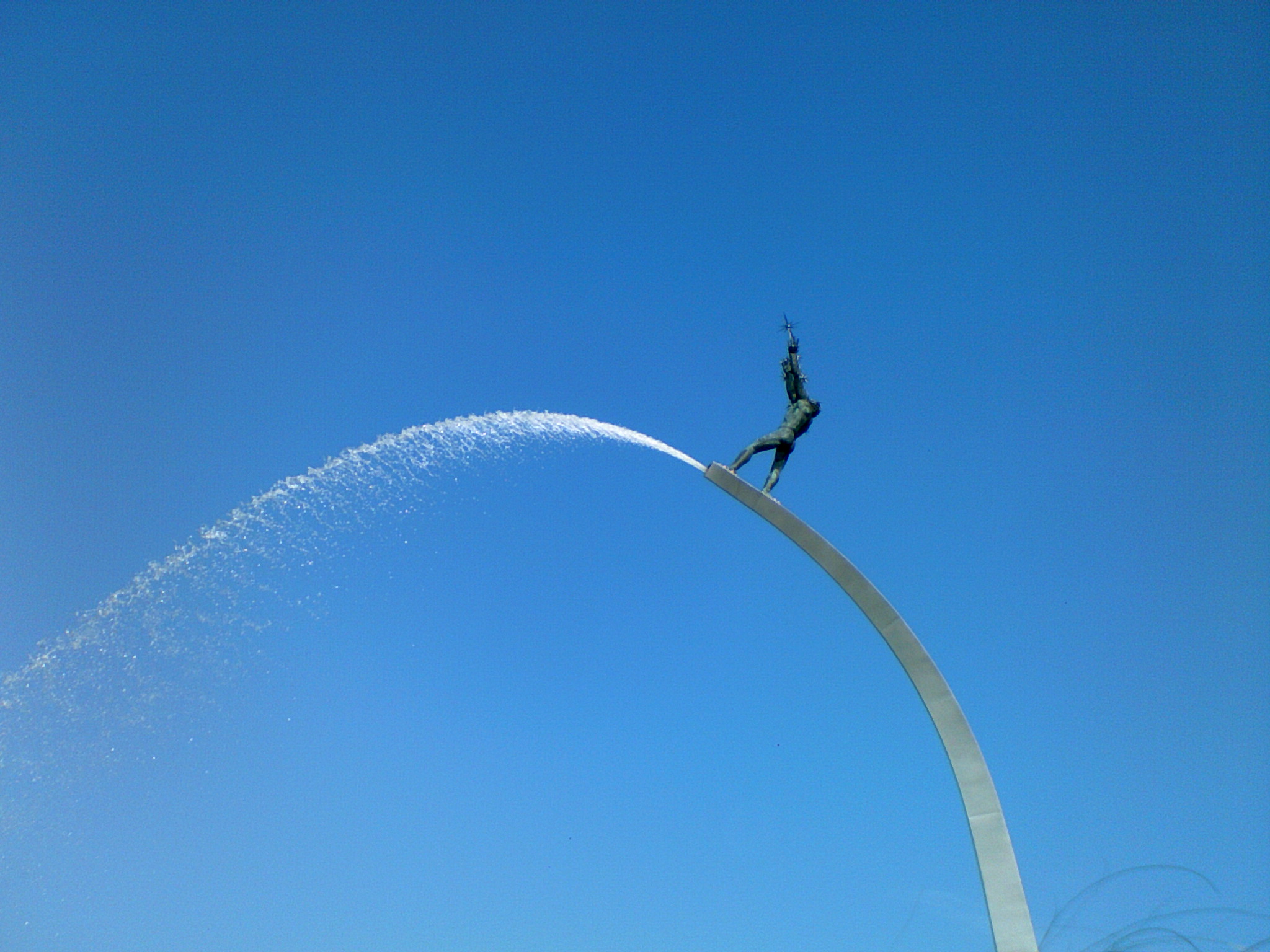
Arc Fountain by Carl Milles, Stockholm Estuary © Jeannette Nelson
 Arts Critic A bit of a culture vulture, Jeannette enjoys art exhibitions, cinema and classical music, but her main interest is the theatre. For several years she ran theatre discussion groups for which her MA in Modern Drama together with teaching skills stood her in good stead. She prefers to concentrate on the many off West End and fringe productions as well as that real treasure of the London theatre scene, the National.
Turtle Watching in The Oman

Turtle tracks in sand
Based in Singapore-style city Dubai in the Arabia Gulf, Dave Reeder took advantage of a quick trip into the more relaxed and green Oman, specifically to watch the centuries old story of giant turtles coming ashore to lay their eggs
Was it a good trip?” my friends all asked, the week after I’d had three days out of Dubai. Yes, it was a great trip. Oman is stunningly beautiful, even though we only saw a hint of it!
So I escaped the steel and glass city of Dubai, thanks to the local natural history club. A team of about 12 of us went in convoy, from one side of the Arabian peninsula to the other – from, if you look at an atlas, the Gulf to the ocean facing East Africa.
Anyway, this late-40s New Zealander turned up in her giant V8 Landcruiser and we set off, to rendezvous with the rest later. In the way of expats, she was easy to talk to and she drove us to the Omani border where I took over the driving of this 2-ton monster.
Fast down the coast, we turned inland about 30km before the capital Muscat, rising up through the mountains on great roads. Because it was the Islamic festival of Eid, most locals were with friends and so the traffic was light. We then ended up late afternoon on the edge of the Wahaybah desert – which stretches across to Saudi Arabia and is serious Bedouin country – looking for the desert camp. Seems, however, that there is a political battle between Bedouins and government on the ‘proper’ name of this part of the desert, with the Bedouin destroying signs that have the ‘wrong’ name on them!
Of course, the supplied map was dreadful and our mobiles didn’t work. Finally, with sunset approaching we found a rough track into the desert and, after about five miles, found the camp – up a hillside in deep desert sand, which somehow I got the Landcruiser up!
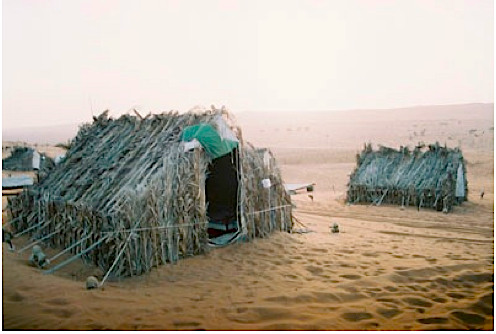
Frame tents covered in fronds and branches of Barasti
Simple place. A-frame tents covered in barasti (a kind of interlocking frond and branch arrangement), with hard metal beds inside – memories of school! – with a communal eating area and a shower/toilet block. The whole group then assembled piles of drinks and nibbles on the back of a 4×4 and we drank our way through to the dinner bell at 7pm. Food was simple, buffet style, with rice and dhal, boiled eggs and sausages, bread and salad. Breakfast much the same.
Plus a small Bedouin troup of musicians who, sadly, didn’t speak any English but tried to help me understand the oud – the Arabian lute – and how to play it.
An early night for all, as we were tired and wanted an early start. Next day we went in convoy to a serious wadi (a dry channel that floods after rain) way up in the mountains – five miles up rough tracks, some 20 miles off the main road. Up and up we went, finally reaching the end of the road and the start of rolling over giant boulders and the like. But so green! And, when we reached the end of the road, there was a walk up through falaj (irrigation) systems and, finally, two enormous pools of clear water – about the size of two Olympic swimming pools! Unfortunately, because of the holiday, it was stuffed with more people than you can imagine – many brought up first in taxis and then, after decamping, on the back of small trucks.
But it was a magical place and the peace and beauty of it out of season must be amazing. So unspoilt. Wonderful.
Then, a drama. A German family with us had twisted their front wheel coming up, so it was at a serious angle to the vertical. With far too many cars on this twisty road, they somehow got it out, with us taking the luggage and a mother/daughter combo. Serious 4×4 guys made light of it – they were ready to drag it out of there, if necessary!
Anyway, they set off for the nearest town (some 90km away) and we headed for camp two about 150km south of Muscat. The coast there is stunning and we ran between it and the mountains across a kind of lunar landscape with the sun low in the sky and the most amazing colours everywhere. Finally we found the camp – similar to the others but with wooden-sided tents. Same kind of food and then, at 9.30pm, we set off in convoy to the beach.
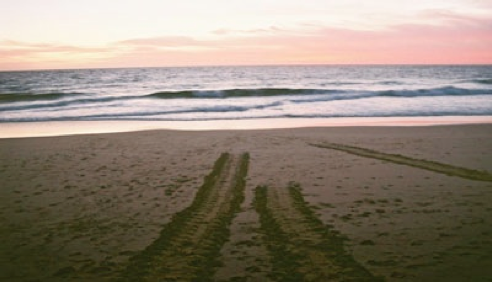
Turtle tracks on the beach
This area has some 20,000 green turtles laying every year which means, despite the remoteness, that it gets popular. The night before, at the main beach, there had been some 1,000 visitors! So our guide took us to a smaller, more remote beach. Serious instructions in the car park – no lights, no shouting, no flash – and we set off following the three Omanis who found the most suitable turtles on the beach.
The beach is dark but you get used to the light, until a crowd of dumb people keep turning the lights on and off. Seems their children were scared and so started bawling and shouting and demanding to be taken home. Talk about destroying the atmosphere … But we could see the tracks up the beach, the mounds that the cover the eggs and then, by magic, a turtle in its self-dug pit laying eggs the size of golf balls. Maybe 120 of them.
Once they’re at work, they’re very placid and didn’t seem to mind us. Even co-operating when the guides unwound a fishing net that had got caught around a flipper of one busy laying.
The moment was incredible. Such a privilege to see, under a black sky filled with more stars than I’ve ever seen – no ambient light, of course. So we went on and they showed us other nests and other turtles. Apparently they take about three hours to climb the beach above high water mark and dig three holes, the first two as decoys to fool the foxes that come at night for the eggs. About the same amount of time to lay and then the same again to rest before hauling back down to the water. The hole is about two feet deep and bigger than the turtle, obviously; then, when covered over, the mound is about a foot above the surface.
After an hour or so, we went back to camp and to bed, woken at 4.30am to go back down again. This time, with the faintest hints of dawn in the sky, we were told it was a “free beach” and we split up, watching the last couple of turtles make their way back to the water. And then the treat of seeing tiny hatched turtles emerging from earlier mounds – they take five or six weeks to incubate. They’re tough! About the size of a cigarette packet, they had to be held really tightly else they’d squirm away. We spent maybe half an hour gathering up any we could find and putting them into the water – with dawn, seabirds were starting to gather for this feast …
And that was the most amazing thing. Out of every hundred, maybe two survive and to know that I helped, in whatever small way, to try and improve those odds was such a wonderful feeling. And then to watch the sun come up over the ocean and the colours of the cliffs behind changing. Wow!
After breakfast, a couple of cars set off on convoy up the coast on a rough road – here an ancient tomb visited by Marco Polo on his way back from China, there a giant sinkhole. Finally, we got to Muscat and hotel apartments. After welcome long hot showers, we were ready for more exploring. We went round the old part of Muscat with its 16th century Portuguese forts.
 Then, next morning, a run up the coast through tiny fishing villages. Part of the Eid celebration involves new clothes and everywhere we saw small children rushing towards the car in their new finery, faces full of smiles. Omanis are so friendly. Then we cut in land and headed for the Emirates border at Al Ain – a stunning run through the mountains with loads of fertile little oases and beautiful small villages. Lunch in Al Ain in an archaeological site of bronze age settlements and then home.
What a trip! For those who imagine that the Middle East is all desert and no wildlife, this kind of trip could be such an eye-opener. Traditional ways of life. Loads of greenery, often in the most unexpected places. And wildlife from birds and camels, to turtles and whales – strangely, the whales off the Oman coast never migrate, like all other whales. Why would they want to? It’s a paradise …
Dave Reeder Consultant Editor
Peace and Tranquility in County Durham

Durham Cathedral from the embankment of the River Wear
A surprisingly peaceful break from the rush and bustle of London at any time of year
Durham is just three hours from London on the train. There for the first time in September we were due to specifically experience some of the events arranged for Peace and Tranquillity Week and we were seduced by the city’s atmosphere and eclectic architecture. Small but perfectly formed was a description that sprang to mind.
We were bowled over by the centuries old city centre with its cobbled streets, mysterious alleys – referred to as vennels – home to quirky shops and off beat craftspeople. Beautiful bridges, the reflections of the cathedral in the river, a castle that has been in continuous use for 900 years.
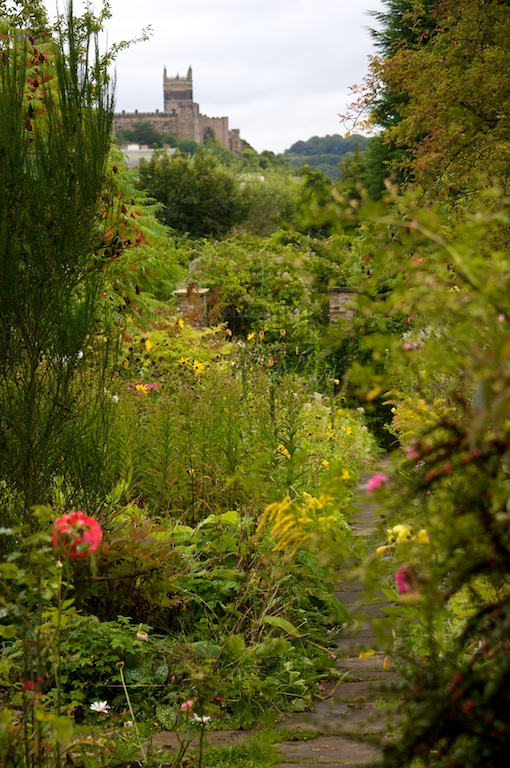
View of Cathedral from Crook Hall, an architectural gem
One architectural gem we discovered in Durham was Crook Hall. A few minutes walk from the city centre this medieval building with eleven themed gardens in four acres, is perched on a hill overlooking the cathedral.
A popular venue for keen gardeners, the gardens are a joy. 300 year old pear trees grow on the southern walls of the oldest buildings, they were originally planted to ward off disease and have fruited for all that time. An ongoing programme of events at the Hall for all ages is listed on their website.
We wanted to see more of Durham but ran out of time and instead went onto Teesdale about 25 miles south west from Durham.
We stayed in Northside Farm Retreat near Barnard Castle. Northside Farm is in the process of developing as a centre for visitors to chill out and participate in courses such as tai chi, meditation, yoga. Access to a 14 metre swimming pool with sauna and steam room offers a relaxing environment.
There is a self-contained cottage that sleeps 6. Very well appointed, it had everything needed to make our stay very comfortable indeed, that included the dishwasher, which gave my husband a welcome rest from sink duty!
Gail and her husband Adrian have achieved a huge amount in the short time they have lived there and Gail’s ambition now is to grow lavender on the 100 acre farm.
Nearby was Barnard Castle once the ancient capital of Teesdale. Now a lively market town with a very long high street it has a weekly Wednesday market and the occasional farmers market on Saturdays.

The River Tees runs through Barnard Castle, Co Durham
Last inhabited in 1630 and much raided for materials to build in the area, Barnard Castle itself is now a beautiful ruin with wonderful views of the countryside and the river Tees. Turner was inspired to paint it.
On the edge of the town a most beautiful building in the style of a French chateau is Bowes Museum. Famous for one of the finest art collections in the country, it opened to the public in 1892 and has the most comprehensive collection of historic clothing and decorative arts in the UK.

Tai Chi in the grounds of Bowes Museum, Co Durham
One of the eighteen events in the Peace and Tranquility week on offer was Tai Chi tuition at Bowes Museum. Two groups worked in unison in front of the museum, a memorable experience in such beautiful surroundings. A couple of beginners were surprised and pleased to find they experienced a sense of wellbeing during the session. Our roast beef Sunday lunch at the restaurant was absolutely excellent with an excellent red wine. Followed by an absolutely fab creme brulee … we couldn’t ask for a better finish to our visit.
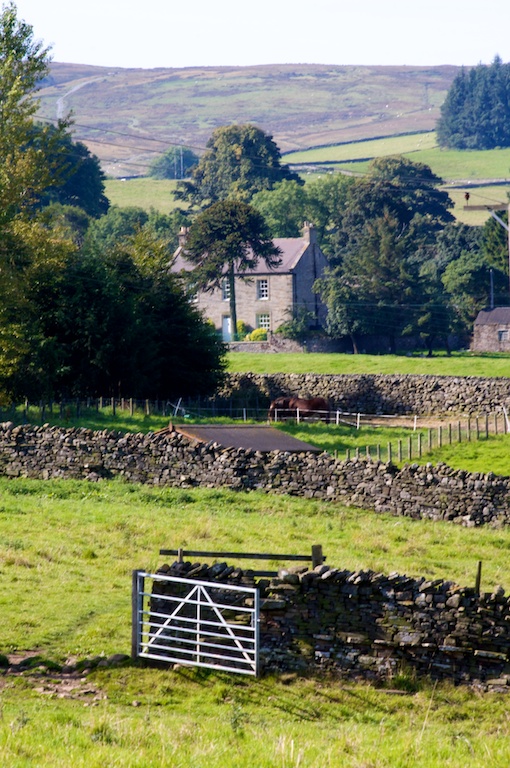
One of the locations for our painting tuition, Co Durham
Another group activity we joined was a two hour painting tuition session with Brian Brown who with a wry humour steered the event along with consummate ease and was able to coax interesting creative results from the group, each with different levels of expertise. He runs similar courses in Durham and France.

Stanhope Agricultural Show, Co Durham
By sheer chance we came across an agricultural show in Stanhope. It was outstanding in what it offered in two days, from dog obedience, welsh ponies, donkeys and hunters, open sulky racing, cossack trick riding and much more on Saturday. Sunday included Clydesdale horses, side saddle, bale pulling competition, wife carrying competition … and on it went. Astoundingly these shows are held all over Teesdale and are enormously popular. We loved it, a very friendly and happy event.
About 15 miles north east of Durham we made a visit to Seaham Hall, the leading luxury hotel and spa resort in Northern England which culminated in a wonderful massage in its Serenity Spa. Linked to the hotel by an intriguing underground walkway, The Serenity Spa, designed by Jocelyn Maxfield, has won a string of international awards and has become one of the UK’s top destination spas as voted by Best Spa for Style by The Sunday Times and Best UK Spa Destination by Conde Nast Traveller.

African decorative art, Seaham Hall, Co Durham
The decor of the four star Michelin Hotel is a fusion of East and West and takes most visitors by surprise. We were quite taken with the airiness and space given to the whole property and the signature pieces of antique and artisan decorative art. In fact a very similar feel and style to the world famous Saxon Hotel in Johannesberg.
Afternoon tea was a magnificent end to our visit, finger sandwiches, good strong coffee, delicious tea, sausage rolls to die for and we won’t go on about the cakes except they were plentiful and delightful!
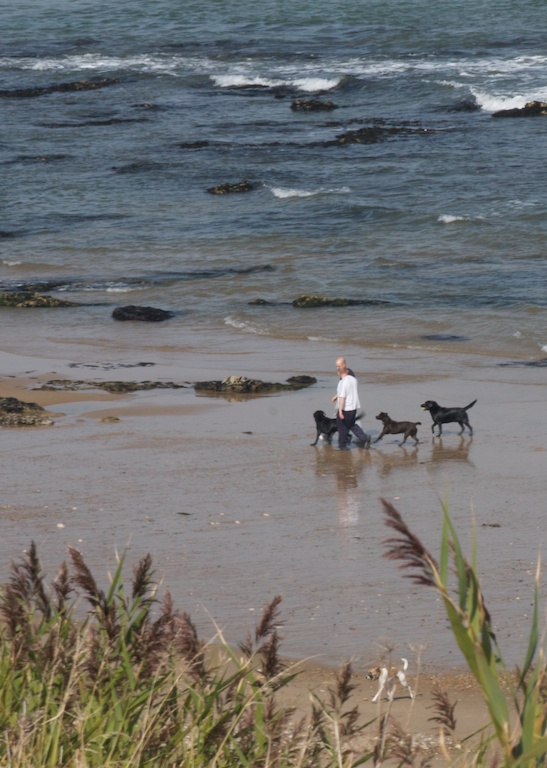
Seaham Beach, Co Durham
You can join the Durham Heritage Coastal Walk at Seaham where the beach is sandy, great for kids. The Coastal Walk goes from Sunderland to Hartlepool but you can leave your car in the car park at the end of Lord Byron’s Walk and meander south as far as you desire. The coast has had a lot of investment to restore its natural beauty from the devastation of industrial use throughout the twentieth century.
We seized the opportunity to join an hour of photographic tuition on Seaham beach with Graeme Peacock a well known photographer in the North, who was absolutely excellent – he runs similar courses throughout the year, full details are on his website.
Raby Castle was open free of charge on the Sunday we visited, as part of Heritage Open Day. The grounds were dotted with herds of deer, cattle and sheep and we were able to wander down the paths at will. The gardens were beautiful particularly the ponds and some ancient yew hedges. There is a splendid tearoom and shop. Events are arranged through the year, details on their website,
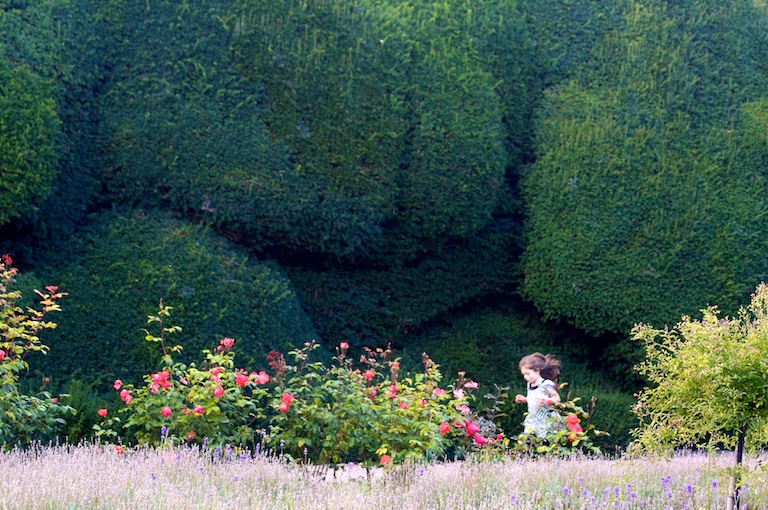
Magnificent Yew Hedge at Raby Castle, Co Durham
Our last evening was spent at Headlam Hall, a rather beautiful 17th century country house with beautiful gardens surrounded by rolling farmland. We crammed in a lot in the time we had and we really wanted to stay longer.
With substantial financial investment in the spa it attracts members both locally and further afield. Opened three years ago they have five full time therapists and one student trainee offer an impressive range of treatments. Membership includes access to the gym and swimming pool.
We loved the warm welcome and friendly atmosphere of the staff and stayed for dinner in the Orangery. The food was absolutely excellent, from the tiny appetizer cup of leek and potato soup, through to the chocolate creme brulee. Restraint flew out of the window and we toasted the meal with a glass of champagne! Very highly rated, it was a wonderful end to an excellent five day stay in County Durham.
There is so much to see and explore in County Durham but we particularly wanted to see much more of Teesdale. High Force, a waterfall with the highest unbroken fall of water, 21 metres, in England. Great practice for photographers! It’s the beginning of the wilder area of the Pennines and one we want to see on our next visit.
Of course events don’t just happen in the Peace and Tranquillity week, have look at the Visit County Durham website for programme details. Why not visit next year? Or before that if you can’t wait for a real treat – we can’t!
WEBSITES
Visit County Durham www.visitcountydurham.com
Crook Hall www.crookhall.co.uk
Teesdale www.teesdalediscovery.com
BrianBrown http://myspace.virgin.net/brianbrown.uk/durham.htm
Northside Farm Retreat www.northsidefarmretreat.co.uk
Raby Castle www.rabycastle.com/HOD.htm
Graeme Peacock www.graeme-peacock.com
Seaham Hall and Spa www.seaham-hall.co.uk
Durham Heritage Coast www.durhamheritagecoast.org
Headlam Hall www.headlamhall.co.uk
Stanhope Agricultural Show www.stanhopeshow.com
All photography copyright © Pintail Media
Cheap Flights, Flights for 50p …
Reflection of plane on cloud with Brocken Spectre © Pintail Media
We loved this YouTube clip sent in by a reader … hits several nerves. Very, very funny.
Val Reynolds Editor
Reflection of plane on cloud with Brocken Spectre
The same effect is often seen in mountains
© Pintail Media
Johannesburg – Saxon Boutique Hotel & Spa
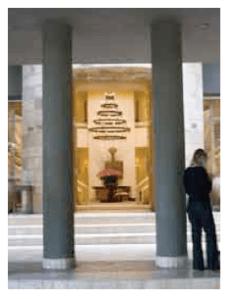
Main entrance to the Saxon Hotel
Bowling along in an airconditioned minivan on a sunny afternoon following 10 hours on a plane was a relief. The clouds seemed bigger and sky bluer than I had seen for a long time. Unfamiliar flowers on the roadside and birds in the trees were intriguing and exciting.
Given the opportunity to experience treatments on offer in some spa hotels in South Africa we were looking forward to a period of relaxed living in five star surroundings. We were not disappointed.
Starting in Johannesburg, with its reputation for violence and unrest seemed a little unwise, but we didn’t see anything untoward, although we found the number to street traders converging on the car at traffic lights somewhat unnerving. Anyway we had to start somewhere and why not experience what is considered the best of the best, the Saxon Hotel in the Sandhurst section of the Santon area.
We faced a high security entry procedure with a high perimeter wall, a 24 hour guard and a sliding door so heavy it rumbled along its tracking into the wall itself. I felt a bomb would have trouble making an impression on it.
Black ibis on the lawns
The gate opened onto a six acre park with a meadering drive, past groups of grey ibis busily searching for insects in the grass – quite a broadleaved type of rye grass, different from our fine fescue rich mixes, arriving at a magnificent entrance. It was easy to see how the management could promise peace and security for their highly placed guests.
In the huge entrance hall with its stunning central light fitting to match were dozens of examples of African artefacts – wooden carvings, masks, even doors, which featured on walls, tables, and floors in all directions, and through to my bedroom, well suite actually, with its beautiful masks and carvings to gaze at.
I had a balcony with a table and chairs overlooking the park and trees, a pillared bed, beautiful bathroom with a fantastic bath – oh what a wonderful soak to be had after our eleven hour journey! I would have liked to stay in the suite for a couple of days just to enjoy the luxury of it all and try out some of other facilities. It had a table I could work on big enough for a meeting of six people, with internet access, a huge television, round sound hifi system, lots of sofas and, luxury of luxury, a master pad at the door and by the bed to switch all lights and devices off in one fell swoop, or choose any combination you want. You can see images on the website.

Pool area
Saxon hotel is ideal for travellers of all kinds wanting the opportunity to relax and restore their energy. There is plenty to choose from including swimming pools and lounging areas in the most beautiful surroundings, an excellent spa centre, as well as a fitness centre.
I chose the unique sound therapy in the hotel spa, where tibetan bowls and gongs were all around the room. Whilst I lay on a water bed, bowls were placed on my chakra points, then gently tapped, the sound resonating through my body. I fell into a dream state going to a far away place while other bowls and gongs were softly sounded continuously. I really resented coming back into the here and now at the end of the session!
I’m unsure whether this could be considered an authentic African therapy, but then remembering the recent rapid development of spa centres of all kinds in South Africa it’s only to be expected that many treatments on offer are strongly influenced by others from around world. The 60 minute treatment was R690 (approx £49). You will find more details on the website that includes the spa brochure.
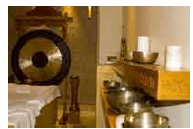
Spa with sound therapy treatment
Saxon was originally a private home and it was there Mandela stayed when writing his book A Long Walk To Freedom. The site was later transformed into the luxury conference venue and hotel it is today.
Oprah Winfrey and Bill Clinton have been notable visitors. I can see why Saxon says captains of industry, heads of state and even royalty can be offered a quality of service beyond reproach and with international chefs providing fantastic tasting food, beautifully crafted, there is everything here to enjoy and relax into.
Lunch was beautifully presented and cooked, if rather long in delivery. The dessert was especially good, a soft layered meringue with a cheesecake-like base. When faced with a beautifully laid out table with cutlery and glass to die for, my anticipation of an excellent meal is heightened. We were not disappointed, it was stunning.
It is possible to experience the hotel’s spa as a day visitor. If you happen to be in Jo’burg with a day or so to spare do consider a visit – whatever you decide it will be a memorable occasion.
We flew from London Heathrow to Johannesburg with South African Airways www.flysaa.com 0870 747 1111 Flights LHR to JNB approximately £700 return, including taxes
South African Tourism, www.southafrica.net Information/Brochure Line: 0870 1550044
Saxon Boutique Hotel and Spa 36 Saxon Road Sandhurst Johannesburg www.thesaxon.com Tel: 00 27 11 292 6000 Voted the World’s Leading Boutique Hotel for the last six consecutive years
The Saxon is an all-suite hotel – we each had an Egoli suite R 5,400 per room per night (approx £385) Presidential Suite R11,300 per room per night (approx £810) Platinum Suite R21,000 per room per night (approx £1,500) Rates include breakfast and use of the hydro facilities at the spa.
Editorial and Photography Val Reynolds Brown August 2008
Zimbali Coastal Resort, Durban SA

Fabulous plants at Zimbali
Descending a steep hill we could see and smell the sea! How exciting after a period in the bush and veldt.
What might be called a coombe in Gloucestershire, this massive 700 hectare valley leading down to the sea was a forest of plants, both planted and indigenous, and so extensive that guests at the top used golf buggies to get to the beach, and those on the beach definitely needed the buggies to get their lunch!
It was a sumptous setting for a golf resort where you can buy property overlooking the golf course and with views of the sea. It was a real knock out and the hotel interior was fabulous.
We had arrived for a spa treatment with lunch to followand we were delighted to have the opportunity to experience such wonderful facilities which, when we enquired, are not that expensive. A week with a golfing partner could be achieved within a modest budget, remembering the UK pound is very strong at the moment.

Clubhouse interior
The spa centre offers an extensive treatments list, many of a decent length, that is an hour or more – the ancient Bali ritual, given to princesses for 40 days prior to their wedding day, takes two hours! As our time at Zimbali was limited by our need to get to Durban airport within a few hours our choice of luxury timeconsuming treatments was limited. However we did manage a full body bamboo massage of an hour. Traditionally used by various African groups, including the Tswana it has only recently been added to the Zimbali list. I only wish we had had a few more days to enjoy yet more luxury, traditional treatments.
Our lunch was memorable, we ate at a table overlooking the forest and the sea beyond. Good food, good wine and a merry group is a great recipe for happiness! Pity we had to up sticks and rush off to the airport to catch our plane en route for Jo’burg and home. Ah well, another time perhaps, it was that good.
August 2008
Val Reynolds Brown, Editor
 In Balance