
Call The Midwife author, Jennifer Worth’s Fight with Eczema
Jennifer Worth, author of Call the Midwife – currently a hugely successful TV series – sadly died just before filming began in 2011.
Some seven years previously she had contacted me offering a feature about the severe eczema she had developed at the age of fifty five and her efforts to relieve it.
The first line was startling: Severe eczema doesn’t kill you; it just drives you insane.
Written in much the same style as her books the feature chronicles the development and relief of the eczema she experienced.
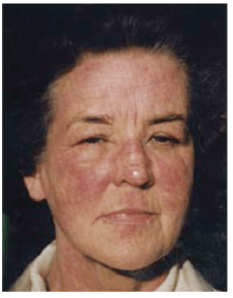
Jennifer Worth at the worst of her eczema
I developed eczema for the first time when I was fifty five. Within three short months two tiny patches of eczema on my legs had spread to cover my entire body. It is the itching that drives you mad. I would scratch the whole night long until I drew blood, then it would begin to hurt, but the pain was infinitely preferable to the itching.
Dermatologists could only offer steroids. These helped a little, but the itch came back worse than ever afterwards. I was in despair, until I happened to eat a Chinese meal, which gave me food poisoning and I did not eat for four days. During that time my eczema virtually cleared up. When I started eating again it came back. The cause was obvious – food allergy.
The dermatologists told me it was coincidence, as in their view there was no connection between food and eczema. But I was not convinced and searched every path for the offending foods – with no success. Let me say here that most people fail if they try to identify food allergies alone. It is too complex for the layman and you need an allergy specialist, a qualified nutritionist or at least a reputable book to follow.

Eczema on Jennifer's arms
I was fortunate in finding the right specialist, who guided me through a strict elimination diet. Once we had found the right diet, my skin cleared within three weeks. Then he led me through the challenge/reintroduction phase of the diet, which was very difficult and troubled by many pitfalls. After about six months, my skin was completely clear and I felt wonderful. Incidentally a side effect of an elimination diet is a surge of good health. Eliminating dairy products, gluten, yeast, sugars and chemical additives from your body can only be beneficial. We all eat the wrong things and suffer for it.
My specialist advised me to have a course of Enzyme Potentiated Desensitisation (EPD) because, he told me new allergies would develop. I have had EPD – see below – twice a year for nearly ten years and my skin remains perfect, for which I thank God every day of my life.

Clear of eczema
The charity Action Against Allergy asked me to write a book about my experiences detailing the elimination diet given me by my specialist. I was asked for this because there is so little information available on this subject. My book Eczema and Food Allergy was published in 1997 and featured in the Nursing Times, the Sunday Telegraph and the magazine Here’s Health. It sold out of two editions and last year they decided to republish online – see below.
This is a very controversial subject. Doctors, dieticians and even the National Eczema Society will state that eczema is not connected to food. But I have proved that it is.

Jennifer after treatment
In this article, I have deliberately refrained from giving any advice to eczema sufferers about diet. It would be rash and irresponsible for me to do so, because the subject is far too complex for a short article. But my book contains all the details necessary for a successful elimination diet and includes many addresses for specialist treatment. My heart goes out to anyone afflicted with severe eczema. I know the suffering involved and it is beyond description. If my experience can be of help to anyone, I am well pleased.
Many people have asked me what EPD is; how does it work, where can you get it, and what does it cost? It is a very subtle and complex medical process, and I give below a brief summary of what it is about.
Enzyme Potentiated Desensitisation is a form of immunotherapy developed by Dr. L. M. McEwen in the 1960s and now used worldwide. It has the potential to desensitise anyone to the allergens to which they are allergic. This includes foods, dust, animals, birds, grasses, pollens, moulds, and many chemicals. An ultra-low dose of allergen is used – approximately 1/1000 part of a routine skin-prick test – combined with the natural enzyme beta-glucuronidase which enhances, or potentiates the desensitisation process (thus we get the rather curious name). It is particularly effective for the treatment of eczema, and will work quickly for children – the younger the child the quicker it will work. It takes about 2-5 years to be effective for an adult.
EPD is only available on the NHS at the Royal Homeopathic Hospital (60 Great Ormond Street, London W1N 3HR). Dr Michael Jenkins, Consultant Allergist will see patients via a referral from their GP. EPD has a ‘Specials’ licence. This means it is accessible only to suitably accredited doctors to supply on a ‘named’ patient basis. The doctor must be a qualified MD trained in allergies, and who is specially trained to hold a licence to administer EPD.
There are about twenty such doctors in the country, and their names and addresses can be obtained from the British Society of Allergy and Environmental Medicine, PO Box No. 7, Knighton LD7 1WT Phone: 01547 550378; Web site: www.bsaenm.org.uk. This is a charity which will give you the address of your nearest medical practitioner of both EPD and Neutralisation. An adult course of EPD, lasting about five years, will cost around £2000, but far less for a child. This may seem a lot, but, believe me, EPD is worth a second mortgage.
In my book ‘Eczema and Food Allergy’ I devote two chapters to EPD, which gives far more detail than I can give here.
Eczema and Food Allergy is available in print from Merton Books www.mertonbooks.co.uk
Jennifer Worth, born 25 September 1935 died 31 May 2011, was a nurse, midwife and ward sister from 1954-1973.
Her book Call the Midwife about her years as a district midwife in the slums of London’s East End is published by Orion Books There is an interview with Jennifer talking to Danuta Kean about writing her books on that web page.
Two more books Shadows of the Workhouse and Farewell to the East End make up a trilogy. All three books have sold almost a million copies and stimulated a publishing subgenre of nostalgic true life stories.
You can watch a short video interview where she talks about her nursing career and working with the nuns in the East End of London.
Val Reynolds Brown, Editor
What is it about chilli that polarises opinion?

Supermarket chillies
A quick survey of friends and colleagues showed that more men than women like chilli.
Some men were quite adventurous and consumed meat dishes containing large amounts of chilli. We wondered whether there would be any taste in the dish apart from chilli, so why such a volume?
We guessed it might be the endorphins that are stimulated, so chilli gives a kick, or perhaps it’s something else …
Another question is what positive benefits are there to be gained?
Searching Google with chilli+stomach we found:
- Chili stomach ache
- Chili stomach cancer
- Chili stomach ulcer
- Ghost chili stomach pain
- Chilli and stomach ulcerts
- Stomach pain from chilli
- Stomach pain after chilli
- Chilli burning stomach
- Chilli and stomach cancer
We didn’t go any further.
We then entered chilli+stomach+healthy and found many websites with advice for all kinds of ills, including cancer, from all kinds of self-appointed experts.
So, what should the discerning enquirer do?
Our advice is to follow the old adage of a little of everything does you good and, if you like chilli make sure you which find out which are the most reliable websites to refer to.
Websites providing reliable health information we recommend are:
- www.nhs.uk
- www.mayoclinic.org – very interesting
- www.bma.org.uk
- General advice on using the web … www.gosh.nhs.uk/EasySiteWeb
www.justanswer.com/health is a website where you can pay to talk to a doctor direct
Val Reynolds Brown, Editor
Luscious Chocolate Recipes
Ok, you’ve guessed! We’re total chocoholics and we want to share our love with you! Here are some more of our favourite recipes from Menier, the cooking chocolate we couldn’t be without.
Mexican Pinto Bean, Sweet Pepper & Garlic Soup with an Avocado Salsa – Serves 4-6 Ingredients:

Mexican Pinto Bean, Sweet Pepper & Garlic Soup with Avocado Salsa
Soup 5 tbsp olive oil 1 medium red onion, finely diced 6 garlic cloves, crushed 1 fresh red chilli, de-seeded and finely chopped 1 red pepper, de-seeded and roughly chopped 1 yellow pepper, de-seeded and roughly chopped 1 tsp ground cayenne pepper 1 tsp ground cumin 1 tsp ground coriander 1 tsp smoked paprika 2 tbsp tomato purée 1 tin pinto beans, drained 2 tins chopped tomatoes 400ml vegetable stock 35ml red wine vinegar 1 tbsp white sugar 30g Menier dark chocolate 1 tsp salt Large pinch ground black pepper Avocado Salsa 1 ripe avocado ½ red onion, finely diced ½ red chilli, de-seeded and finely chopped 1 tbsp fresh coriander, finely chopped Juice of 1 lime 2 tbsp extra virgin olive oil Large pinch salt To make the soup: Heat the olive oil in a medium/large saucepan. Once hot, add the onions, garlic and red and yellow peppers, stir and cook for 6-8 minutes, or until the onion and peppers start to colour and soften. Add the fresh red chilli and all the ground spices – cayenne pepper, cumin, coriander and smoked paprika – then gently cook for approximately 15 – 20 minutes. If it starts to catch on the bottom, add a little water. Add the red wine vinegar, sugar and tomato purée, stir and cook for a further 5 minutes. Add the pinto beans, chopped tomatoes and vegetable stock. Bring to the boil then lower the heat, cover and gently simmer for about 30-40 minutes. Meanwhile, to make the avocado salsa, peel, stone and finely dice the avocado. Place in a bowl and combine with the red onion, chilli, coriander, extra virgin olive oil and lime juice. Season with the salt, and set to one side. To serve: Ladle the soup into 4 pre-heated bowls and top with a good spoonful of the avocado salsa, a dollop of sour cream, and a drizzle extra virgin olive oil. The soup should be served piping hot.
White Chocolate, Raspberry and Lime Drizzle Cake Serves 8 – 10 Ingredients:

White Chocolate, Raspberry and Lime Drizzle Cake
Lime Syrup: Juice of 5 limes Zest of 1 lime 140g golden caster sugar Cake Mix: 220g golden caster sugar 225g unsalted butter, softened 4 medium-sized eggs Juice of 2 limes Zest of 1 lime 25g ground almonds 210g raspberries 100g Menier white chocolate, chopped 250g self-raising flour For the cake: Pre heat oven to 160°C. Line the base and sides of a 22cm square cake tin with greaseproof paper, then butter the paper and set aside. Cream the sugar and butter together until light in colour and texture, then gradually beat in the eggs. If they start curdling, add a little flour, folding in gently. Add the lime zest, followed by the rest of the flour and the ground almonds. Next, add the lime juice one spoonful at a time, as you don’t want the mixture to be too wet. (It needs to be dropping consistency.) Gently fold in ¾ of the white chocolate and the raspberries, then pour the mixture into the lined cake tin. Give the tin a little shake to ensure that the mixture spreads evenly to the corners. Place the rest of the chocolate and raspberries on top. Bake for 40 minutes or until the cake is firm to touch. To make the lime syrup: Put the lime juice and sugar in a small saucepan and place on a moderate heat. Cook for 3-4 minutes or until the sugar has dissolved, then remove from the heat and add the lime zest. As soon as the cake comes out of the oven, prick the cake all over with a metal skewer, then pour the syrup all over the top of the cake. Leave for 1 hour so that the cake absorbs all of the syrup. To serve: Remove the cake from the tin, then gently pull away the greaseproof paper. Cut into wedges and dust with icing sugar.
Hot Chocolate Mocha – Makes 2 generous cups Ingredients:

Hot Chocolate Mocha
100g Menier dark chocolate 400ml whole milk 20ml double cream 1 tsp vanilla essence 1 cinnamon stick 50ml strong coffee 2 tbsp orange blossom honey For garnish; 2 cinnamon sticks (optional) Put the chocolate in to a heatproof bowl and set to one side. Place the milk, cream, vanilla, cinnamon stick, honey and the coffee in a saucepan and bring to the boil. Once boiling, set aside to steep for 30 minutes. When the milk mixture has steeped, place the saucepan back on the heat and bring back to the boil. Remove the pan from the heat and let the milk subside. Pour a small amount of the hot milk and cream over the chocolate and stir to a smooth consistency, then gradually pour in the remaining milk, stirring gently until the chocolate is completely melted. Return the chocolate mixture to the saucepan and reheat gently. Don’t let it boil at this stage or it might split. Remove the saucepan from the heat and whisk to a foam using a balloon whisk or a cappuccino frother. Pour into pre-warmed cups or heat proof glasses and garnish each with a cinnamon stick.
More Cooking with Chocolate features:
Cooking with Chocolate – Gifts for all occasions
Cooking with Chocolate – Sweet and Savoury
Chocolate Cake for Coeliacs
Menier Swiss premium cooking chocolate is available in major supermarkets nationwide with a RRP of £1.19.
Val Reynolds, Editor
Washing Hands – Hygiene Matters

Washing hands
The importance of hand washing should never be under estimated. I wondered how many people picked up on it following Global Handwashing Day and was interested to see some feedback from the UK public.
Are we worried about hygiene?
It would seem we are, especially when visiting, and leaving, a public toilet. Some ingenious if rather ingenuous tactics are adopted by some people to avoid touching doors in the loo and on leaving. However, it’s all very well making sure you use a piece of toilet paper to hold the door handle, or wait until someone enters the toilet area to hold the door open for you, or failing that, keeping the door open with your foot and or elbow. But if, for instance in a pub, you go straight to the bar and eat a few peanuts from a bowl, just how many people have also taken some peanuts and did they wash their hands … Apparently e.coli has been found on nuts, crisps, even olives in open bowls on bars.
And what about cash machine keys, card readers in supermarkets, keyboards on computers, hand rails on buses and the Underground, the list goes on. You could say a ha’peth of dirt doesn’t do anyone any harm, but it isn’t just any old dirt we’re talking about. We’re concerned about campylobacter and salmonella bacteria both likely to cause a gastric infection and easily passed on through fecal contamination.
When out and about some people take a small container of antiseptic gel. It is a token gesture towards hygiene as it is not entirely effective. So it’s always wise to wash your hands before you get to eat anything. That’s a great restraint on your appetite – you would be off to wash your hands before you ate that luscious cake, cup of coffee and biscuit in the coffee shop of even the irresistible chocolate bar at the checkout! You would have to wait until you got home to wash your hands after touching the keypad in the supermarket and the trolley or basket handle!
Hand washing techniques
John Oxford professor of virology thinks people don’t wash thoroughly, or long, enough – singing two verses of Happy Birthday – to yourself – is a good guideline. Just rinsing your hands under water won’t wash the germs away. They need soap to slide off your skin.
And it isn’t just after visiting the toilet. It is important to wash your hands if you have been handling raw meat and poultry.
Increasingly public toilets have devices to avoid hands touching infected areas. For instance taps that operate when you waving your hand in front of a sensor, another sensor dispenses soap. The new blow driers from Dyson are becoming more common, so are ultraviolet light hand cleaners.
Did you know copper door handles kills MRSA?
Whether or not a recent study suggesting one in six mobile phones contaminated with fecal matter is statistically anomalous, the findings were interesting. Does it mean people use their phones in the loo? It wouldn’t surprise me. I remember a student who had been on work experience had transcribed an audio tape in which she distinctly heard the dictator using the loo. Luckily it was of the watery kind … Her experience had us in stitches!
So, while diarrhoeal disease remains one of the world’s biggest killers in developing countries and handwashing saves lives, here it will help prevent a nasty stomach bug. In the UK it is more likely that children pass on stomach bugs. They have a habit of constantly putting their hands in their mouth, and love to handle pets and all that entails.
Did you know there are wipes available that kill 99% of harmful bacteria?
 The Global Handwashing Day website has a lot of very interesting statistics and background information.
So should we really be worried about hygiene? The consensus is yes, but keep it in proportion. Do you agree?
Val Reynolds, Editor
How to get rid of the winter blues – Positivity breeds success

Kelly Holmes at De Vere Village Wirral 30 Oct
The clocks may have just gone back and the world economy may still be teetering on the brink, but a positive mind and a healthy heart can beat the winter blues, according to Dame Kelly Holmes.
The Olympic legend has been sprinting between Manchester and Liverpool this weekend inspiring over 3,000 locals across four De Vere Village hotels with one clear message: ‘Positivity breeds success’.
A leading psychology academic also believes evidence suggests that winter-induced mood swings can be fixed with a bit of physical activity.
Dame Kelly, who designed De Vere Village’s fitness plans for all ages and fitness levels, believes that people shouldn’t give up on exercise just because the days are getting shorter.
Dame Kelly said: “Times are hard for many people right now, but fitness really is one thing that people should not give up on. It’s not just about the mental kick of looking good, it’s about the energy you have and the happiness you feel as a result. The better you feel, the better you’ll perform in whatever you do – whether it’s a day job or a sports event.
“Most important is a positive attitude. Despite all my injuries I still knew what I wanted to achieve.”
Dr Jason Halford, head of experimental psychology at University of Liverpool, said: “People who exercise are shown to be more motivated and this can help on many levels. Exercise is shown to produce a positive uplift in mood. Given that the ‘winter blues’ are just a bad mood, exercise can elate you to avoid that sense of feeling depressed.
“Obviously people over-consume food or alcohol if they are depressed or have a low mood, so one could argue that things like exercise could elevate people’s mood and make them less likely to indulge in unhealthy behaviours.
“Exercise is one means of reducing stress, it helps with sleep patterns by relieving nervous tension and reducing levels of cortisol – a hormone that can cause heart disease and psychological problems, such as anxiety and depression.”
Gary Davis, chief executive of De Vere Village, said: “Unlike regular hotels, we drive a third of our revenue through our full blown fitness centres with cardio gyms, fitness classes and pools with an average of 4,000 local members at each location. We believe that our clubs are a benefit to the local community and positive fitness for the family definitely improves lives and attitude.”
Dame Kelly added: “My work with De Vere Village is all about inspiring people and getting people in the right space so fitness can make a real difference to themselves. And with the Games less than a year away, there’s no better time. I think it’s absolutely vital that the North takes some of the glory too and doesn’t let London scoop up all the benefits. There are plenty of great things to do, so it’s essential we get sports fans up to Liverpool and Manchester too.”
“Although I grew up on a council estate in Kent, I always had a sense that anything was possible. My Saturdays were spent working in a sweetshop, so being able to spend my weekends inspiring people now and sharing some of the things I’ve learned along the way is fantastic.”
More information please see www.village-fit.com
Kate Campbell says: I have a love hate relationship with exercise. When I haven’t been active for a while the effort of restarting is so huge that it seems impossible to get going again. However, what works for me is to just do a minute one day! Then 2-3 minutes the next, and I generally find (because I am an on/off exercise person) that because I begin to feel better – clearer head, less aching in my limbs, I want to get on with longer sessions. The aim is an hour of course, that’s what I usually achieve – swimming, or walking, or cycling. At the moment it 5 minutes max! But I haven’t had a single headache in the last three days … so I’m off to work on the turbo trainer again today. Don’t know what a turban trainer is? It’s what serious cyclists use to warm up before racing events … I use the one my husband bought to keep exercised during the winter months. It’s the same as an exercise bike really, but I use mine outside in a covered way so I can imagine I’m outdoors! With my iPod I can listen to music, podcasts or best of all brush up on my French with a Teach Yourself French Course! It all works together, I promise you!
Kate Campbell, contributing author.
Wines to Die For … A French Vineyard visit

Domaine aux Moines vineya
Roses planted at the top of each row of vines at Domaine aux Moines, monitor the health of the plants. Black spot and mildew attack roses and vines alike so if either are detected on the roses vineyard owners know it is time to spray – of course only chemicals approved by the French equivalent of our Soil Association
I had tasted some wine from a neighbouring vineyard at a restaurant in Angers a day or so earlier and I was startled by its fresh taste and particularly the aroma, or nose. (I hate using the word bouquet, it seems so affected. Anyway it reminds me of Hyacinth Bucket and all that she stood for!) I was very keen to visit the area where the wine came from and jumped at the chance to taste the Domaine aux Moines wines.
We tasted white wines from Chenin grapes, from several years. Fascinatingly each one differed in flavour and nose. I found them all quite, quite delicious.
To describe wine is difficult for me as I draw back from eulogising in terms of flowers and fruit, nuts etc, but the wine I chose to take away – Cuvee des Nonnes 2007 – did remind me of the scent of Christmas pudding. If you consider the ingredients of that pudding – raisins, nuts, dried fruit, and brandy of course – you may be able to understand my description. It is a mellow wine, reminiscent of a Muscadet, with less sweetness but enough to serve as an aperitif. The Domaine aux Moines website provides food and wine recommendations, very useful indeed.
I realise now I have drunk a lot of indifferent homogenous wines over the years and am really eager to learn more about the differences and the reasons for them. I have to say I think it has a lot to do with the constituents of the soil in which the vines grow. Some years ago now I produced about 100 litres of wine for a family wedding, made from concentrated grape juice of no particular origins other than red grape, and tap water ferried over from Correze. People found it hard to believe I had made it at home in Hertfordshire – it just tasted so ‘French’.
The Domaine aux Moines website gives you a great deal more information about their wines and its production. Much of it is exported to America and Canada, but is available from Les Cave de Pyrene in Guildford UK.
I’m planning another visit to the vineyard in the not so distant future and hope to visit others using the same agriculture biologique methods in the area. We will be encouraging friends and relatives to do the same – we know they will have a great time and be made most welcome.
Val Reynolds Brown, Editor
*Located near Savenniére, Domaine aux Moines is about 8 miles west of Angers, France
New Cereals for Coeliacs – In Our Basket

Bread is not an option for coeliacs
It has often been suggested that many people could benefit from a gluten-free diet for many reasons. Gluten is a sticky starch (gliadin) found in wheat and related cereals such as barley and rye but absent in rice and other related cereals. Most doctors agree that bowel problems are mainly genetic. Ancient Greeks gave its name, Coeliac.
The problem arises from an immune reaction to an enzyme in the starch, causing an inflammation in the small bowel, damaging the food absorption process.
Symptoms may range from extreme intolerance – excessive tiredness to extreme bowel problems (IBS) – to a barely noticeable effect.
Interestingly tennis player Novak Djokovitch claims his stamina has improved since switching to a gluten-free diet. Djokovitch has sworn off pasta, pizza, beer, French bread, Corn Flakes, pretzels, empanadas, Mallomars and Twizzlers — anything with gluten, since last year. And with the results he achieved in 2011 who’s to say he is wrong!!!
Choco Crispies made by The Groovy Food Company is one of our favourite gluten free breakfast foods. These really are crispy and yummylicious as they describe on the box! Specially made for coeliacs in a totally and utterly dedicated gluten free environment they are free from wheat, dairy, colourings, dodgy additives and sweetened with Agave Nectar.

Special flakes - a maize and rice mix © Pintail Media
Others in the range include Cornflakes, Frosted Flakes and Special Flakes made from a maize and rice mix.
We have tried them all and have to confess we liked the Choco Crispies best … we blame our chocolate addiction!
The Groovy Food Company cereal collection is available throughout major multiples and health food stores nationwide and online at: http://www.freefromandfinefoods.co.uk. More information on www.groovyfood.co.uk
The Coeliac UK website gives a great deal more valuable information.
Budapest In Balance – A trip to a beautiful city

Szechenyi Bath and Spa Budapest
Five years ago I decided to implement a plan that had been brewing in my mind for a long time – to take a group of In Balance readers on a city break and to experience Hungarian thermal spas.
We booked into Hotel Margitsziget on St Margaret’s Island which had its own thermal spa and a range of treatments – many only available with medical approval, although we had the choice of a range of massages and beauty treatments.
 Only having three days to visit, we needed to get moving – and fast! For the group briefing we consulted our copies of the excellent Budapest City Guide, generously provided by Bradt travel guides. In constant use every day, the small size made it an ideal travelling companion in pocket or handbag. Update: It is now in its third edition. The maps fold out – great improvement with points of interest numbered and cross referenced. Physically it has doubled in size. Much improved and very, very informative.

Buda on the hill and the famous Chain Bridge © Pintail Media
One of the first things we learned is that the city is a misnomer. The reality is two cities – Buda and Pest, one each side of the river. With so much to see it was a smart move to arrange a coach tour with a guide. Driving around Buda, we were really very impressed: the historic city has been well restored and, at night, the main buildings are lit giving the city a fairytale backdrop. Great views and a real treat for the photographers.

Pest from St Margaret's Island © Pintail Media
Across the Danube, Pest was another story altogether. Flat and built up, many of its buildings have a stucco finish which was broken almost everywhere giving the city a tired and run down feel. Work on an extension to the Metro was causing traffic havoc.
Overall, the two cities had a melancholy beauty. Everywhere we saw cruelly pruned trees and piles of rubbish in the streets, awaiting collection.
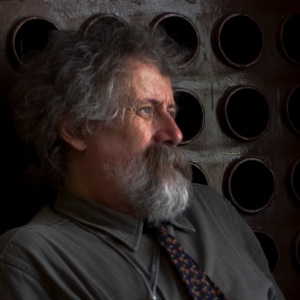
Local in Budapest coffee shop
The people were great though! In our hotel they were really helpful and friendly, although a little shy and slow to approach us at first. But we’d made a great choice for a relaxing base – for example, Lucia, one of the group, quickly forgot which day it was she was so chilled out! The thermal baths were excellent, clean and relaxing.
Interestingly Budapest had become a medical tourism centre, visited by many from the UK for the good value for money dental treatment. (You might like to read our later feature concerning dental treatment abroad). Around the hotel, we got chatting to several visitors from the UK with positive stories to tell about their experiences. Cosmetic surgery and laser eye treatment were popular.
Many of the old state run services, like health, still worked extremely well. Transport was very reliable and easy, with frequent trams, double coach buses, taxis, metro, bikes and river boats, a single ticket system linked all public transport. We found the ticketing regulations complex and struggled at times to travel legally!
Apart from our own hotel, we spent some time in Hotel Gellert – a general cry for coffee and cakes break!

Hotel Gellert Thermal Spa pool © Pintail Media
The hotel’s own thermal spa is available to the public with its main bathing hall renovated and opulent. However the women’s changing area was awful – run down and smelly, with unlockable cubicles for your belongings. Bathing in the women’s pool was naked – an experience not to be missed. Or repeated depending on your view! The hot water gushes straight out of the rock and was absolutely wonderful to stand under it and have a good, natural massage on the shoulders, and other parts if you wished of course!
On aspect of nude bathing is that it is a natural leveller and also an educational experience. Never knew there were so many different shapes of parts of the body. Luckily the mixed pool insisted on swimwear. Thank goodness.
But our visit wasn’t all about healthy living! We ate in traditional restaurants and experienced the dated atmosphere, where music was provided generally by violinists and guitar players. Much of the food we found to be overcooked, but the exceptions were the freshly cooked dishes like trout with almonds and the baked salmon we found in a fish restaurant. We also enjoyed Hungarian dishes including hortobagh palatsinta – chicken minced with cream and paprika.

Flute Player in Budapest market © Pintail Media
As luck would have it we visited during the Spring Festival, a time of music, dance and theatre. One of our stops was at an outdoor craft market with food stalls – a chance to try some more local snacks! And I was rather taken by a flute seller who played his heart out for us.
Organisational problems were few except when a couple somehow got separated from the main group, twice. So I quickly learnt how it important it was to always check mobile phones will work in the country you are visiting!
Well that was six years ago. It would be interesting to revisit and compare experiences. We would go later in the year, probably early April when it would be a good deal warmer, brighter and more conducive to joining in the city’s famous cafe society habit of people watching.
We stayed at the Danubuis Hotel Margitsziget on St Margaret’s Island www.danubiushotels.com
An informative website is www.gotohungary.co.uk
Val Reynolds Brown, Editor
A Bad Back is a Painful Thing

© Pintail
Janet ruefully writes about her Back. A bad back. Something a lot of us suffer from. We are all in a search to soothe, relieve, strengthen, our back. The back is our weakest part of our structure and as Janet says, once it goes, there’s not going back. This is how it is for Janet.
The world is divided into two kinds of people; those with Backs, and those without. And before you sigh and turn to another feature, let me remind you that you could find yourself in the other camp at any time and without warning. And once you’re in that camp, you’re there for life.
For me, it all kicked off at the age of around 40 when I was slim and supple, and attended a weekly two hour yoga class taught by an inspiring teacher. I don’t know what mischievous yogic demon persuaded her to introduce her class of middle-aged mothers to the splits, but one fateful day this is what she did. To my great joy, and very short-lived sense of smugness, I was pretty successful and went home determined to keep practising, though quite what I thought mastering the splits would do for my life, I don’t know. But sheer stupidity led me to think that I could safely attempt at 7.30 am the next day what I’d done previously at the end of a long series of stretches. The pain as I tried to sink into this extreme position was excruciating, and my 40 years of not having a Back had ended. I soon learnt to tell no one how I’d hurt it as the looks of incredulity followed by badly concealed amusement spoke volumes.
So from then on life changed, as it does for all Back sufferers. Because you, the owner of a Back, are constantly searching for the ultimate goal – a permanently painfree back – your antennae are always on the alert for some new and amazing therapy. Your address book is full of chiropractors and physios, while your postman is at risk of developing a Back himself due to the volume of books on Back Care that you’re ordering,
Then you discover a book called You Can Heal Your Life and find that the cause of your problems might not be physical at all, but a reflection of your financial anxiety, or of feeling unloved and unsupported. You pass some of this information onto your partner who takes instant offence and moves into the spare room – where he’d been thinking of going anyway as he’s fed up with falling over the arsenal of back support devices littering the bedroom (Tens machines, magnetic blankets, etc) and with the hour which you now need to prepare for bed every night; gentle yoga postures followed by a period of meditation while lying on the floor, aromatherapy oils burning to help your spine to absorb new energy.
Travelling is well nigh impossible unless accompanied by someone strong who can lift all your suitcases as well as their own, and who hasn’t by now lost all sympathy for you. And when/if you reach your destination, well, hotel beds! Almost without exception, hotel beds are soft enough for that neurotic princess with the pea phobia, and provide no support for aching joints. If you don’t have the nerve to ring beforehand to ask them to provide a stiff board to be placed under the mattress, resign yourself to sleeping on the floor. Don’t take offence if your partner appears to be delighted as this means he gets a nice bed all to himself after weeks of being condemned to the tatty old spare bed. After all, he’s resigned now to the total lack of sex since your Back injury. Oh, hadn’t I mentioned that?
Not only is your sex life non-existent but your social life dwindles. Shopping – of the recreational kind – becomes a challenge. How long will my Back hold out while I try on new clothes? More importantly, how will my best friend react when I have to leave her alone to try things on while I retreat to the coffee shop to rest? You could of course take a leaf from the book of another friend – also a Back sufferer – who simply looks for a quiet part of the store, and lies on the floor! This might just work in Liberty’s or Selfridges where they’re used to eccentrics, but I wouldn’t recommend trying it in Primark in Oxford Street.
Concerts and films? Forget about what’s on; what’s important is how good the seats are. People with proper backs don’t understand this. Their thinking is that if you’re sitting down then you’re resting and your Back is OK, but those of us in the other camp know a bad seat is worse than no seat at all. And sometimes it’s impossible to tell good from bad at first, but slowly the truth reveals itself, and you find you’re starting to wriggle, searching for support for the lower Back. You find it and relax, but several minutes later you’re wriggling again because now there’s no support for the upper part of your Back. Eventually you come upon a way of sitting that suits all your Back – bliss! – until you realise that a serious pain is developing in your buttock and down your leg. To alleviate this you slide your hand underneath your buttock to cushion it from the hardness of the seat and stretch out your leg and this works for a few minutes until your shoulder begins to hurt due to being twisted, and you’re contorting yourself in your seat as your calf muscle has developed cramp. By now you’ve thoroughly infuriated the people sitting next to you and behind you, and you have to annoy them still further because you can’t stand sitting for a moment longer and have to get out. But you can’t leave without your handbag which is somewhere on the floor, so you have to bend down to feel around for it which of course hurts your Back, so gasps and little groans are added to the rustling noises which you’re already making. Heads are now turning in all directions to identify the source of the disturbance, and a chorus of “tuts” and indignant mutters accompanies you as you limp along the row of seats, invariably tripping over outstretched feet. Your partner, unable to withstand the embarrassment, has remained in his seat pretending to be unaware of what’s going on, his face a picture of serious concentration.
Will I ever get better? you think to yourself after months of this. Well, I can say with some certainty that my days of doing the splits were over before they really started, and I’ll never be able to dig the garden again, but with care I can manage a fairly normal life, most of the time. You might be able to do almost everything you did before, but Backs have long memories. One day, probably when you least expect it, the Back will be, er, back.
Back Books
Back Sense by Dr Ronald Siegel, Michael H Urdang and Dr Douglas R Johnson is a selfhelp programme that I can recommend. The cycle of Pain-Fear-Tension-Inactivity-Pain is explained clearly. I wouldn’t accept for some time that pain didn’t necessarily mean that I should rest, but gradually came to notice that after a day of resting, I usually had more pain. Dr Siegel was himself immobilised for some time with back pain, so understands what we go through.
The Body Control Pilates Back Book by Lynne Robinson is also good, though I’d suggest consulting a qualified Pilates instructor before embarking on some of the exercises.
Janet Hamer, Contributing author
We would like to hear of readers’ experiences of a bad back and anything they found gave them relief. Just email editorinbalance@me.com
Supporting the Family on the Final Journey

Fleur de Lys © Pintail Media
A family’s journey through life-limiting illness is very different from that of the patient’s. Isabel Hospice cares for the patient and all those around them. When someone in the family has a diagnosis of a serious illness, everybody is affected. It takes time to adjust and find ways of managing illness and treatment
Isabel Hospice cares for the patient and all those around them. The Family Support Team consists of staff specially trained in counselling and family work and a team of highly skilled and trained volunteers. These teams work closely with the nursing staff and Hospice Chaplain. They know that patients and families need not only physical support but also emotional, practical and spiritual care too.
Jeff’s wife, Cathy lost her fight against breast cancer four years ago. She was just 33 years old. About five months after she was diagnosed, Cathy’s consultant suggested they contact Isabel Hospice. Their initial reaction was typical of many patients and families who have not experienced hospice care before; that the Hospice is a place where people go to die and “she was not going to die yet.” Cathy was struggling at the time with the chemotherapy treatment she was undergoing and so they decided to make use of the care being offered by Isabel Hospice for just a short period. This was the beginning of a relationship between Jeff and the Hospice that still remains today. “They were superb and the care was fantastic. They looked after me as well as Cathy. Cathy would go in for a week or so and they would get everything under control with her medication, etc until she was ready to come home.”
“It would give me a break too. You don’t realise how things build up and up. You think you should be able to cope and you don’t realise things are getting on top of you or how the stress is building. The times when Cathy stayed in the Hospice would let me recover too. I could go and stay with her there whenever I wanted to, knowing that they were handling everything. When she came home I was stronger and in a better position to care for her myself.”
“I was there for her if she wanted to shout or as a shoulder to cry on but I couldn’t really help her. I would think I was coping and then something, usually something small, would just snap and I would find myself snapping back at her and saying things I really didn’t mean. There was one time when a bike show was on in London and Cathy wanted me to go. She was very poorly at home and I didn’t want to leave her. Helen our Hospice Nurse Specialist came and stayed with her and they both convinced me to go and even supplied me with a mobile phone so that I could keep in touch. I worried all afternoon but the break was wonderful and allowed me to feel so much better when I returned.”
“On those occasions when Cathy went into the In- patient hospice I felt a bit of a failure, I was her husband and I should be able to look after her I thought, but she was suffering with terrible pain and a week later she would come back home and it would be all under control again. I couldn’t do that for her, but it made it so that we could cope again for a period together as husband and wife.”
At Isabel Hospice everyone works together with families and carers, allowing them to dip in and out of the facilities, care and support on offer to them as it best suits their current needs. The Family Support Team is there throughout the illness and into bereavement and also specialises in support for the children and young people involved. Although a family’s journey through the illness of one of them is very different from that of the patient’s, their need for support, information and for feeling valued and respected are the same.
Isabel Hospice staff stand beside the family, ready to help when needed. This may be soon after bereavement or it may be years later. The support does not go away. Following bereavement Isabel Hospice support people in many ways such as giving information about the effects of grief and help to sort out finances and other practical worries. One to one or group support is on offer for adults and separately for children and young people.
Where children and young people are involved the Hospice has programmes which offer a group experience for grieving children and their parents. On these programmes children and young people share with others of the same age some of their worries and painful feelings. They are encouraged to express their emotions by using music, art, talking, physical activities and they also have some fun together. Parents are encouraged to accompany their children and meet together while their children are in the group. They take part in similar activities and this provides the basis for the children and adults to have a shared experience.
For adults Isabel Hospice offers one-to-one sessions. There is a team of trained visitors who can either meet with people at home or arrange to meet at one of Isabel Hospice’s bases. The service is confidential and concerned with helping people to cope with their feelings of loss. There are also different groups all over the area that meet to share feelings, experiences and friendship.
Many ill and bereaved people question why and what is the meaning of the illness. The Hospice Chaplain is available to support families whether they have particular religious and spiritual beliefs or none at all. “90% of our patient intake have no religious beliefs and do not attend a worship centre. Yet I have never met a patient without some form of spirituality. By listening and getting to know the patient, we, on the caring team, learn each patient’s spiritual language and so discover their spiritual needs. If a patient is in some kind of spiritual pain we work with them for control or release from the pain.” Geoffrey Brown (Chaplain)
“Some people feel bereavement is like an injury which you will recover from. It is of course not like that at all.
I found the staff at Isabel Hospice were prepared to let me talk to them about Cathy when I wanted to. Friends were very kind but there came a point where I felt guilty repeating myself over and over to them. The Hospice were and are always there and ready to listen when I needed or indeed need to talk.” Jeff.
More information about Isabel Hospice and the services offered free to the local community in eastern Hertfordshire can be found on the website: www.isabelhospice.org.uk or by calling 01707 382500. It is an independent hospice funded mainly by charitable donations. The majority of the £3+ million running costs are generously raised by and through the local community to allow this service to continue to be provided free to local people.
Isabel Hospice care is based on the simple idea that our patients are ordinary people living with physical, social, emotional and spiritual needs. We are an independent Hospice funded mainly by charitable donations. We have developed our services to meet the needs of our local community in eastern Hertfordshire and rely on the help of a multitude of specially trained voluntary staff, highly trained nursing staff and specialist doctors to make the lives of patients and their families as good as they can possibly be.
The Hospice provides its services for free to local people. Around £2 million of the £3+ million it costs to run the service each year needs to be raised through charitable donations.
 In Balance