
Henry Moore Exhibition 2011

Moore's signature on sculpture plinth
Henry Moore at Hatfield and at Home
Could Moore be compared to Marmite? His work is so huge, so enigmatic, so smooth, so in your face, that many find it too much. Others love just those features. It seems you either love it or hate it. That was the concensus when I did a quick verbal survey before a visit to the Moore at Hatfield open air exhibition that has attracted thousands of visitors this summer.
Some of the questions I asked:
Are you familiar with Moore’s work – About 70% had seen at least one sculpture, many abroad
How would you describe his work – Chunky, smooth, fun, weird, creepy, ugly
Do you know how he made some of the work – Most didn’t but were interested to hear about Perry Green where you can join in free workshops for children, young people, adults and families.

Hill Arches, 1973 Bronze Length 550 cm
When I visited the exhibition I asked several visitors Is there any one piece you like best of all? My favourite answer was the child who said she loved Hill Arches because it was smooth and she liked lying on it, not something encouraged by the exhibition organisers, but inevitable I guess!
A reclining Toltec–Maya figure was the original influence on Moore’s sculpture – Chac Mool stone statue at Chichen Itza site, Yucatan Peninsula, Mexico which you can see in his very early work.
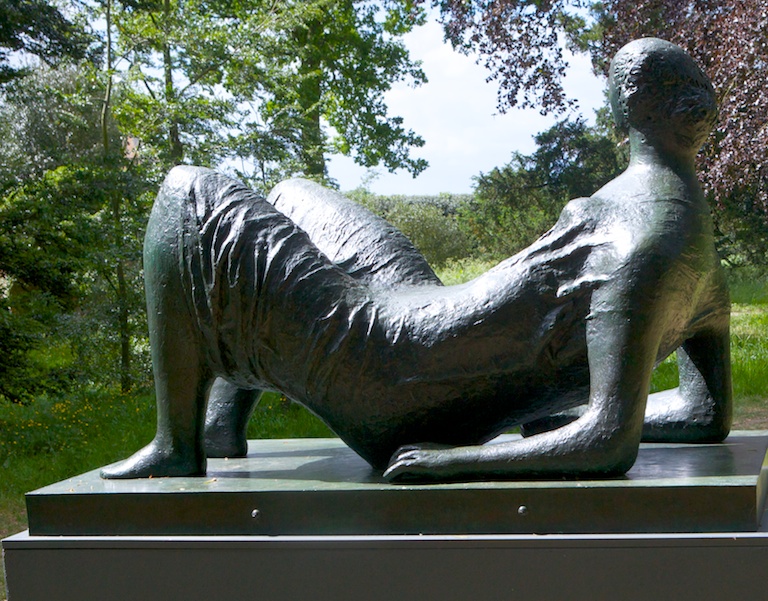
Draped Reclining Figure 1952-3 Bronze Height 157.5 cm
The Hatfield setting is big enough to take fifteen massive pieces. Every piece has at least one seat to sit and contemplate the work, just as Moore always wanted.
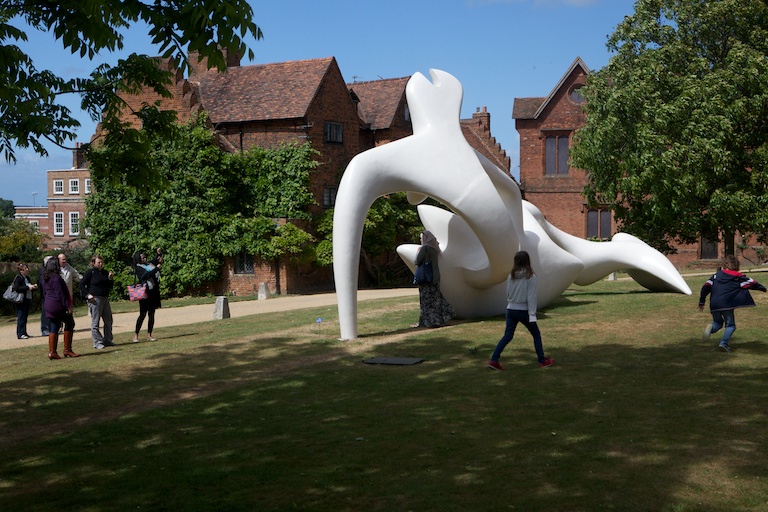
Large Reclining Figure, 1984 Fibreglass Length 900 cm
The huge historic buildings at Hatfield are certainly big enough to contain the work rather than be overwhelmed.
He was especially pleased with the siting of the Two-Piece Knife Edge next to the House of Lords, placed right next to a path and seats.
He was once asked by his niece why his works had such simple titles and he replied: All art should have a certain mystery and should make demands on the spectator. Giving a sculpture or a drawing too explicit a title takes away part of that mystery so that the spectator moves on to the next object, making no effort to ponder the meaning of what he has just seen. Everyone thinks that he or she looks but they don’t really, you know.
There is an excellent Wiki page about Moore that includes many well known pieces. One photograph shows the panorama created in the Ontario Museum.

Locking Piece, 1963-4 Bronze Height 290 cm
A visiting teacher from Vancouver said it was not possible to take photographs or touch the exhibits in Ontario and was delighted to be able to have the opportunity to get a real feel for Moore’s work at Hatfield and excited about visiting the Perry Green permanent exhibition.
Although interest in Moore has diminished since his death, Perry Green, his home in Hertfordshire, has a popular outdoor exhibition with 25 outdoor works on display. When I visited everyone seemed to be loving the whole experience, I certainly smiled at some of the pieces. The children especially liked some hollow copper pieces that made satisfying noises and big enough to play hide and seek in.
This hugely successful sculptor – he was paying million in tax in 1970s – left a legacy that continues to delight and intrigue.
One suggestion I have is to make available for sale small reproductions – to scale – I would love a collection of miniatures to handle, admire and contemplate.
Moore at Hatfield is open until 30 September – ideal for picnics and lots of room for children to run and play in!
Hatfield House is just 20 miles from central London and only 16 miles from Moore’s former home at Perry Green, Herts – The Henry Moore Foundation.
Moore at Perry Green visitor season runs from 1 April 2011 – 30 October 2011. It has a newly-refurbished pub dining room, The Hoops Inn, and a new exhibition in its gallery, Henry Moore Plasters. There are 70 acres of outdoor sculpture as well as the artist’s house and studios, carefully restored.
Val Reynolds Brown, Editor
View from the Stalls – London Theatre 2011

Dominic West in Butley
That’s not to say that the West End never hosts a gem of a play; it’s really a question of winkling them out. Happily there is at least one to regale us playing currently: Simon Gray’s Butley at the Duchess Theatre. Well staged and admirably acted, notably by Dominic West playing the eponymous anti-hero, this play may be celebrating its fortieth anniversary but its rather bleak theme of the disintegration of a rather unpleasant man is, perhaps unfortunately, timeless.
 Another not to be missed performance (though I have yet to see it) must be Simon Callow Being Shakespeare at the Trafalgar Studios. I witnessed this actor reading all of Shakespeare’s sonnets many years ago and it was mesmerising – his one-man-show promises the same. But instead of paying £45 for your seat, try lastminute.com/theatre – they are offering the seats for £20 + £1 booking fee. Try this before opening night though, my pessimistic view of what theatregoers want may be wrong in this instance and then the discounted tickets will disappear!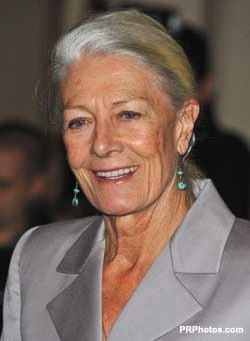
Vanessa Redgrave in Driving Miss Daisy
Mark Rylance will reprise his star turn in Jez Butterworth’s Jerusalem which was sold out during the original run and was one of the best plays I saw in 2010.
 will open at the Adelphi Theatre in November. This hits the spot for the Christmas outing of the season. I saw it at the National a couple of weeks ago it had people rolling in the aisles. Whatever it costs, this is real value for money!
 Jeannette Nelson A bit of a culture vulture, Jeannette enjoys art exhibitions, cinema and classical music, but her main interest is the theatre. For several years she ran theatre discussion groups for which her MA in Modern Drama together with teaching skills stood her in good stead. She prefers to concentrate on the many off West End and fringe productions as well as that real treasure of the London theatre scene, the National.
Fashion in Motion – Fantastic Free Catwalk Event – Yohji Yamamoto – Book Your Seat!
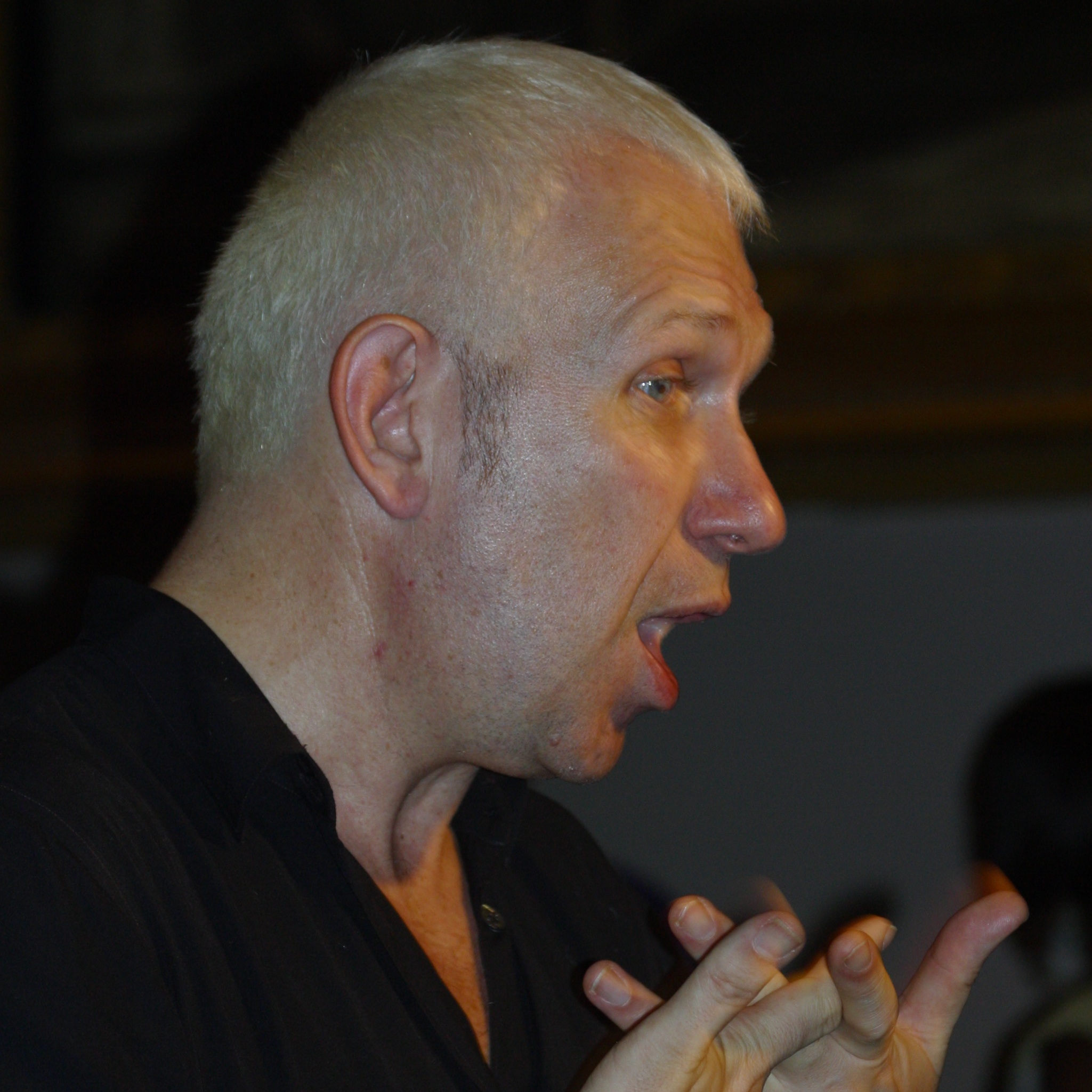
Jean Paul Gaultier at Fashion in Motion Show
What a fantastic FREE
High Fashion Catwalk Event! & anyone can attend! The Yohji Yamamoto Show is on 1 July 2011 at the V&A but booking is essential – details below
Me? Go to a fashion show with impossibly proportioned models wearing impractical clothes? Never! And yet … I was there! At the V&A, watching the amazingly outrageous designs of Jean Paul Gaultier. It was one of five shows of the day put on as part of the Fashion in Motion series of free catwalk shows. This was the first time Jean Paul’s work, from his early collections to his most recent, had been shown in the UK.
All the Gaultier iconic items were there, from underwear worn as outwear, the corset dresses, the Aran pullover dress, the patchworked mermaid dress, the silver anatomic dress.
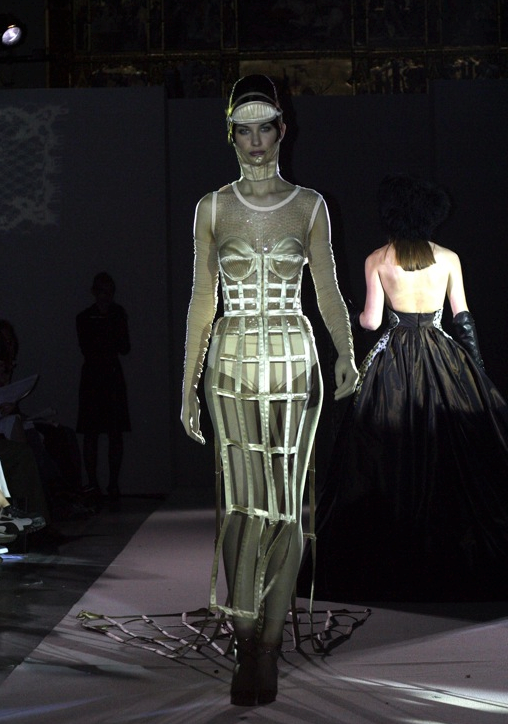
Jean Paul Gaultier iconic corset design
My favourites were the most outrageous, the Divine Jacqueline, the ballet costumer for Regine Chopiot, Sacre Coeur and the black lace capelin dress.
An inspirational experience – it was half an hour of sheer entertainment with a very excited and appreciative audience: young, old, male and female, fashionistas, the wealthy, students, admirers. All wildly applauding Jean Paul when he appeared at the end of each show. And what a friendly chap! He mingled happily with the crowd, willingly signing anything offered to him. He took a real interest in the questions from fashion students and young people – where did he find inspiration (everywhere), what he was most proud of (the most popular designs!)
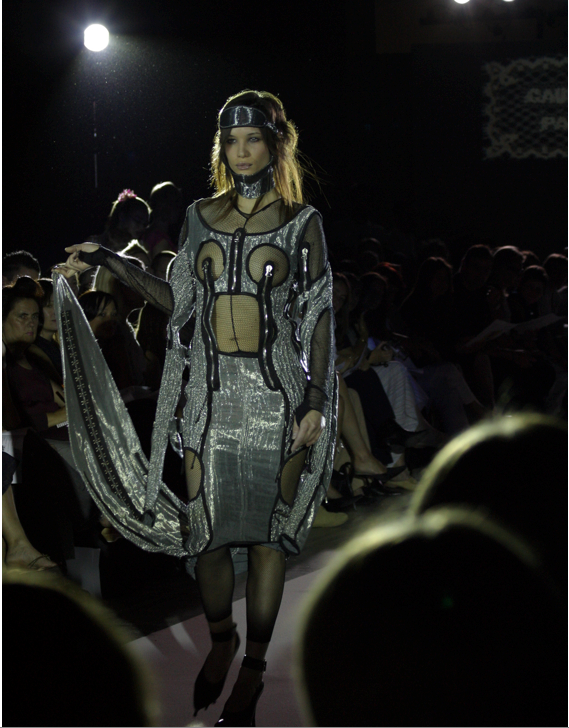
Jean Paul Gaultier iconic design
Two young women who work in the accessories trade were ecstatic at having the chance to attend the show, very well aware they would never normally have access to a couturier fashion show such as this. Others were knocked out by the clothes, the models, the atmosphere and energised by the sheer excitement of the event. That clothes such as these are inspirational is clear and elements do filter down to high street fashion.

Jean Paul Gaultier iconic design
Attending the show made me appreciate how successful the V&A is at working to make art forms accessible to the general public. Their aim is to show fashion as it is meant to be seen – in movement. Previous designers featured in the series include Ozwald Boateng, Giles Deacon, Roksanda Ilincic, Christian Lacroix, Stella McCartney, Alexander McQueen, Gareth Pugh, Vivienne Westwood and Erdem. Absolutely everyone I spoke to agreed it was an absolutely fantastic event and couldn’t wait for the next one! Must say I felt the same way myself!
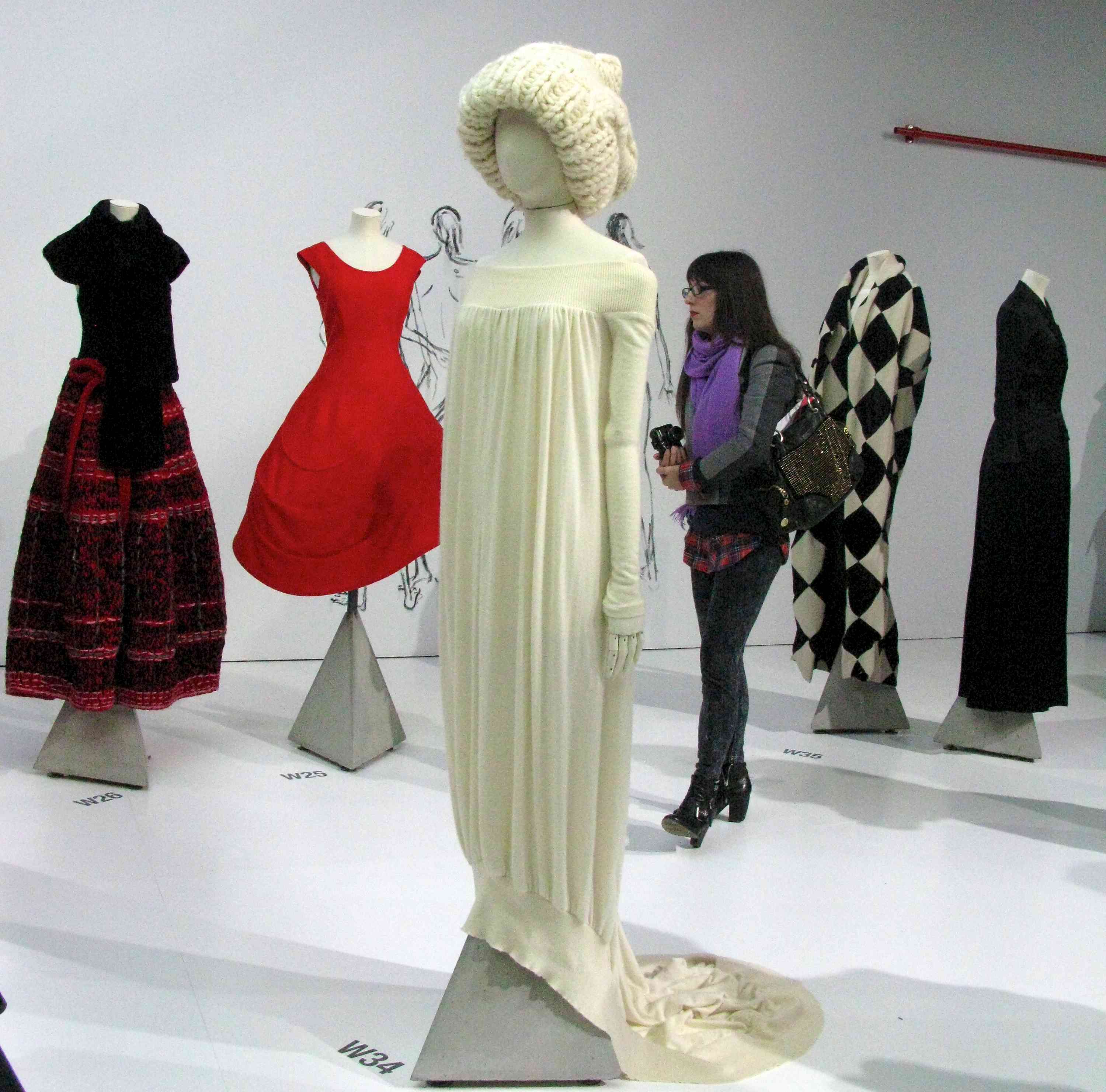
Yohji Yamamoto retrospective exhibition at V&A 2011
If you would like to go to the next show on 1 July 2011, featuring the work of Yohji Yamamoto admission is free but booking is essential.
Tickets will be available to book from 20 June on 020 7942 2820.
If there is absolutely no chance of you being able to attend you might like to know Fashion in Motion: Yohji Yamamoto will be broadcast live from the V&A website www.vam.ac.uk/channel/live
Val Reynolds Brown, Editor
Ecstasy & Under Milk Wood
 Jeannette Nelson Jeannette is a bit of a culture vulture who enjoys art exhibitions, cinema and classical music, but her main interest is the theatre. For several years she ran theatre discussion groups for which her MA in Modern Drama together with teaching skills stood her in good stead. She prefers to concentrate on the many off West End and fringe productions as well as that real treasure of the London theatre scene, the National.
Rare Picasso Lithographs in London
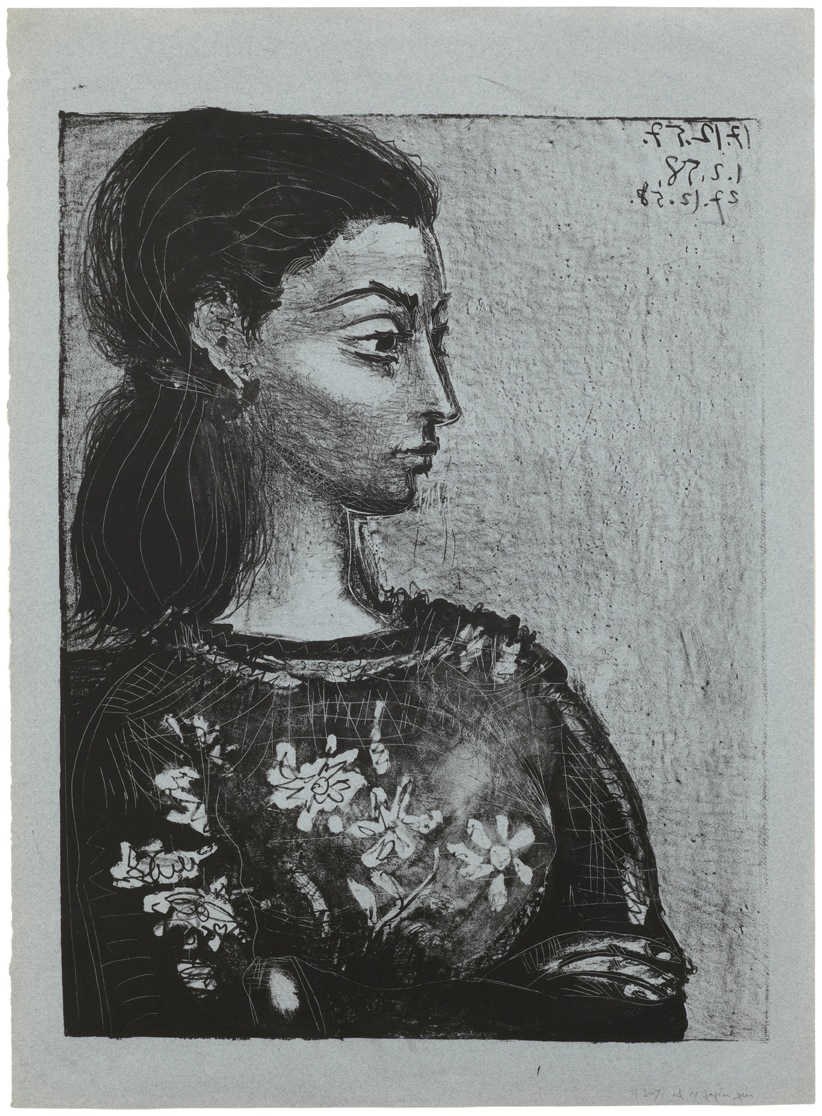 Lithograph making fascinated Picasso and you can see a few of the prints, some of which were never intended for sale, at a London Gallery for the next few weeks.
Paper 74.3 x 54.9 cm / Plate 63.0 x 47.0 cm to 64.5 x 48.6 cm
Third and final state
Unique impression on grey Arches wove paper aside from the edition of 50 and six proofs reserved for the artist and printer
Mourlot catalogue reference 307
Bloch catalogue reference 847La Femme au Fauteuil No. 1 (d’après le rouge) 2e état, 13 December 1948
 The Woman in the Armchair No. 1 (from the red) 2nd State
Lithograph using sandpaper, needle, pen, crayon and brush on zinc on the red plate of Woman in the Armchair, Mourlot catalogue reference 133, on Arches wove paper
Paper 76.2 x 56.0 / Plate 69.8 x 54.5 cm
One of six proofs reserved for the artist and printer
Initialled by Fernand Mourlot, inscribed 2e état (2nd state) and numbered 6/6 verso
There was no edition of this state
Mourlot catalogue reference 134
Bloch catalogue reference 586

La Femme au Fauteuil No. 1 (d’après le rouge) 9 e état, Le Manteau Polonais, 30 December 1948
The Woman in the Armchair No. 1 (from the red) 9th State, The Polish Coat
Lithograph printed in black and blue-grey from the red plate of Woman in the Armchair, Mourlot catalogue reference 133, on Arches wove paper
Paper 76.0 x 56.2 cm / Plate 69.5 x 54.5 cm
One of six proofs reserved for the artist and printer
Initialled by Fernand Mourlot, inscribed avec un gris (with a grey) and numbered 6/6 verso
Aside from the edition of 50, which did not include the background colour
Blue-grey is one of two colour versions, the other being grey-green
Mourlot catalogue reference 134 (grey-green version illustrated)
Bloch catalogue reference 587
Culture and Kids

Listening to a speaker
There was a time, not so long ago, when ‘culture’ was almost a dirty word. A ‘culture vulture’ read a broadsheet newspaper, spoke in a drawling upper-class accent and ate smoked salmon sandwiches during the intervals at the opera. But recently the definition of culture has broadened; it now recognises and encompasses a far wider range of activities in many fields. This has brought with it a greater egalitarianism and many activities are now considered cultural where previously they were given other labels. Does this matter, you may ask? Well, yes, I believe it does. Not the labelling per se (a rose by any other name …) but the importance placed by society on the full development of the individual. Exercise for the brain as important as exercise for the body. As we become more and more a nation of shoppers (as opposed to shopkeepers) the need for balance in our lives becomes even greater.

Punch and Judy audience
The government added its cachet to the importance of culture when about three years ago it announced its ‘aspiration’ for every child at secondary school to have five hours of culture per week. Like most aspirations this is very laudable, though how it can be achieved does beg many a question. And there is probably nothing like the label cultural activities to put off a teenager and achieve the opposite effect from what was originally intended. Many schools and colleges already offer much in this field and it could be argued that including it in the current curriculum rather than presenting it as an add-on is a far more subtle way of influencing young minds.
As a Londoner and a theatre-goer I have for many years observed the shepherding of hordes of teenagers to West End plays. Indeed, as a former teacher, I have been guilty myself of the shepherding! I think I can say that I now feel less trepidation when sighting said hordes than I have in the past. Students from all areas of the education system are present, and generally speaking they are less disruptive than they have been previously. But almost invariably there are aspects of behaviour that seem peculiar to this type of member of the audience. First, there is the ritual of sitting next to your friends. This enables many of the young girls (and occasionally boys) to rest their heads on their neighbours’ shoulders, perhaps to have a comfortable shut-eye. Then there’s the question of mobile phones. Not just the young but people in general have thankfully learned to disable the ringing tone before the start of a performance, but teenagers seem unable to be out of communication for an hour or so and the lit-up screens of those intent on texting or playing games during the performance can be most distracting. But whatever the involvement with the play, there’s no doubting the enthusiasm of young audience members when it’s (finally) over. Even those who have slept or texted their way through the entire performance will whoop and cheer the cast as they take their bow as if they were a Jerry Springer audience. Maybe they’re just thankful it’s all over!
 Jeannette Nelson Jeannette is a bit of a culture vulture who enjoys art exhibitions, cinema and classical music, but her main interest is the theatre. For several years she ran theatre discussion groups for which her MA in Modern Drama together with teaching skills stood her in good stead. She prefers to concentrate on the many off West End and fringe productions as well as that real treasure of the London theatre scene, the National.
Water at The Tricycle
 The Tricycle has come up with some real gems in the past, but somehow ‘Water’ misses the mark. It has great innovative touches and uses new technology like computers, video and such. But perhaps these detract from the content of the play which flits about in time and lost me more than once. The content is admirable. Like the Royal Court’s ‘Heretic’ it addresses, amongst others, the issue of global warming and also personal relationships. But the result is somewhat bitty and a play that doesn’t carry you along with it has to be deemed somewhat of a failure. That said, it did get some quite complimentary reviews, so maybe it’s me that missing something! However, don’t be put off the Tricycle – whatever it shows it remains one of London’s best little theatres.
Jeannette Nelson, Theatre Critic
 Jeannette is a bit of a culture vulture who enjoys art exhibitions, cinema and classical music, but her main interest is the theatre. For several years she ran theatre discussion groups for which her MA in Modern Drama together with teaching skills stood her in good stead. She prefers to concentrate on the many off West End and fringe productions as well as that real treasure of the London theatre scene, the National.
Intelligent Opera at the King’s Head, London
 The Laurence Olivier award for best opera in 2010 went not to a production at Covent Garden or the ENO but the Operaupclose’s ‘La Boheme’ which started life in a small room above the Cock Tavern in Kilburn, transferred to the excellent Soho Theatre in Dean Street, and then back for more sell-out performances at the Cock.
The Company has produced several more small operas in the space of very few months. Most of them are at London’s only fringe opera space, the King’s Head in Islington and currently showing is an absorbing Pagliacci, not only beautifully sung but wonderfully acted as well. I wouldn’t be surprised if the Olivier award for 2011 didn’t go to the same company, that is unless the big guns get lobbying. 
Check out the King’s Head’s website for the full programme of innovative and intelligent operas.
Jeannette Nelson, Theatre Critic
Jeannette is a bit of a culture vulture who enjoys art exhibitions, cinema and classical music, but her main interest is the theatre. For several years she ran theatre discussion groups for which her MA in Modern Drama together with teaching skills stood her in good stead. She prefers to concentrate on the many off West End and fringe productions as well as that real treasure of the London theatre scene, the National.
Two LONDON plays – Mogadishu and Frankenstein
Currently playing at the Lyric, Hammersmith is an excellent first play by former teacher Vivienne Franzmann, called Mogadishu.
 Set in a sink school, it is fast moving, witty and poignant. The central character is a liberal teacher (always write about what you know!) who is wrongly charged with assault and racial abuse. A group of excellent young actors play the schoolkids in whose hands her fate lies. Unlike other reviews I’ve read of this play, I’m not about to give away the plot – if it were a book it would be a real page turner. This is certainly one to catch
http://www.lyric.co.uk/whats-on/production/mogadishu/
The National’s Frankenstein has to be one of the most written about productions of the year so far and has the added twist of the two leads alternating in the roles of Dr Victor Frankenstein, the mad scientist, and his creation, often in B horror movies referred to as the monster, but here, in a text more in keeping with Mary Shelley’s novel, simply called the creature.
Everything you may have read about Benedict Cumberbatch or Jonny Lee Miller is true – they are truly superb in the lead roles.
The lighting is electrifying, as is the set and the production, directed by Danny Boyle. My quibble is that the adaptation of the text by Nick Dear is a little clunky and some of the acting of the rest of a cast somewhat wooden. But nothing can really take away from the power of the piece.
Not surprisingly it has sold out, even for the next set of performances, but will be shown as a one-off in selected cinemas as now happens quite frequently with National Theatre productions.
Worth trying to catch, it really is some experience
Jeannette Nelson, Theatre Critic
 Jeannette is a bit of a culture vulture who enjoys art exhibitions, cinema and classical music, but her main interest is the theatre. For several years she ran theatre discussion groups for which her MA in Modern Drama together with teaching skills stood her in good stead. She prefers to concentrate on the many off West End and fringe productions as well as that real treasure of the London theatre scene, the National.
London Theatre Review: The Heretic
Richard Bean’s ‘The Heretic’ showed great promise in the pre-opening hype, just like so many plays these days of which a great number disappoint. I’m happy to say that this play lived up to the hype; well, almost. The first three acts were superbly crafted, funny, and rang so very true.
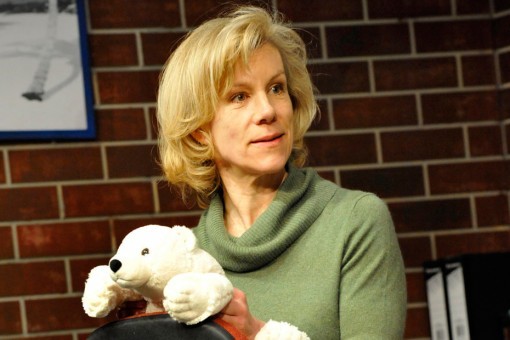 The heretic is Diane played by Juliet Stevenson, an academic who does not agree to be swallowed up in the maelstrom of global warming enthusiasts. Instead she sticks to the rigour of her scientific findings in her limited field where she can find no evidence of rising sea levels. There are many highlights, and so many memorable quips, but the prize must go to a filmed interview with her, and Maldives politician and Jeremy Paxman for Newsnight. Or perhaps to the scene which involves her choice of union representative, a toy polar bear.
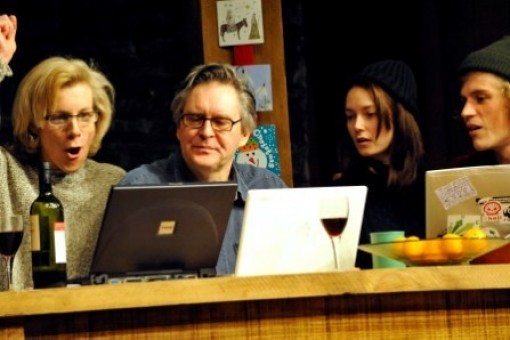 The last two acts flag a little and get a bit silly. But only a bit. I criticize really in the context of the brilliance of the first three.
The play is shortly ending its run at the Royal Court. But there is perhaps hope that like that theatre’s last runaway success, Clybourne Park, it may transfer to the West End.
Jeannette is a bit of a culture vulture who enjoys art exhibitions, cinema and classical music, but her main interest is the theatre. For several years she ran theatre discussion groups for which her MA in Modern Drama together with teaching skills stood her in good stead. She prefers to concentrate on the many off West End and fringe productions as well as that real treasure of the London theatre scene, the National.
 In Balance