
Regain Balance after a Stroke
The first time Chris came across a wobble board was when he was attending physiotherapy at the local hospital following a severe stroke. He found it a real challenge but after a few weeks could see a distinct improvement in his posture and with that more confidence to walk without a stick. This is what he has to say:
After my stroke, I had to attend physio rehab classes to regain my sense of balance, among other things, and I found I had extreme difficulty balancing; the physio had a home-made wobble board, made of ply, and I remember commenting that this would be ideal for practice at home.

Home4physio Wobble Board
Then we found the Home4physio Wobble Board. This wobble board is adjustable for height; the adjustment is intended to provide a slight increase in difficulty, once some profiency has been attained. This exerciser would be ideal for anyone with weak core muscles (calves thighs, back), plus those with a poor sense of balance. It is small and easily stored away, when not required. My wife and I are both using it just for fun, balancing on one leg – this is not as easy as it sounds – just try closing your eyes!
* * * * *
The Home4physio wobble board is designed to aid the recovery of balance following injuries to feet, ankles, knees, hips and would benefit anyone or any age – many athletes and sportsmen and women use them in recovery and physiotherapists generally have one in their armoury. We use ours for general balance and flexibility maintenance – and it works!
In the elderly especially there is a certain look of vulnerability in those with poor balance and stability. Using the wobbleboard helps to regain confidence through improved strength. Flexibility and coordination can be improved without impact damage.
The home4physio wobble board has two height levels, easily adjustable. It comes with clear instructions for use and the exercises for improving sitting and standing are not extreme – with regular practice they will make a big difference.
More details on www.physiosupplies.com, or call the sales helpline, M-F 9am-5pm on 08700 545 050.
UPDATE – apparently the Wii Ski device is very good for strengthening balance – we’ll write about it once we have had some practice
Christopher Johns, Contributing Author
Coping with a Diagnosis of Cancer
Thursday JANUARY 8TH 2009 – The day Caroline Edmonds’ life changed forever: little did she think that within a week she and her family would be coping with a diagnosis of Follicular Non Hodgkin’s Lymphoma Grade 1 stage 4, a form of cancer
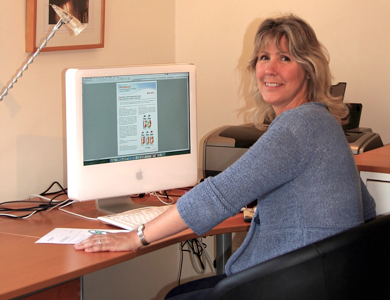
Caroline had been treated for a stomach ulcer for many years, occasionally suffering from terrible pains and then suffering bouts of nausea. It all came to a head that Thursday; Caroline had severe pains all day and was unable to sleep. Gary took her to the out of hours doctor who then referred her to the QE2 hospital in Welwyn Garden City, where she received morphine and was sent home. After a sleepless night of being violently ill, she returned to the doctor the next morning, who then referred her back to the hospital. She was finally admitted to hospital not knowing that she was to spend the next two weeks in there, including her 47th birthday three days after being admitted.
Caroline says “I felt like a fraud, as between bouts of pains and nausea, I felt fine”. During her first week in the hospital she underwent test after test, CT scans and what felt like every blood test known to man. It was in the afternoon of Wednesday, 14th January that the Consultant informed her that she had a suspected malignant lymphoma and needed to undergo surgery. On the night before her operation on Friday the 16th she said “The pains all over my body were so severe, I think every lymph node had enlarged. I really thought I was going to die”. She had nurses writing letters to her family as she feared that she would not make it through the ordeal.
During surgery they removed the tumour, surrounding tissue and part of her intestine. A week later Caroline received the news that she had been dreading; it was what they had suspected and further tests showed the cancer had also spread to her bone marrow and chest.
All this came as a blow to Caroline and her family, as she was self employed falling sick meant she would be unable to earn money to help support the family. Caroline along with her husband Gary have run a graphic design business – Edmonds and Hunt Advertising in the Hertford area for over twenty eight years. They have one son, Sam who is currently busy with his GGSEs.
Caroline is an active member of her son’s school PTA, Friends of Sele School. She attended every possible meeting and helped out at the various fundraising events. She is also a Councillor for Bengeo Parish Council. If this was not enough of a shock for the Edmonds to deal with, they also tragically lost Gary’s father the day after Caroline came home from the hospital. The family now not only had the worry of Caroline’s health, but also had to sort out the logistics that come with a bereavement.
On 1st April she started her first of eight sessions of chemotherapy. One every three weeks for a whole day. One of Caroline’s side effects was hair thinning; fortunately she didn’t lose it all. She was also put on steroids. “During the first week after each session of chemo I had to take 24 tablets a day, gradually reducing until the next session where it all started again” she said. The course of chemotherapy finished on August 28th and a month later she was told it had been successful. The doctors said if she could get through the next year and it returned they would put her on the same chemo therapy treatment again. This form of cancer is not curable, but is controllable. Should the cancer return before September 2010 she would have to undergo a far more aggressive treatment.
Throughout the pain and stress of being diagnosed and treated for Follicular Non Hodgkin’s Lymphoma, she tried to carry on as normal as possible but to make matters worse as Caroline was recovering and finally able to return to her business full time, the recession hit. Suddenly after being in business for so long and never having to look for work, she has had to look at reinventing the way she does business.
The first thing she did was join the world of social media and online marketing. She designed a web page, started using Twitter and created a Facebook page. She recently also started blogging. “Times are tough out there for graphic designers, but you have to look at what is trending, embrace it and move with the times” she said.
Caroline is an example to us all and is proof that even if you are dealt a bad hand, it doesn’t mean that you have to lose the game.
For more information of Follicular Non Hodgkin’s Lymphoma:http://www.lymphomainfo.net/nhl/follicular.html
For more information on Caroline and her business:
http://www.edmondsandhunt.co.uk/
http://www.edmondsandhunt.blogspot.com/
Brigitte Houghton, Contributing Author
UPDATED 12 March 2011
Caroline has asked us to let readers know she is willing to talk to anyone who feels they would benefit from talking to her about their cancer experience. You can reach her by email at edmondsandhunt@hotmail.com
I Did It! So Can you! Give Up Smoking!
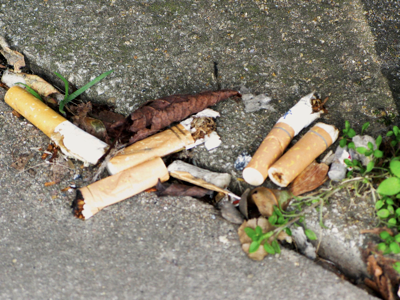 I was a 20-30 a day cigarette smoker from the age of 16. I shudder to think the condition of my lungs at 46 years old, 30 years later.
Smoking was enjoyable, mostly. A crutch to bridge the periods of boredom, the uncomfortable pauses in social events, to cover nervousness and to take away appetite, the relaxing effect after a meal. I used it and abused my body. Not that I ever thought much about that aspect.
Two things happened that brought it home to me just how unsociable smoking was to those who didn’t. One couple who socialised in their kitchen/diner would always put the extractor fan on when I lit up. I didn’t really notice because we were in the kitchen weren’t we, until someone else pointed it out and that made me so selfconscious I didn’t smoke in their house from then on.
On another occasion, on the way home from babysitting I realised I had left my handbag behind. I ran back to fetch it, and found my friends had opened all the windows and doors and were spraying odour killer around. I was horrified and somewhat ashamed that they felt so strongly about the smell of smoke.
So I could go for short periods without smoking when necessary which to me was almost as good as giving up.
However gradually my friends stopped smoking, and I was virtually the only in our group who puffed away. I began to feel selfconscious and the disapproval was palpable so I started to go outside to smoke.
All this happened years before the current smoking regulations came into force but I was determined to stop. And as Mark Twain said, it was easy, I did it lots of times!
I tried herbal cigarettes, herbal tablets, hypnosis but in the end it was sheer willpower, self disgust and exasperation that finally tipped me into the smoke free habit, together with using chewing gum loaded with nicotine. I gradually managed to reduce and have now been totally smoke free for more than 15 years.
In truth I would have much preferred to use a more natural product and when I heard of the new Rescue Chewing Gum I really wanted to tell everyone about, but especially anyone who is really desperate/keen to junk those cancer sticks.
Chewing gum really did help me, I felt calmer. Recent research has shown that chewing gum helps to relieve nervousness, improve alertness and reduce stress. Research also shows that chewing gum for an hour in the morning seems to reduce the appetite to some extent. But the reason why I am so interested in the Rescue Chewing Gum is the natural ingredients used, each piece of chewing gum has a liquid Rescue centre – the famous combination of five flower essences discovered by Dr Bach almost 80 years ago.
Suitable for vegetarians a month’s supply comes in a handy portable box ideal for taking Rescue on-the-go. Rescue Gum costs £3.95 and is available from Boots, Holland & Barrett, Lloyds Chemist, independent pharmacies and health food stores as well as grocery stores nationwide. For more information visit www.rescueremedy.co.uk
Why not buy some on your way home tonight and take the decision to stop smoking – It’s No Smoking Day tomorrow, let Rescue get you going!
Tips to help:
Keep an eye on your progress – keep a chart, by day
Keep your hands busy – get going on those word puzzles, sodoku, whatever that are in every paper these days
Give yourself targets of really positive treats – a weekend break, an active goal – climb that mountain! Yes, you’ll feel more energetic as all those toxins slowly leave your body
Acknowledging a dependence on nicotine and tobacco is a crucial first step and can be the all-important catalyst that smokers need to seek professional medical help and succeed in become smokefree.
There are Stop Smoking Services provided for free by the NHS. This support has been shown to increase a smoker’s chances of stopping by up to four times, compared with going it alone.
Why not join the million smokers who will use tomorrow to try to quit. It could just work.
Or perhaps you know someone who is desperate to give up smoking and might benefit from some help? You could make it your Good Samaritan deed for today! and tomorrow …. why not for the next twelve days! If you help just one person to quit smoking wouldn’t that be worth the effort?
Good luck!
Kate Campbell, Contributing journalist
GIVEAWAYS
Our contribution is to GIVEAWAY a month’s supply of Nelsons Rescue Gum to TEN In Balance readers.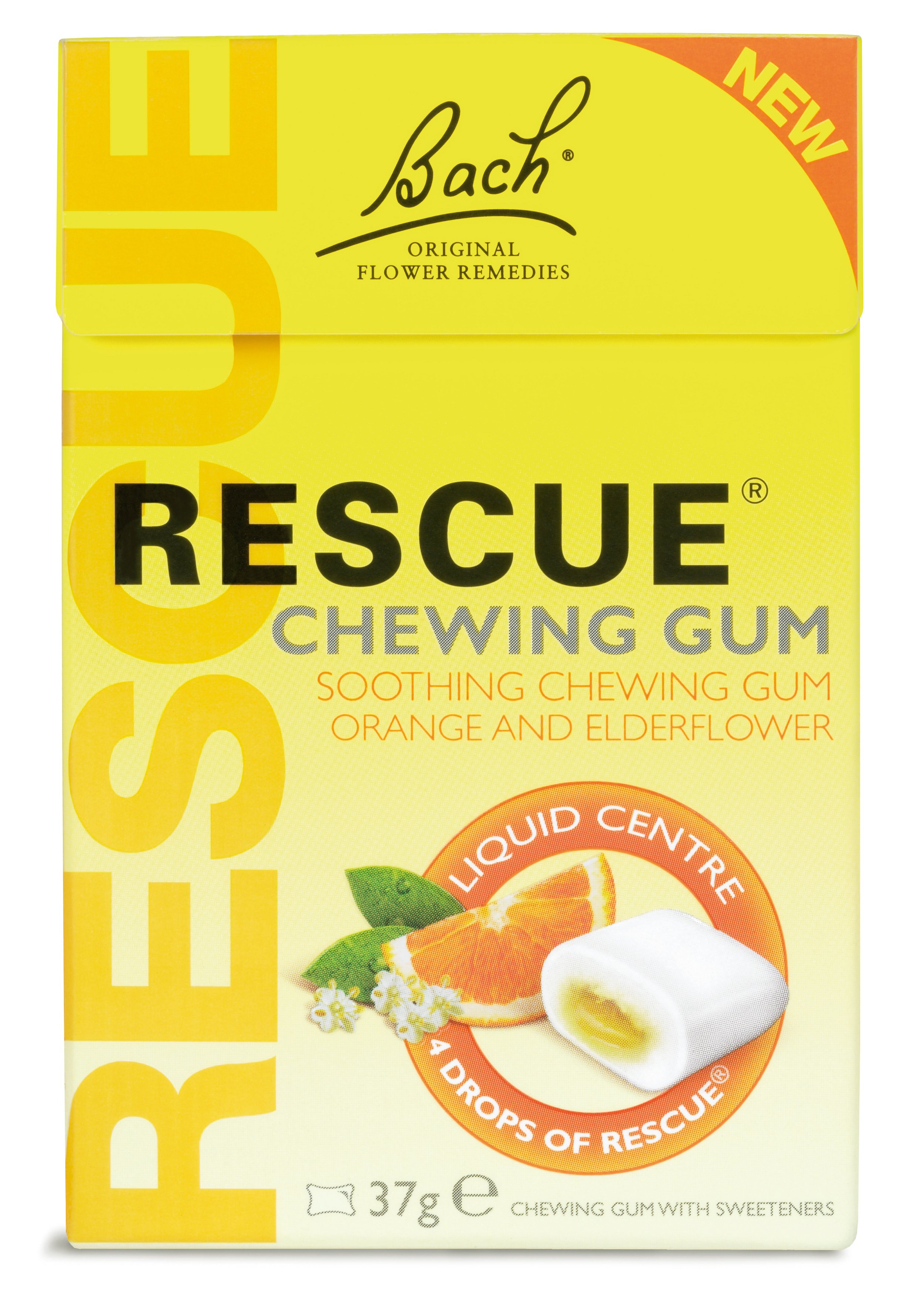
To enter the draw send an email to editorinbalance@me.com with NELSONS RESCUE GUM in the subject box and your contact details in the text area. Make sure your entry reaches us by 18 March 2011. One entry per household. The draw is restricted to readers resident in the UK.
Dental Treatment Abroad
Check out the facts before you check in

A fine set of teeth
With more and more people considering dental treatment abroad, UK dental regulator, the General Dental Council (GDC) has issued guidance and advice to dental patients with a checklist of questions to ask before travelling abroad for treatment.
The aim of the checklist, produced in association with the British Dental Health Foundation (BDHF), the UK’s leading oral health charity, is to help dental patients make informed decisions about their dental care, wherever they receive treatment.
Duncan Rudkin, Chief Executive and Registrar of the GDC, said: Our job is to protect UK dental patients by making sure all dental professionals practising in the UK are trained appropriately and registered with us. We think it’s important for dental patients – wherever they receive their treatment – to know the questions to ask to ensure they receive the best possible treatment and care, and where they can go if something goes wrong.
That’s why we want to encourage people considering travelling abroad for dental care to ask questions before making a decision about their treatment. Qualifications and standards are likely to differ from country to country, so it’s important that you collect as much information as you can before committing to anything.
Dr Nigel Carter, Chief Executive of the BDHF, said: The National Dental Survey 2008 found that 16% of people would be willing to travel abroad for dental treatment and the figure was even higher among the 18 to 30 age group – suggesting the trend will continue.
This document provides members of the public with a very useful starting point on the questions to ask before getting dental treatment abroad.
Styles and standards of dentistry can vary a great deal from one country to another and, if things do go wrong, patients could still be left facing some difficult and potentially expensive decisions.
However by researching their chosen practitioner and asking the right questions they can reduce the chances of encountering potentially avoidable problems further down the line.
A copy of the dental tourism checklist is available on their website, www.gdc-uk.org.
The International Dental Health Foundation, is dedicated to improving the oral health of the public by providing free and impartial dental advice, by running educational campaigns like National Smile Month and by informing and influencing the public, profession and government on issues such as mouth cancer awareness and water fluoridation.
For free and impartial expert advice contact the Dental Helpline on 0845 063 1188 Monday to Friday.
Val Reynolds Brown, Editor
This feature was first published in January 2010
Amalgam tooth fillings – toxicity claims debunked

Heavily filled teeth
For a long time in the alternative health and more recently in the popular health press, concern has been flagged up of the possibility of mercury leaking from tooth filling amalgam. A lot of money can be spent on having fillings removed and replaced by non-toxic amalgams, even going abroad to save money.
So it was interesting to read on the QuackWatch http://www.quackwatch.org/ of reviews that dispute the toxicity claims. I am reproducing it in full:
False dental amalgam toxicity claims slammed again
A study of 56 patients who claimed to have symptoms caused by mercury in their amalgam fillings has found that none of the patients had significant levels of mercury in their blood or urine levels. The researchers noted that 20 of the patients has previously been previously diagnosed with mercury toxicity by “commercial practitioners using unconventional testing panels.” [Eyeson J and others. Relationship between mercury levels in blood and urine and complaints of chronic mercury toxicity from amalgam restorations. British Dental Journal 208(4):E7, 2010]http://www.ncbi.nlm.nih.gov/pubmed/20186178 A recent review by the American Dental Association Council on Scientific Affairs concluded: “Studies continue to support the position that dental amalgam is a safe restorative option for both children and adults. When responding to safety concerns it is important to make the distinction between known and hypothetical risks.” [ADA Council on on Scientific Affairs. Literature review: dental amalgam fillings and health effects on amalgam fillings and health effects. Amalgam Safety Update, Sept 2010]http://www.ada.org/sections/professionalResources/pdfs/amalgam_literature_review_1009.pdf
During the past few weeks, unjustified scare headlines have been generated by an anti-amalgam campaign that involved testimony at an FDA hearing. In response, Robert S. Baratz, M.D., D.D.S., Ph.D. noted:
“The simple truth is that there is no significant risk because amalgam fillings are safe. . . . The promotion of anti-amalgamism is regularly linked with fringe practitioners, people with financial interests in promoting something else, and pseudoscience. Based on past practices, and rhetoric, I’m one of many who conclude that the anti-amalgamists resemble more a religious cult than a group of serious, objective scientists searching for the truth.” [Baratz RS. More notes on the anti-amalgam movement. Dental Watch, Dec 18, 2010] http://www.dentalwatch.org/hg/hearings/fda(2010).html
Earlier this year we wrote about a checklist of questions to ask before travelling abroad for treatment issued by the General Dental Council, reproduced in this Health section.
 In Balance