
Broad bean problem – HELP needed
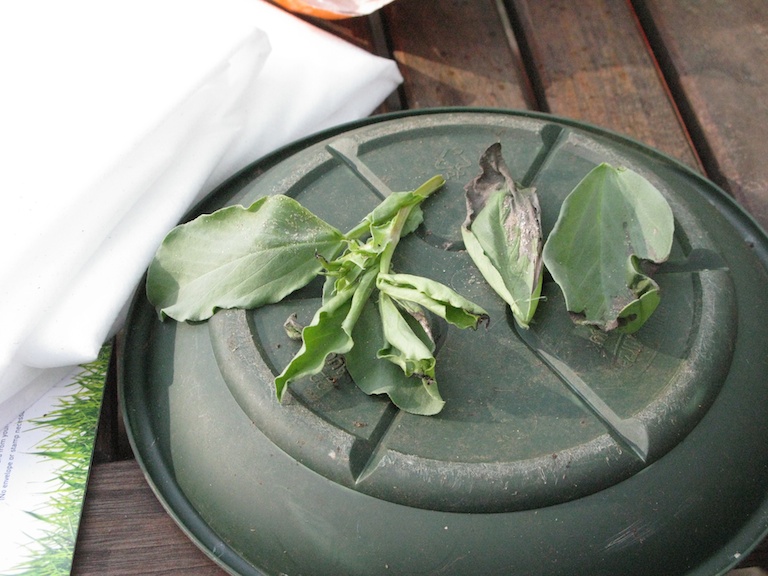
Broad bean leaf damage
A reader has emailed in with this photo – can you identify what it is. Is it a virus, fungus, insect?
The plants have been growing well until now. I hope we can help her. Editor
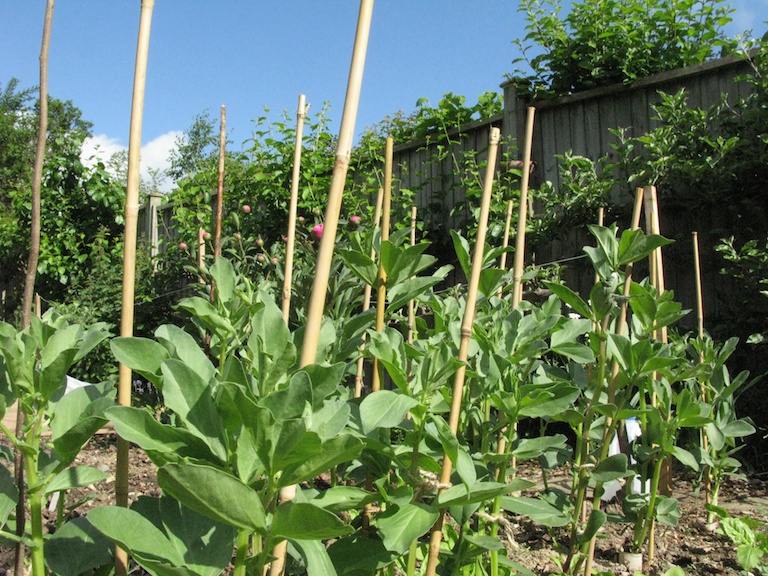 The problem has been identified as frost damage and nothing to worry about. The plants look very healthy and should produce a fine crop. A growing tip from Sine Chesterman* is to pinch out the tops once the first beans are forming on the lower stems. This stops blackfly colonising the tops of the beans and working their way down and ruining the crop. She used to give the tops to their goats who loved them. When the last goat died Sine used to cook them, boiled with a little salt, strained and warmed with a little pepper and butter – superb!
* Sine Chesterman’s interest in gardening and botany started at an early age with her own patch in her parent’s garden and learning which plants were natural healers.
Brought up with old and tested remedies and gardening methods, now termed organic, she still practises natural ways of pest control. We will be publishing a series of features about herbs written by Sine in the near future.
Editor
By the way www.ourfrontgarden.com is the website we write about the ongoing renovation and care of a front garden in a garden city
Prize Draw – Supa Drippa Taps
 We are great fans of these extremely useful devices that help the busy gardener with watering precious plants. You can control the flow of water and spread watering over a period of a week using a discarded plastic milk container and a dinky little tap.
Inexpensive, efficient and fuss free we love these Supa Drippas – see our feature.
We have three packs of ten worth £11.95 + £1 pp provided by The Organic Catalogue, to giveaway to our readers. To enter the prize draw just send an email to editorinbalance@me.com, with Supa Drippa in the subject box and full contact details in the text box.
One entry per household, closing date is 12 June 2011.
By the way www.ourfrontgarden.com is the website we write about the ongoing renovation and care of a front garden in a garden city
SOS – Save your Plants
A simple, inexpensive and no fuss solution in drought conditions
Supa Drippa taps are all that they say on the packaging!
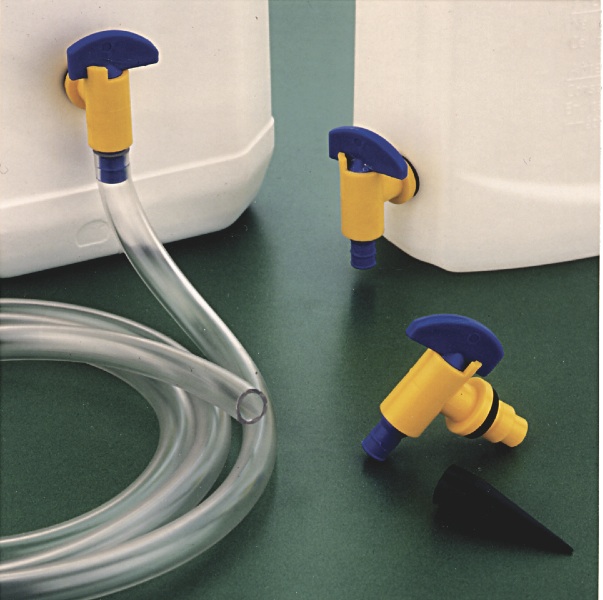 In unremitting hot weather some vulnerable plants, especially newly planted fruit trees, have needed constant attention and using discarded plastic milk bottles as water containers with a little plastic tap slowly watering plants has made a critical difference.
I’m not a huge fan of plastic milk bottles sited all over the garden but they will stay there until the weather turns to rain.
I did find the instructions a little short on detail, but got there in the end.
I had ten drippers and quickly realised why the diagram showed the bottle filled with water. Yes it means you get a bit wet when the spiker gets through the plastic, but the water gives the container much needed volume to take the pressure when piercing the plastic. The spiker gets pushed into the container and that’s when you insert the little tap.
I would like the tap to have some indication of which is the continuous flow and which is the slowest. In fact On and Off, or + and – signs would have been very helpful. As it was, I had to experiment and again got rather wet.
To relieve the pressure in the container the lid has to be left off. If you are concerned about mosquito invasion drill a couple of small holes in the lid and replace.
I found when planting out it was useful to be able to put the taps on continuous flow right next to the stems to get the plants well watered, then refilled them in situ and put the tap on very slow drip. Each plant got two litres of water, enough to carry them through for at least five days.
In the case of seedling courgettes and tomatoes the system was invaluable. It made the difference between wilting and continued growth. I also added water with fertiliser direct to the bottle when topping up. Again this is very useful for tomatoes that like lots of nutrition.
You can buy tubing to go with the Supa Drippas, useful when you want to water patio pots. I also had the idea to have a sufficiently long tube to snake round my six precious outdoor tomato plants and punch a hole where the tube meets the plant. That way I would use only one container – would have to be a two litre container, and one tap. This is an experiment in the making! I’ll try it and write about my experience.
ARE SUPA DRIPPAS WORTH THE MONEY?
Ours came from the Organic Gardening Catalogue who charge £11.95 + £1pp. At roughly a pound a tap the answer has to be yes as they are virtually indestructible and I’ll be able to use them for years. I loved the idea of reusing those plastic milk cartons too. Once I have enough 2 litre milk containers I’ll replace the 1 litre containers so when we are away for more than a few days I’ll be less reliant on the goodwill of friends and neighbours to make sure plants don’t suffer from any unexpected drought.
I have been considering using the water butts with a solar powered pump to water when we are away. The cost is fairly high and involves laying out piping with dripper attachments. Although less conspicuous than milk containers, at the moment I’m more worried about losing plants and these Supa Drippas have taken away a lot of that anxiety.
ARE THEY WORTH THE EFFORT? A resounding Yes!
1. They have made the difference between using a hose and all the economic factors that implies.
2. You can add nutrient to the water, a simple, time efficient way of adding feed direct to plants that need it. So easy to keep the water in the watering can topped up.
3. Once a plant looks like it has had enough water for a while I have moved the containers to other plants. I can see I really need about 30 containers altogether which will be a really good investment
4. The containers can be easily stored ready for reuse for the next drought.
When I put some young gerbera plants in the front garden each with its own watering container for a day they intrigued some passersby and I made some more gardening friends!
So you need more reasons to get some? OK! they are made in the UK!
We have THREE PACKS to give away. Just send an email to editorinbalance@me.com with Supa Drippa in the subject box and your contact details in the text box. Closing date 12 June 2011 – one entry per household.
Val Reynolds Brown, Editor
Giveaway Winner – Brother Labeller
 The feature we wrote about the Brother P-touch Labeller included a popular giveaway.
We are pleased to say the winner is C Farley from East Sussex.
Click on the Sign Me Up button on the right to be sure to receive details of future features and giveaways.
Val Reynolds Brown, Editor
All Over the Place!
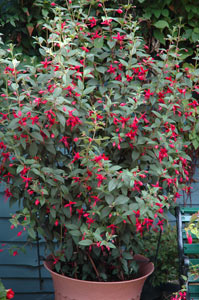
Lady Boothby
Lady Boothby, a really beautiful climbing fuschia, is on offer in a price clearance from Thompson & Morgan
The plant, with two-toned flowers on red stems, is the world’s only climbing fuchsia, suitable for pergolas, trellises, arches, walls, fences and will give years of colour. It will climb up to ten feet and spread over three feet in sun or semi shade, flowering from June to September.
The Thompson & Morgan website gives brilliant instructions on how to grow and aftercare information.
Current prices while stocks last are 3 jumbo plugs for £7.99, 5 jumbo plugs £9.99, and 15 jumbo plugs at half price £14.99. At prices like these you could afford to buy several and give some away as gifts.
Delivery will be by end May 2011, so get your order in now and look forward to a plant that’s sure to attract lots of interest!
Sowing Tips from Experts
It’s always good coming across a commonsense, straightforward account of how to do something and here are some of the books I refer to frequently for help when getting seeds and equipment together:
 Anna Pavord – Growing Food: Eminently readable, easy to digest, beautifully illustrated with line drawings, much in the style of Dorothy Hartley. Anna gives details on a raft of planting plans. One plan I was attracted to was the Potager’s Garden where she advocates some lovely combinations of flowers and vegetables. Much in the way I grow our vegetables and fruit in fact, but she gave me some ideas of companion planting I haven’t used before.
Raymond Poincelot wrote Organic No-Dig, No-weed Gardening which I read cover to cover when I came across it some years ago. It is full of great ideas, clear instructions, and gives a clear understanding of his concept.
 Allotment Gardening: An Organic Guide for Beginners by Susan Berger is another book I have by my bedside and is regularly referred to.
 Geoff Hamilton‘s Gardeners World … is a bible I refer to frequently. He was my kind of gardener, self reliant and imaginative when looking for solutions, without going too mad on devices, but using commonsense … He gives very useful and clear instructions on how to construct inexpensive cloches.
 And then I love reading Carol Klein’s Growing your own Garden. Bliss! I can hear her voice with the enthusiasm oozing out on every page! I have met her and she is just the same in real life. A great lady!
 Trawling the Net I came across Madeleine Giddens’ website where she has put a clear and concise guide to sowing herb seeds. She gives useful links to seed suppliers and books to follow up.
I hope you find these helpful – if nothing else it is a booklist for winter reading!
Val Reynolds Brown, Editor
Forced Rhubarb – First fruit of the year
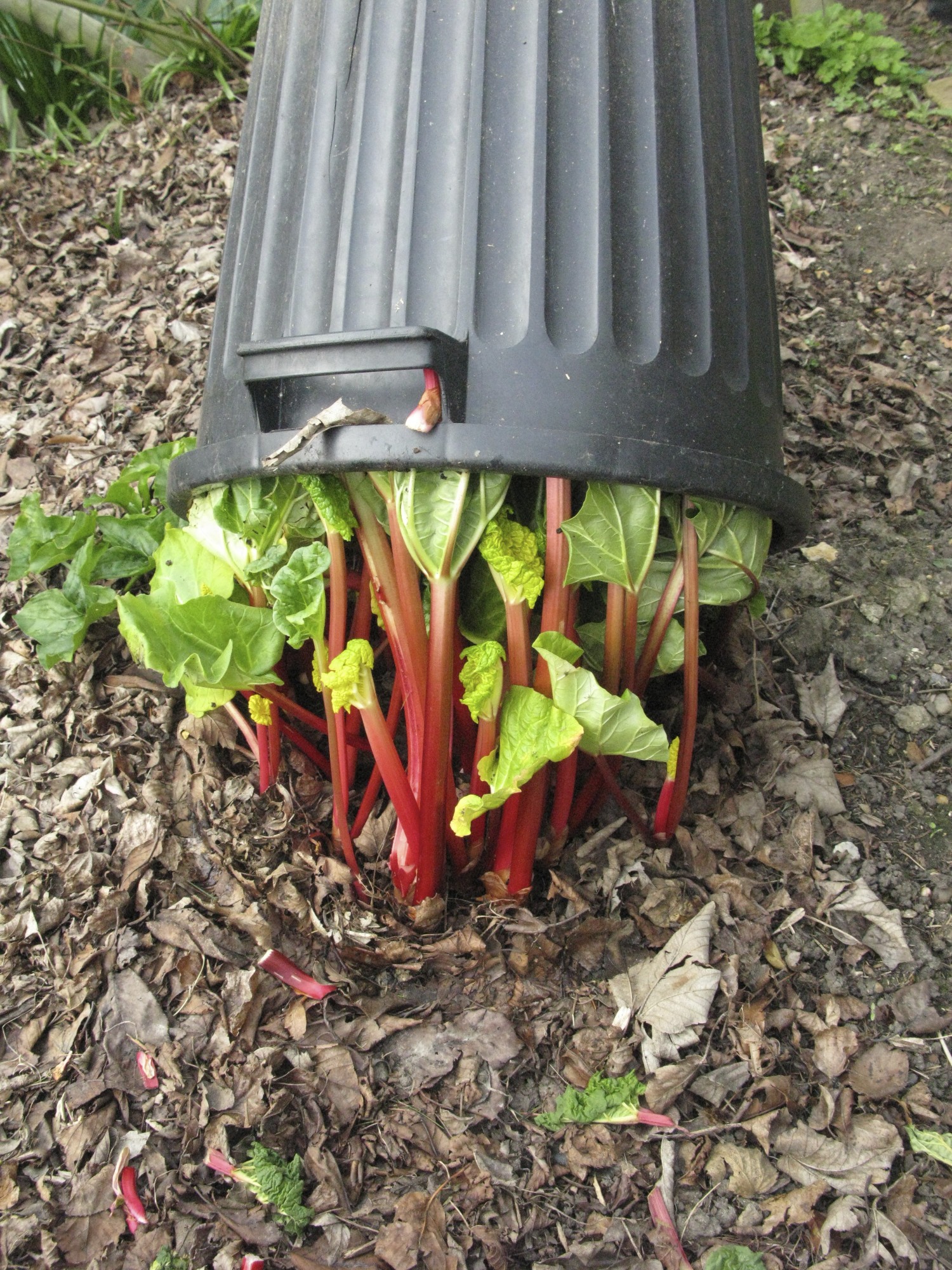
Forced rhubarb ready to cut
It’s so unbelievably easy to get juicy, sweet rhubarb so early in the year. And yet we do it, every year. We just place an old plastic dustbin over the new shoots when they appear in early spring and a few weeks later hey presto there’s rhubarb to pick.
We generally get too much at a time so it is cooked with a little sugar and stored in the freezer ready for later use. Great with yogurt, on cereal, with ice cream. We made some delicious wine one year, it was a beautiful pink colour. We do bottle some, best for us in the smaller jars, a whole kilo jar tends to languish in the fridge for far too long. Anyway as it has a high oxalic acid content it’s best not to eat rhubarb for extended periods. Once a week is probably wiser. We generally go for crumble or pies, with a generous amount of ground ginger to give it that little extra zing.
We have no idea which variety of rhubarb we have, we think it’s been in this garden since the 1930s. But good plants can be purchased from Thompson & Morgan, here is a link to their comprehensive rhubarb catalogue page.
Val Reynolds Brown, Editor
The Sun is Shining in the Sky …
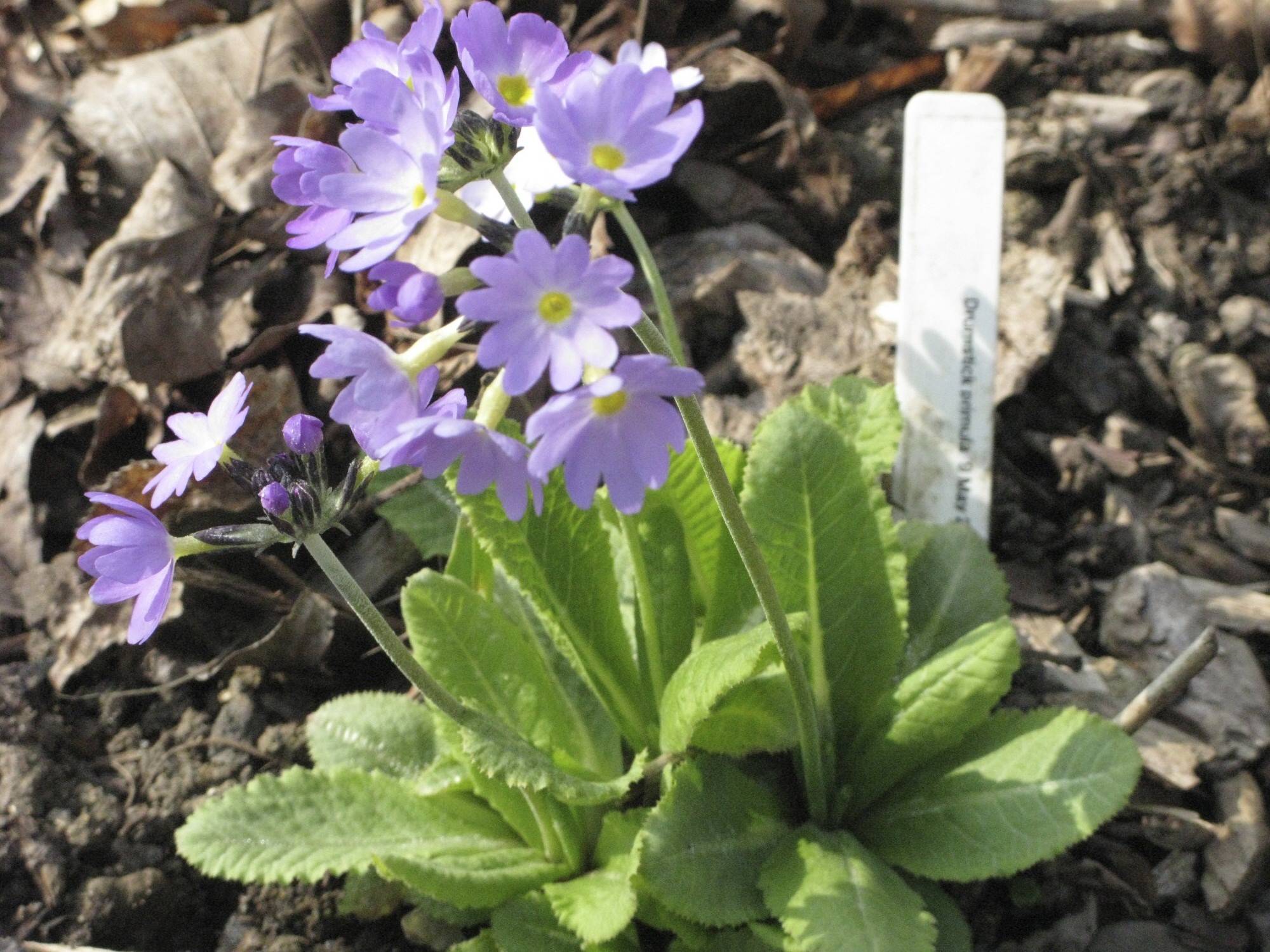
Drumstick primula, sown May 2010
The sun is shining in the sky and it’s seed time! The most exciting time in my gardening year. The anticipation, the joy, the expectation. But then there is the labelling … I have so often sown the seed and not bothered to write a label thinking I won’t forget that particular tray.
Wrong! I have often forgotten and some seeds haven’t received the attention they need, especially those that take more than a month to germinate.
That’s all in the past. This year I have a labelling machine. A Brother P-touch GL200 and a wondrous machine it is too!
A dream machine it is a computerised, battery run labeller. Lightweight and so portable I can do the labelling in the garden if I want. In fact though, I generally print out the labels before I go into the garden, much easier to prepare the labels before I get my fingers muddy.
I can’t say enough good things about it, and so far, touch wood, I can’t think of anything negative. The labels are rainproof, humidity proof, fade proof, heat and frost resistant, can be on coloured tape. I can choose the typeface which can be small, medium or large, on a long or short strip. It has a built in date and time clock. You get to see the text before you print on a small screen, and it can be neatly cut. All I do is make sure I have enough plant sticks to add the label to! Easy. If you’re interested in the specification go to www.brother.co.uk/gl200
Actually I can think of a negative, the price of the replacement tape is a bit steep. But honestly the machine is so useful I can tolerate that, just.
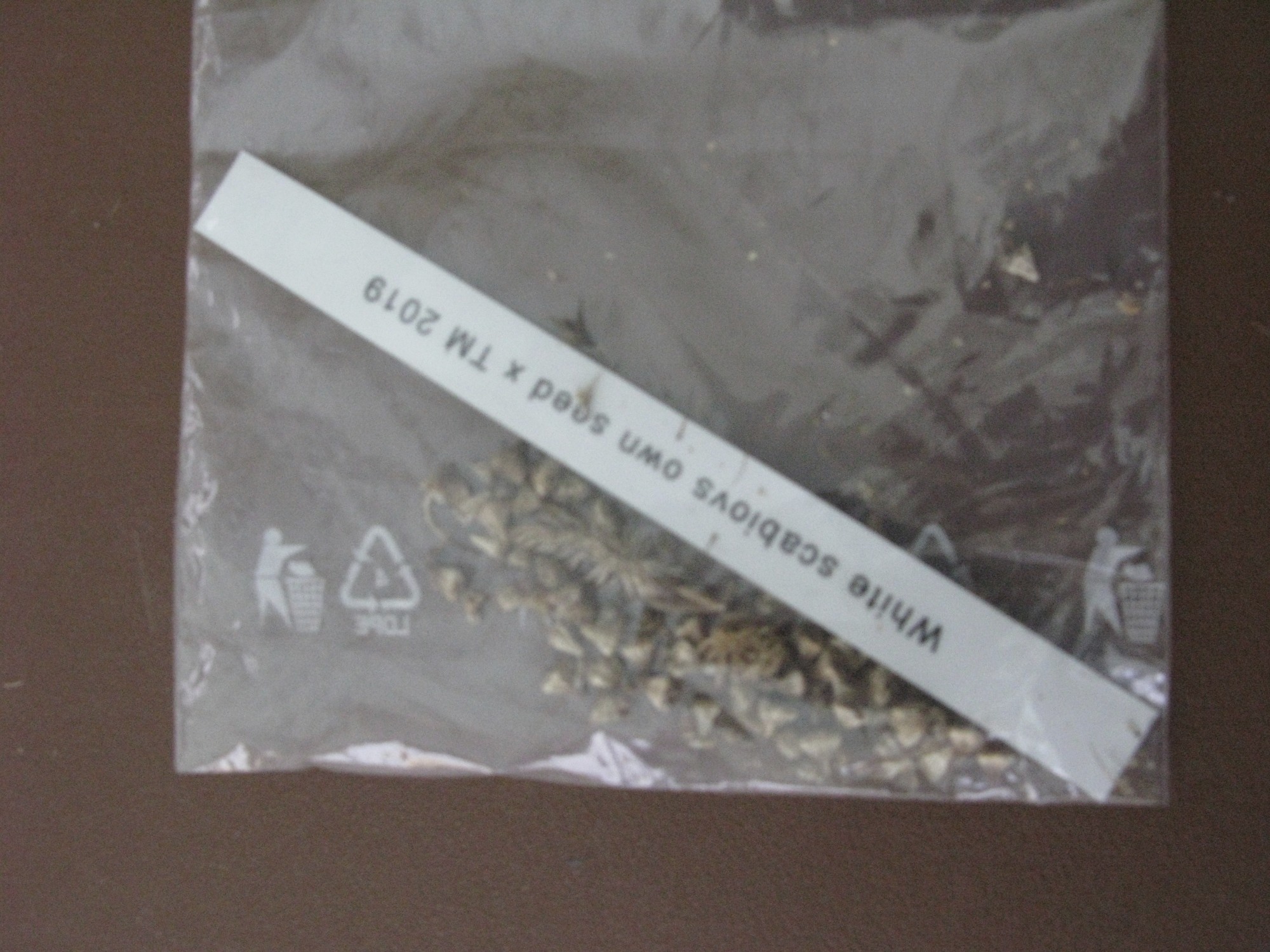
Seed collected 2011
One of the uses I have put it to is to add an appropriate label inside the numerous plastic bags of seed I have collected last year. That way I know what those funny looking seeds really are this year and the label is ready to go. What joy!
My husband uses it for labelling his filing folders and I have used it for all kinds of jobs around the house and elsewhere – even the little plaque on a fence post giving the website address for our front garden!

Label weathering well
It is one of those gadgets I really wouldn’t be without.
RRP £27.55, available on Amazon Brother P-Touch Label Printer

Kate Campbell, Gardening editor
We have a Brother P-touch GL200 to GIVEAWAY to an In Balance reader. To enter the draw send an email to editorinbalance@me.com with Brother P-touch GL200 in the subject box and your full contact details in the text box. Entries to reach by latest 25 April 2011. One entry per household.
How to Grow Gladiolus Callianthus or Acidanthera – Beautiful Scent Beautiful Flowers
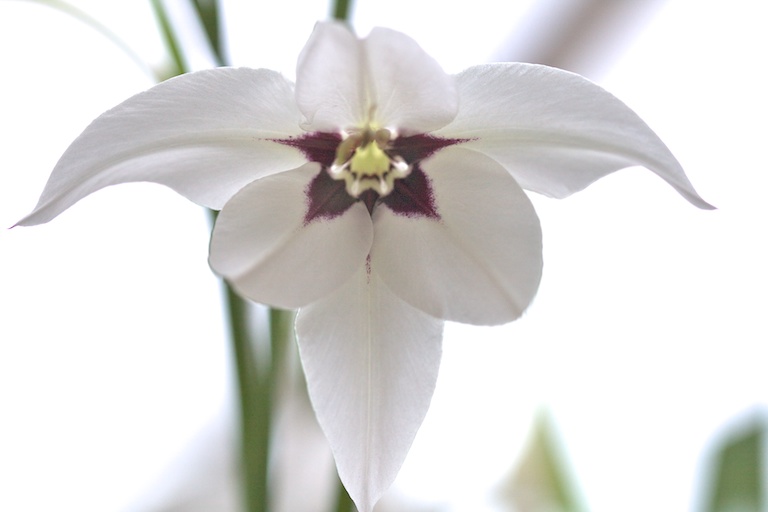
Last summer we were delighted and surprised with the beautiful scent and beautiful flowers of the gladiolus callianthus, now more usually referred to as acidanthera. Also known as Abyssinian gladiola and sword lily, acidanthera, pronounced ass-ih-dan-ther-ah, plants are tender and grown from corms.
We planted ours in April in a pot. If you want to plant Acidanthera in the ground choose a site that gets the afternoon sun and near a path, that way you will notice the scent as you pass.

Hoverfly drinking Gladiolus Callianthus nectar
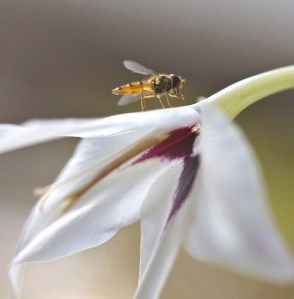
Hoverfly resting on Gladiolus Callianthus
When ours flowered in mid July we brought the pot into the conservatory out of the wind and strong rain. Each long leafed plant produced about ten white flowers, each with a beautiful scent that filled the room. They attracted innumerable hoverflies who fought for a place on the long perfumed stamens. Once there they were very reluctant to move and other hoverflies darted and hovered waiting for their turn, or not, when there was an amusing dogfight to watch.
The swordlike leaves are about 24 inches tall with blossoms that filled the conservatory with a beautiful scent.
Growing these bulbs really didn’t take much effort, we put 6 corms to a depth of about 5 inches in a clay pot in a soilless compost for the conservatory. The plants are low maintenance, to produce the most flowers the plants do appreciate a regular feed.
Next year we’ll put some in pots for the conservatory and others in the front garden in pots but plunged in the soil. They will need support of some kind, we’ll probably use some unobtrusive metal rings you can buy from any garden centre or even B&Q. The pots will be easy to remove once the flowers have gone over and later when the leaves have died away the bulbs can be dried and stored in a paper bag in a cool but not frosty place during the winter with a note in the diary to get them out and planted by latest mid April*. I have read some gardeners successfully leave the bulbs in the pot kept in a frost free greenhouse, bringing the pot out once the danger of frost has passed.
These plants originate from East African mountains, between 4,000-8,000 ft, mainly found in grassy areas and amongst rocks, which perhaps give them the protection from frost they need.
The gladiolus callianthus bulbs, generally available in the spring, were supplied by Avon Bulbs, Avon Bulbs Ltd, Burnt House Farm, Mid Lambrook, South Petherton, Somerset, TA13 5HE, Tel: (01460) 242177
*By the way, we completely forgot to lift and store them last autumn … luckily Avon Bulbs still have some of sale so we’ll plant some more in April.
March 2015 Just been to Aldi where they are selling packets of 30 bulbs for 99p – what a bargain! Was so excited I bought 3 packs … can’t wait for the summer and their heavenly scent. I have to say everything I have bought in the plant and seed sections has always gone well for me, from olive trees to lavender bushes, from wild flower mixtures to bonsai plants. Would love to hear if that has been your experience.
Val Reynolds Brown, Editor
Why Bees Collect Pollen in Baskets
A visit to a local fifteenth century churchyard on the first sunny day that enticed us out of the house, reminded me of the uniqueness of pollen colours. For years I was completely unaware of how each plant produces a different pollen colour and that because honeybees collect pollen from only one source at a time it is easy to see the colours. The bee adds a tiny amount of nectar to the pollen as it collects it which makes the pollen stay on the bee’s pollen basket, which is in fact on just one strand on each rear leg.
 For instance in this picture of a bee in the churchyard on a white anemone blanda – usually a purply/blue colour – you can see the pollen is a creamy white. Snowdrops provide a red pollen and dandelions a reddish yellow. There is a fascinating page on the Bristol Beekeepers website showing pollen colours for a variety of plants.
This fantastic image by Dave – see his website – is clearer, the bee is on plum blossom. 
So why do bees collect pollen? It is a source of protein, fat, starch and vitamins and fed to bee larvae along with honey and a little of what is called queen jelly, a secretion from the glands in the heads of worker bees. A well written Wikipedia page gives more in depth information.
You might this website of artist Valerie Littlewood, interesting, she is fascinated by all things bee, who now lives in Florida.
You may wonder why bumblebees’ pollen baskets don’t have similar colours, it’s because they are gather pollen from a variety of plants so the colours are all mixed up.
Interestingly Anna Pavord writes in The Independent Magazine about the historical daffodils she has in her garden that were collected from churchyards and abandoned gardens by Alan Street of Avon Bulbs and are now available on their website. Sadly they are now completely sold out … but will be ready to order in May to plant in the autumn.
I’d quite like to grow some dwarf narcissi under the cherry trees and have made a another note in the diary to get in touch with the Yorkshire growers Miniature Bulbs later this year. I’ll have a hard job deciding on which ones to plant, they are all utterly gorgeous!
Val Reynolds Brown, Editor
 In Balance